
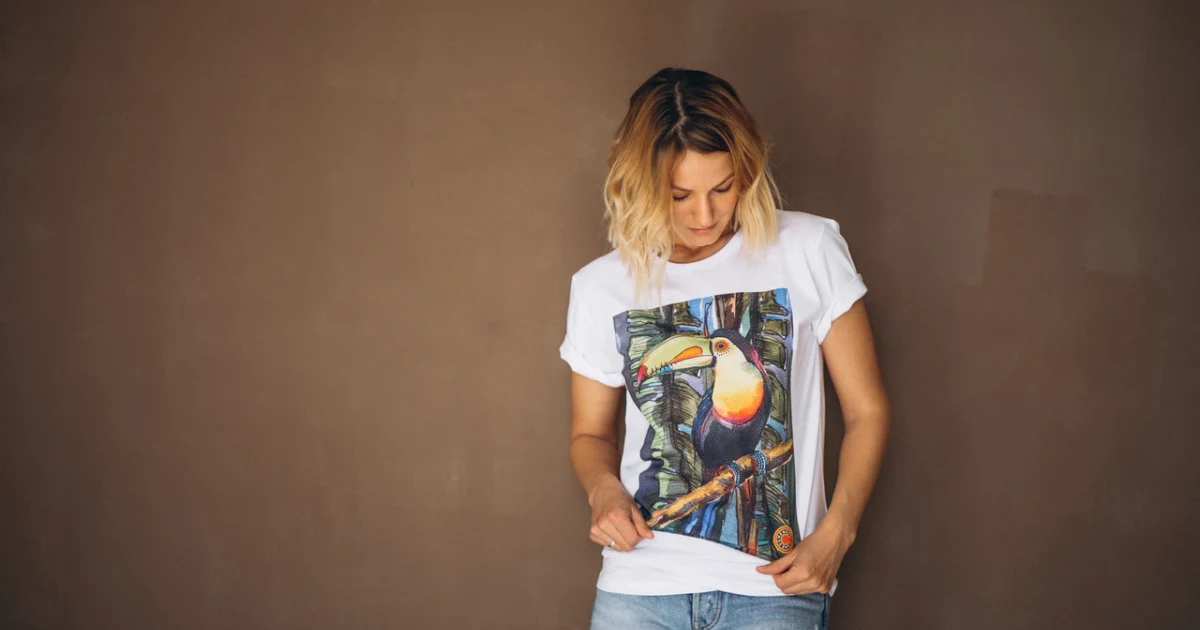
Choosing a t-shirt for a company or event may seem simple, but it's important to review several details before placing the order. Price matters when ordering large quantities, although an overly uncomfortable or poorly finished garment can end up giving a careless image.
Therefore, when choosing the garment, it is important to consider the intended use. A t-shirt for a one-off event is not the same as a uniform that will be used several times a week. You should also think about customisation, sizes, and budget. Comparing different models of cheap t-shirts allows you to find economical options without focusing solely on price.
How to Choose the Fabric
Cotton is often one of the most chosen options due to its pleasant feel and comfort for everyday use. It can work well for promotional activities, customer service teams, or indoor events. For sports activities, physical work, or outdoor days, technical fabrics and blends with polyester can facilitate drying and better withstand intense use.
It is also advisable to consider the quality of the fabric. A lightweight t-shirt may be suitable for summer or for a short event. In contrast, a thicker one usually conveys a more solid feel. The garment should fit the season and the purpose of the order.
Details are also important. A collar that retains its shape, regular seams, and a fabric that does not easily deform help the t-shirt maintain a good appearance. Before ordering a large quantity, it is advisable to request a sample to check the feel, sizing, and behaviour of the garment.
Customisation, Sizes, and Quantity
The customisation technique also influences. Screen printing is usually used for large orders with designs of few colours, while digital printing allows for more detailed images.
Embroidery provides a durable finish, although it is not always suitable for large designs or lightweight fabrics. Sublimation is mainly used on polyester and is common in sportswear.
The design should adapt to the available space. A logo with too many details may lose legibility when reduced, and an excessively large print may be uncomfortable. To create merchandise that people will want to continue using after the event, a simple proposal with easy-to-combine colours and a discreet brand presence usually works better.
Additionally, sizes may vary by manufacturer, so it's advisable to consult the size chart for each model rather than relying solely on standard letters. For large orders, it may be useful to combine unisex cuts with specific models and reserve some additional units of the most requested sizes.
Buying through a clothing wholesaler makes it easier to gather different models, colours, and quantities in one order. Before confirming the purchase, check the stock, delivery times, and whether all garments belong to the same reference. Keeping the same model helps avoid visible differences in tone, cut, or texture.

Trending on the web
You may also like