
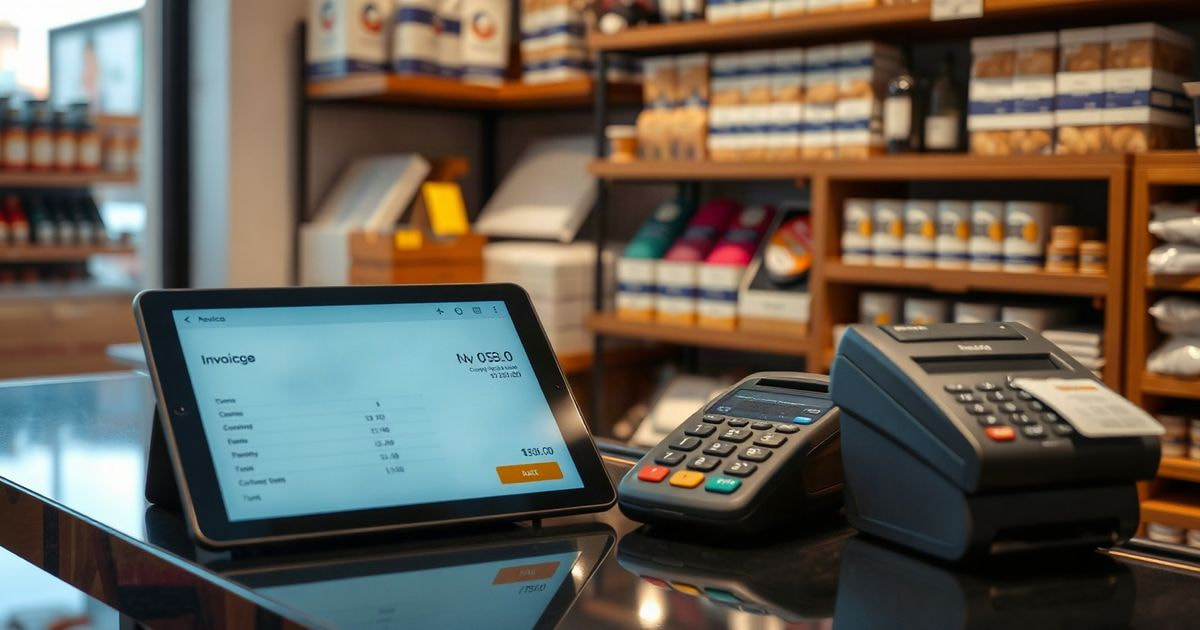
For years, many small businesses have issued invoices using a spreadsheet, a text template, or an old program that no one dared to change. That model is coming to an end. The anti-fraud regulations require that the software used for issuing invoices guarantees that the records are integral, traceable, and unalterable, which necessitates a review of how each business invoices.
What Changes with the Anti-Fraud Law
The anti-fraud law 2021 (Law 11/2021) prohibited so-called dual-use software, meaning programs that allow for parallel accounting or deleting and modifying invoices without leaving a trace. Its development, the regulation known as Verifactu, specifies how invoicing systems must operate: each invoice is recorded, linked to the previous one, and has a code that allows the Tax Agency to verify that it has not been manipulated.
After the last postponement, the timeline places the obligation in 2027: first for companies, and then for self-employed individuals and other taxpayers. There is some leeway, but it is advisable not to push it, as the law foresees penalties of up to 50,000 euros per year for those who use non-compliant programs.
Invoicing App or ERP: They Are Not the Same
An invoicing app addresses the basics: issuing quotes and invoices, managing receipts and payments, and preparing data for taxes. For a self-employed person or a small service business, it is usually sufficient and can be set up in an afternoon.
An ERP (Enterprise Resource Planning) goes further. It consolidates invoicing, accounting, purchasing, inventory, human resources, and, in many cases, customer relations into one system. Its value lies in the fact that data is entered only once and flows throughout the company: a sale deducts from stock, generates the invoice, updates cash flow, and feeds into accounting without anyone having to manually copy anything.
Integration: What Really Saves Time
The productivity leap does not come from having many tools, but from them communicating with each other. The most common cases:
- Payroll: having personnel costs go directly to accounting avoids errors and duplications.
- Electronic invoicing: the obligation to invoice electronically between businesses, as provided in the Create and Grow Law, requires the system to generate and receive invoices in structured format.
- Warehouse Management: if inventory is not connected to sales, the actual stock and the program's stock end up not matching.
- Banks: automatic reconciliation of receipts and payments reduces hours of administrative work each month.
What Is Suitable Depending on the Type of Business
Self-employed and micro-enterprises in services: an invoicing app adapted to regulations, with good connectivity to the advisor, covers almost all needs. The important thing is that it is simple and genuinely used.
SMEs with products and stock: here, an ERP or at least a solution that integrates invoicing and inventory begins to pay off. Inventory errors cost money in stock shortages and idle goods.
Consultancies: they need tools that allow them to work with many clients simultaneously, receive their data without asking for it via email, and file taxes from the same place.
Logistics and distribution companies: the traceability of orders, delivery notes, and returns is critical, and the integration between inventory, transport, and invoicing is what prevents claims and delays in payment.
Criteria for Choosing and Common Mistakes
Before deciding, it is advisable to check that the program complies with the regulations and that the manufacturer declares it as such, that it can be expanded as the business grows, that it allows data export, and that support responds when needed.
The most common mistakes are waiting until the last moment to change, choosing a tool based on price that does not integrate with anything, not training the team, and keeping the old system running in parallel "just in case." Adapting to the anti-fraud law may be seen as just another obligation, but it is also a good opportunity to streamline management and stop wasting hours on tasks that good software can handle automatically.

You may also like