
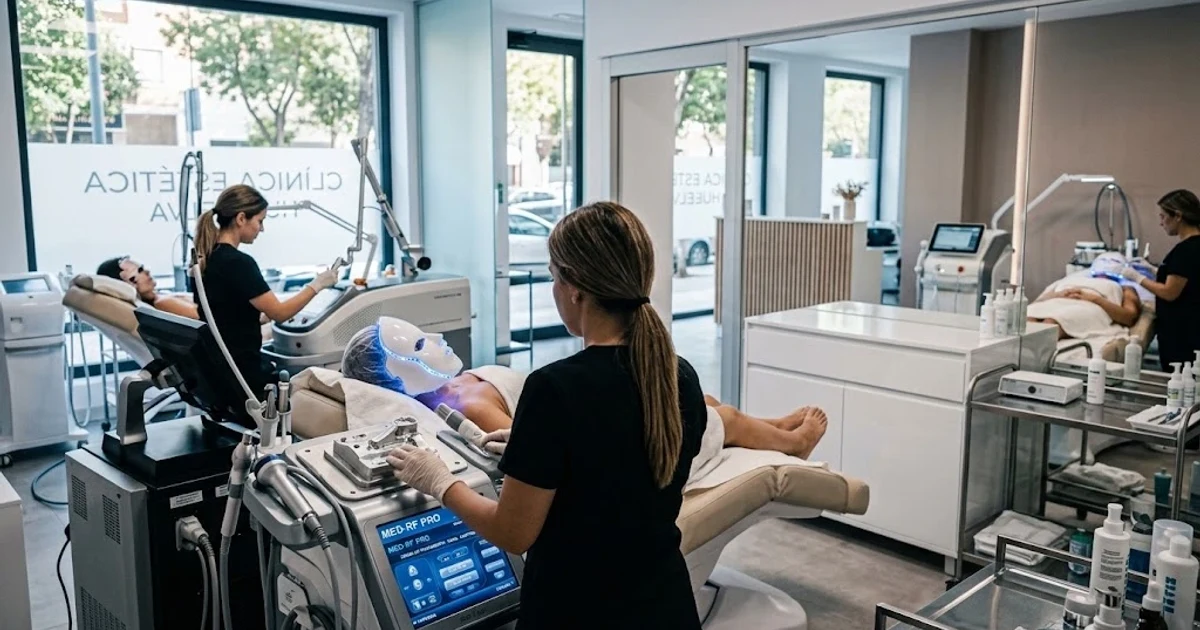
It doesn't matter if you have an aesthetics centre in a town of fifteen thousand inhabitants or a boutique salon in the heart of Madrid: today's customer compares, researches, and above all, notices the difference between a place with outdated equipment and one that looks like it came straight from a luxury clinic. And no, you don't need a staggering budget to achieve this, although for years many professionals have thought otherwise.
The reality is that the aesthetics sector has changed its skin (pun intended) in a very short time. What used to mean "having a treatment bed and some creams" now involves pressotherapy, radiofrequency, diode laser, and an endless list of acronyms that, if you’re not in this field, sound like science fiction. And this is where many centres get lost: they don’t even know where to start updating their equipment without going bankrupt in the process.
Why Equipment is No Longer a Luxury
For a long time, investing in professional machines was considered something reserved for large chains. Today, it is practically a prerequisite to compete in the sector. Customers arrive informed, have seen reviews, compare results, and frankly, they no longer settle for just a relaxing massage.
One of the clearest examples is pressotherapy, which has gone from being a rarity to becoming a basic offering in any respectable centre. In this regard, specialised stores like Lipobody have carved out a niche among professionals looking for reliable equipment without depending on endless intermediaries or eternal delivery times, something that is appreciated when you have a full schedule and zero time to waste.
What Pressotherapy Really Offers
It’s not magic, although it may sometimes seem so. Pressotherapy works through sequential pneumatic compression, stimulating the lymphatic and venous systems. Translated into plain language: it helps drain fluids, improves circulation, and smooths the appearance of cellulite. Nothing that a serious centre can afford not to offer these days.
The benefits that customers value the most are:
- Reduction of tired legs, something that becomes almost a national obsession in summer.
- Effective lymphatic drainage, especially useful after surgeries or in postnatal recovery treatments.
- Visible improvement in skin texture when combined with other treatments.
- Immediate relaxation, turning a technical session into a pleasant experience.
Furniture Matters, A Lot
This is where many professionals make a classic mistake: they think that equipment is everything and neglect the furniture. A grave error. An uncomfortable or outdated treatment bed can ruin the perceived quality of a treatment, no matter how good the machine next to it is.
Treatment Beds: The Element No One Notices Until It Fails
Electric treatment beds, with height adjustment via a button, have become the minimum standard required. They allow for position adjustments based on the type of treatment and reduce the physical strain on the professional, who at the end of the day appreciates not having to act like a bodybuilder to lift or lower a client.
There are several types depending on usage:
- Fixed beds, economical and sturdy, designed for basic treatments.
- Multifunction electric beds, versatile for centres that combine facial and body aesthetics.
- Massage beds, with specific padding for long sessions.
- Facial aesthetic beds, designed with special support for the head and neck.
Hairdressing and Barbering: Sectors Not Falling Behind
Not only aesthetics centres have jumped on this renewal wave. Hairdressers and barbers are investing in ergonomic chairs, wash basins with designs that no longer look like they’re from the nineties, and workstations designed to optimise every square metre of the premises. The aesthetics of the business itself, pun intended, sells as much as the service.
How to Choose a Supplier Without Surprises
Here comes the less glamorous but more important part: not everything that shines on a website is gold. When renewing a centre's equipment, it’s wise to consider several factors before pulling out the card.
Some questions to ask yourself:
- Does the supplier offer real warranty and after-sales technical service, or do they disappear as soon as they get paid?
- Are the delivery times reasonable, or do they leave you with your client schedule hanging?
- Are there verifiable reviews from other professionals in the sector?
- Does the catalogue cover different price ranges to adapt to various stages of business growth?
These details make the difference between an investment that pays off in months and a headache that lasts for years.
The Future Lies in Specialisation
The trend is clear: the centres that survive and grow are those that specialise and communicate that specialisation well. It’s no longer enough to "do a bit of everything." The customer seeks centres that master specific treatments, with updated equipment and an environment that conveys professionalism from the moment they walk through the door.
Investing in equipment and furniture is no longer an option reserved for a few. It is simply the way to stay on the map in a sector where competition is relentless and where the increasingly demanding customer can easily distinguish between what works and what merely pretends to.

You may also like


