
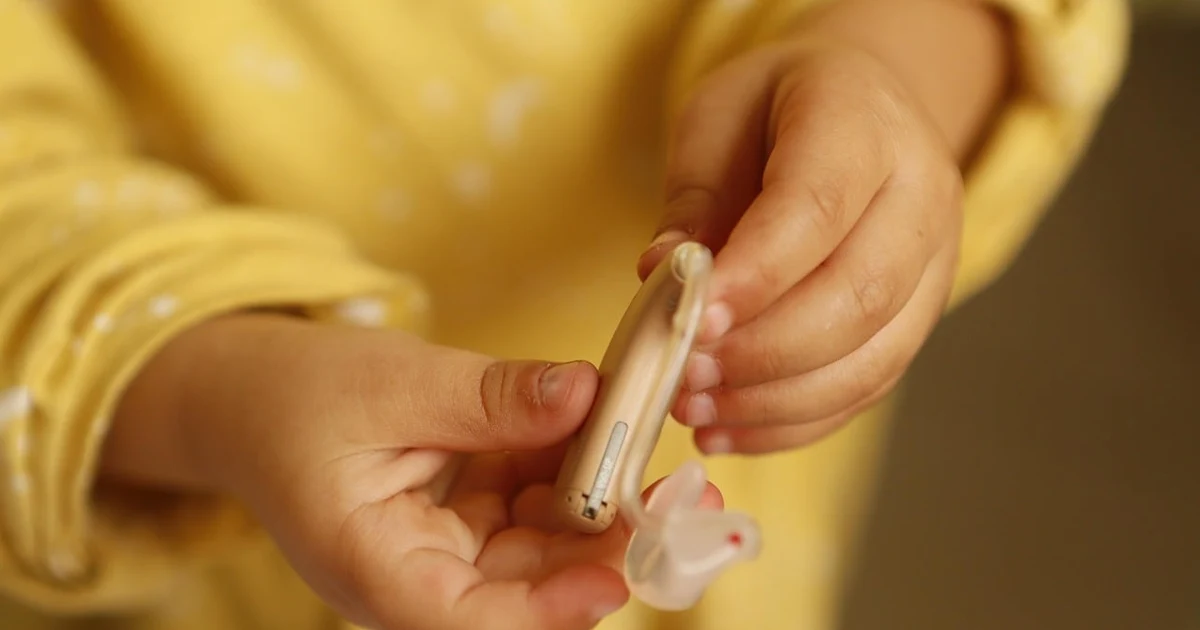
We rarely think about who is behind a hearing aid. We take it for granted, like wifi or hot water, until a family member starts turning the TV up to disco levels and responding with "What?" to everything. This is where a key and rather unknown figure appears: the audioprosthetist, the professional who evaluates hearing, chooses the appropriate prosthesis, and adapts it to each person.
To reach that position in Spain, there is a very specific official path: the Higher Technician in Audioprosthetics, a higher vocational training course in the healthcare family that Davante offers with a very practical approach closely aligned with the real practice of audiology clinics.
Barcelona, moreover, is a city with a huge educational offer, and it is not always easy to distinguish the wheat from the chaff. Those looking for vocational training in Barcelona will find that Davante has several locations in the city, including Roger de Llúria (Calle Sardenya, 68), CampusNet Manyanet Les Corts (Carrer Entença, 301), and CampusNet Sant Andreu (Calle Sant Sebastià, 55), and that Audioprosthetics is included in their catalogue of in-person healthcare courses.
What is learned in the course
The qualification lasts for 2,000 hours spread over two academic years, starting in September. It is an official qualification accredited by the Ministry of Education, valid throughout Spain, something that should always be checked before enrolling anywhere. Not everything that shines on Instagram is an official qualification.
The curriculum combines the technical aspects with direct patient care. Among the modules, the following stand out:
- Acoustics and sound protection elements
- Anatomosensory auditory characteristics
- Creation of ear molds and hearing protectors
- Electronic technology in audioprosthetics
- Selection and adaptation of hearing aids
- Care for the hearing impaired and Audition and verbal communication
In addition, there are transversal subjects such as technical English, applied digitalization, sustainability, employability pathways, and a modular project, along with an optional module that varies by autonomous community. In summary: graduates leave knowing as much about decibels as they do about dealing with people, which weighs almost equally in this profession.
Why Davante fits this vocational training
Audioprosthetics is a hands-on and ear-based profession, literally. Reading about ear molds is of little use if you have never made one. That is why Davante's practical approach makes sense here: the centre works with a workshop classroom and assigns each student a mentor who accompanies their journey throughout the course.
Internships from the first year
One of the strong points is that the internship module, mandatory in higher vocational training, can be done from the first year, as part of a company training phase integrated into the curriculum. The internships take place in hearing centres, audioprosthetic clinics, and hospitals, which is exactly where one ends up working. No learning the profession by correspondence.
Active professionals as teachers
The teaching staff consists of industry professionals who combine teaching with their work activity. Translated: the person explaining how to adapt a hearing aid has probably done it that same week with a real patient. This is evident in the nuances that are not found in books.
An extra for the CV
Davante also offers the FP Plus modality, which adds complementary certifications to the official qualification such as AWS artificial intelligence, Cambridge, or first aid, along with a master's degree with university accreditation from UDIMA. In a market where all CVs start to look alike, these details help to stand out.
Access requirements and career opportunities
To enter, there is no cut-off mark. It is enough to meet one of these requirements: have Baccalaureate (or BUP, COU or equivalent), a Medium Degree, another Higher Technician qualification, have passed the access test for Higher Degree (for those over 19 years old) or the university access test for those over 25.
Upon completion, the career paths are quite clear and closely linked to the health sector:
- Audioprosthetist or audioprosthetic specialist
- Audiometrist
- Creator of ear molds and hearing protectors
- Technician in sound level measurement
It is a profession with prospects. The population is aging, there is increasing attention to hearing health, and urban noise does not seem to intend to retire, so the demand for qualified profiles is unlikely to decrease. Barcelona, with its network of clinics, optical shops with audiology departments, and hospitals, is a good place to study and to stay and work.
How it is financed
Money is often the big question, and there are several options here. The course is compatible with MEC scholarships, Davante has its own grants, and allows payment in 26 interest-free instalments, as well as discounts if paid in two installments or in full. Those who prefer to study at their own pace also have the option to take the course online.
For those looking for a healthcare profession with a lot of practical experience, direct contact with patients, and real job opportunities, the combination of an official qualification, internships from the first year, and locations spread across Barcelona makes Davante one of the most solid options for training in Audioprosthetics in the city. And on top of that, at home, they won’t have to repeat things to you twice.

You may also like