
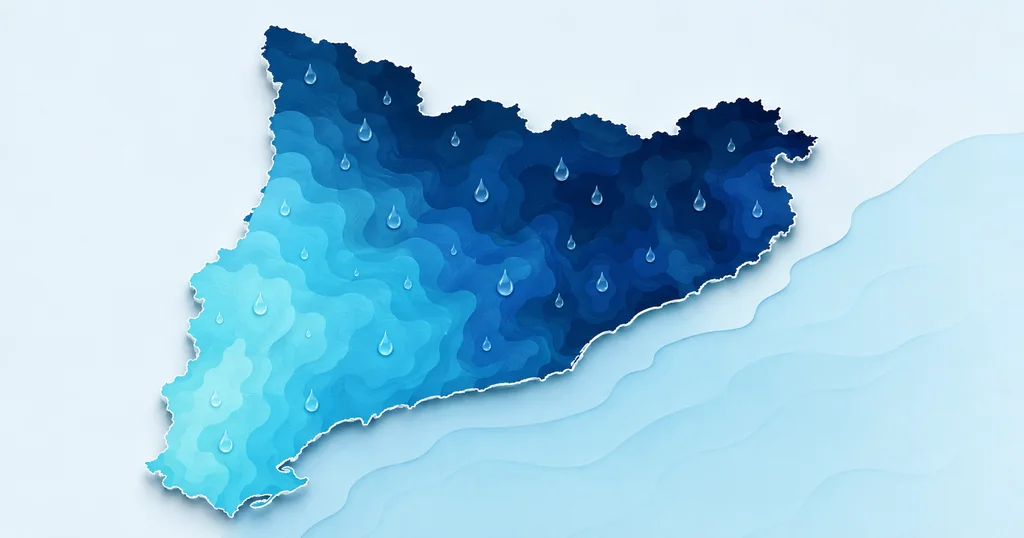
The hardness of the water that comes from the tap is not the same throughout Catalonia: it depends on the network supplying each municipality and the source of the water, with significant differences between towns. Based on official data from the National Drinking Water Information System (SINAC), the water treatment company Aquaclar, based in Vall-Llobrega (Girona), has compiled the hardness of water in Catalan municipalities, with contrasts of more than ten times between some locations and others.
At the extreme end of hardness is Porqueres (Pla de l’Estany), with about 1,135 mg/l of calcium carbonate, the highest figure recorded. It is followed by Santa Coloma de Queralt (857 mg/l, Tarragona), Banyoles (845 mg/l) and Calaf (710 mg/l, Barcelona). In the coastal area of Girona, towns like Palafrugell (502 mg/l) also record clearly hard water.
On the opposite side, the softest waters are concentrated in the Pyrenees and part of the West: Vielha (103 mg/l), Mollerussa (109 mg/l) or Guissona (122 mg/l), alongside coastal municipalities like Badalona (112 mg/l) or Blanes (113 mg/l).
The case of Barcelona is particular: its water comes from a mix of the Ter and Llobregat networks, so the hardness varies depending on the area and the time, generally falling within a medium-high range. Within the same city —and even between neighbourhoods— the experience with limescale can be very different.
Why does it matter? Hard water contains more calcium and magnesium, which form limescale when heated. Over time, this limescale deposits in pipes, heaters, and appliances like washing machines or dishwashers, reducing their efficiency and shortening their lifespan. It is a maintenance issue, not a health one: hard water remains safe for consumption.
There are two distinct approaches to dealing with limescale, and it is important not to confuse them. Salt-based water softeners, through ion exchange, truly remove calcium and magnesium and produce soft water. In contrast, salt-free systems do not remove calcium or soften the water, but condition it to prevent limescale buildup without the need for salt bags. Which is suitable depends on the hardness of each household's water and what each home prioritises.
Experts recommend always starting with local data. “Hardness can change from one street to another within the same municipality, so the first step is to measure the water that actually comes from the tap before deciding anything,” explain those at Aquaclar, which offers free home analysis in Catalonia. With that information, each family can assess whether it is worth installing a water softener and what type.
Beyond the anecdote of which town has the hardest water, the map presents a clear reading: in much of Catalonia —and especially in the interior counties of Girona and Tarragona— limescale is a factor to consider at home. Knowing the hardness of your municipality is the first step to deciding, with reason and without alarmism, whether you need to take action.

Trending on the web

You may also like