
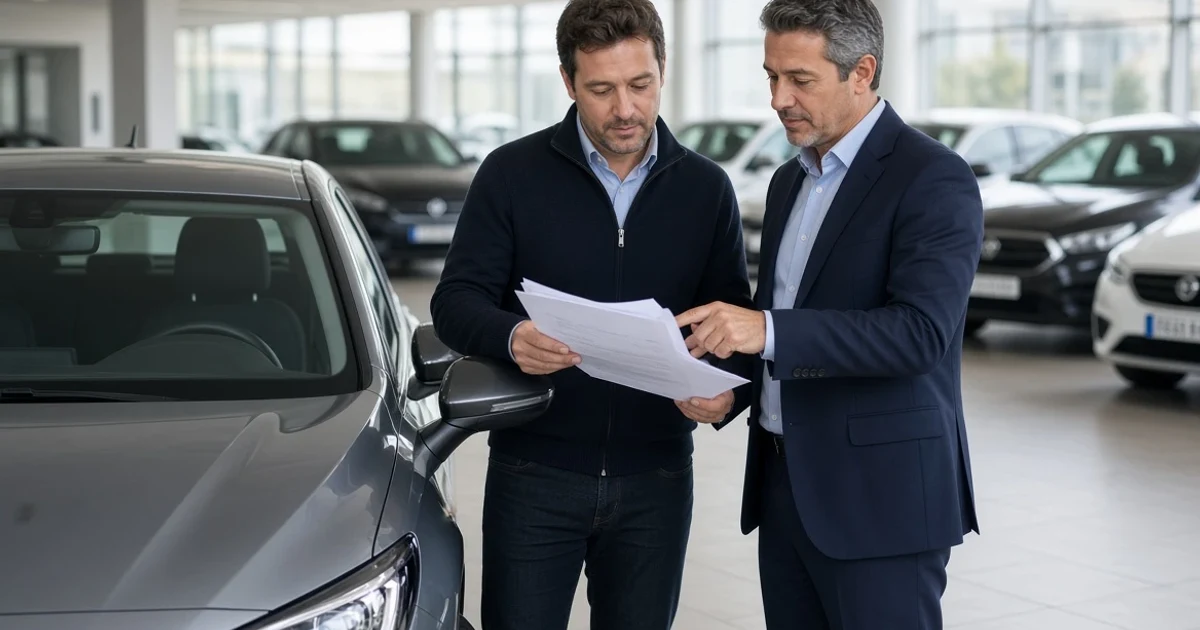
Buying a second-hand car is no longer just about finding a good price: it also involves checking warranties, history, consumption, environmental label, and the trustworthiness of the dealership.
In Catalonia, more and more drivers are opting for a used or KM0 vehicle rather than a completely new one, as prices have skyrocketed, delivery times for new cars remain a headache, and the quality of the second-hand vehicle market has improved significantly.
However, buying well is not simply about choosing the cheapest ad from a portal. There are a series of criteria that make the difference between making a good purchase and ending up with a car that causes more problems than joy.
Why the Second-Hand Market is Gaining Ground in Catalonia
Tarragona, Barcelona, and Girona share a similar pattern: daily mobility largely depends on the car, whether for work commutes, trips between industrial estates, or simply to move outside the urban area. In this context, the second-hand car has become a household economy solution rather than a luxury.
Moreover, many buyers are now looking for used vans for freelancers and small businesses, a segment that has grown strongly due to the rise of delivery and home services. The difference from a few years ago is that the current buyer arrives much better informed, compares several options, and demands clear documentation before making a decision.
Mileage and Age, the First Filters
The first filter is usually the most obvious: mileage and year of registration.
A car with more kilometres but documented maintenance may be a better purchase than one with few kilometres and a confusing history. What matters is not just the numbers; it also matters how the vehicle has been cared for.
As a general rule, it is advisable to be wary of suspiciously low mileages for the car's age, especially if the seller cannot justify regular maintenance. An eight-year-old car with 40,000 kilometres and no supporting documents is, at the very least, a reason to ask more questions.
Where to Buy: The Importance of a Trusted Point of Sale
Buying from a private seller can go well, but it also leaves the buyer without any legal guarantee if something goes wrong a few months later. A specialised dealership, on the other hand, usually offers a pre-sale mechanical inspection, a written warranty, and, in many cases, the possibility of valuing the current car as part of the payment.
For those looking to compare models, prices, and financing options in Catalonia, Autokoleccio brings together second-hand vehicles, KM0 cars, and vans with specialised advice in Tarragona, Barcelona, and Girona. It is not the only alternative on the market, of course, but it is an example of how a multi-brand point of sale can simplify the process for those who do not want to deal with individual ads and home visits to test a car that might not even start properly.
How to Check the Vehicle's History Before Signing
Before closing any purchase, there are a series of checks that should be non-negotiable:
- Report on the historical mileage to rule out tampering.
- Check if the car has any outstanding debts, liens, or associated fines.
- Status of the ITV and date of the next mandatory inspection.
- Maintenance history at the official dealership or trusted workshop.
None of these steps takes more than a few minutes, and yet they prevent most of the disappointments that usually arise months after the purchase.
Environmental Label and Consumption: The Small Print That Matters
In urban areas like Barcelona, the DGT environmental label has shifted from being an administrative detail to a decisive factor. Many traffic restrictions during pollution episodes directly affect cars without a label or with a B label, so before buying, it is advisable to check what label the vehicle has and whether that limits its daily use within the city.
There is no need to jump straight into a hybrid or electric car if the budget does not allow it, but it is worth considering the actual consumption, not just what appears in the technical sheet, which often falls short compared to real driving in the city.
Financing
Financing is another point where it is advisable to go with a calculator in hand. Before signing any deal, it is recommended to compare the actual APR, not just the monthly payment that sounds good in the brochure. Two financings with the same payment can have very different total costs depending on the terms and opening fees.
It is also worth asking if there is a possibility of early repayment without penalty, something that many buyers do not even consider at the time of signing and that can later lead to considerable savings.
What to Look for in After-Sales Service
Finally, and although it often takes a back seat during the purchase, the after-sales service ends up being decisive in the real experience with the car.
Basic questions such as whether the garage offers regular inspections, if there is accessible stock of spare parts, or if the response to a breakdown is quick make a significant difference compared to buying and disappearing from the map.
A well-chosen second-hand car can last many years. The secret is not to be swayed solely by the starting price and to dedicate the necessary time to reviewing documentation, the condition of the vehicle, and warranty conditions before signing.

You may also like
