Barcelona closed the first half of 2026 with 4,216 burglaries, the highest figure in the country, according to the Crime Balance from the Ministry of the Interior.
In this context, the security company System Protek has focused its activity on remote access video surveillance, just as the Spanish Agency for Data Protection (AEPD) has intensified its oversight of these systems.
The numbers invite more caution than optimism. The province reduced home burglaries by 6.7% compared to 2025, but the capital did not follow this trend: it recorded 1,522 cases between January and June, eight more than a year earlier. The City Council presented a report in July showing an overall drop in crime of 11.2%, although the feeling in households is different. In 2025, the city recorded 2.06 home burglaries per 1,000 inhabitants, above the average of major Spanish cities, which stands at 1.39.
“Overall data is improving, but those who have suffered a burglary in their building do not perceive it that way. What we are being asked for today is not just recording, but the ability to see what is happening at home from a mobile device in real time,” explains the CEO of System Protek.
This demand has a problem: it is precisely where installations fail the most. On April 13, the AEPD made public a fine of €400,000 against a system where eleven people accessed the images from 9,000 cameras using one single user and the same password. The resolution has served as a warning for the entire sector, as the regulations require individual passwords and a record of who accesses each recording.
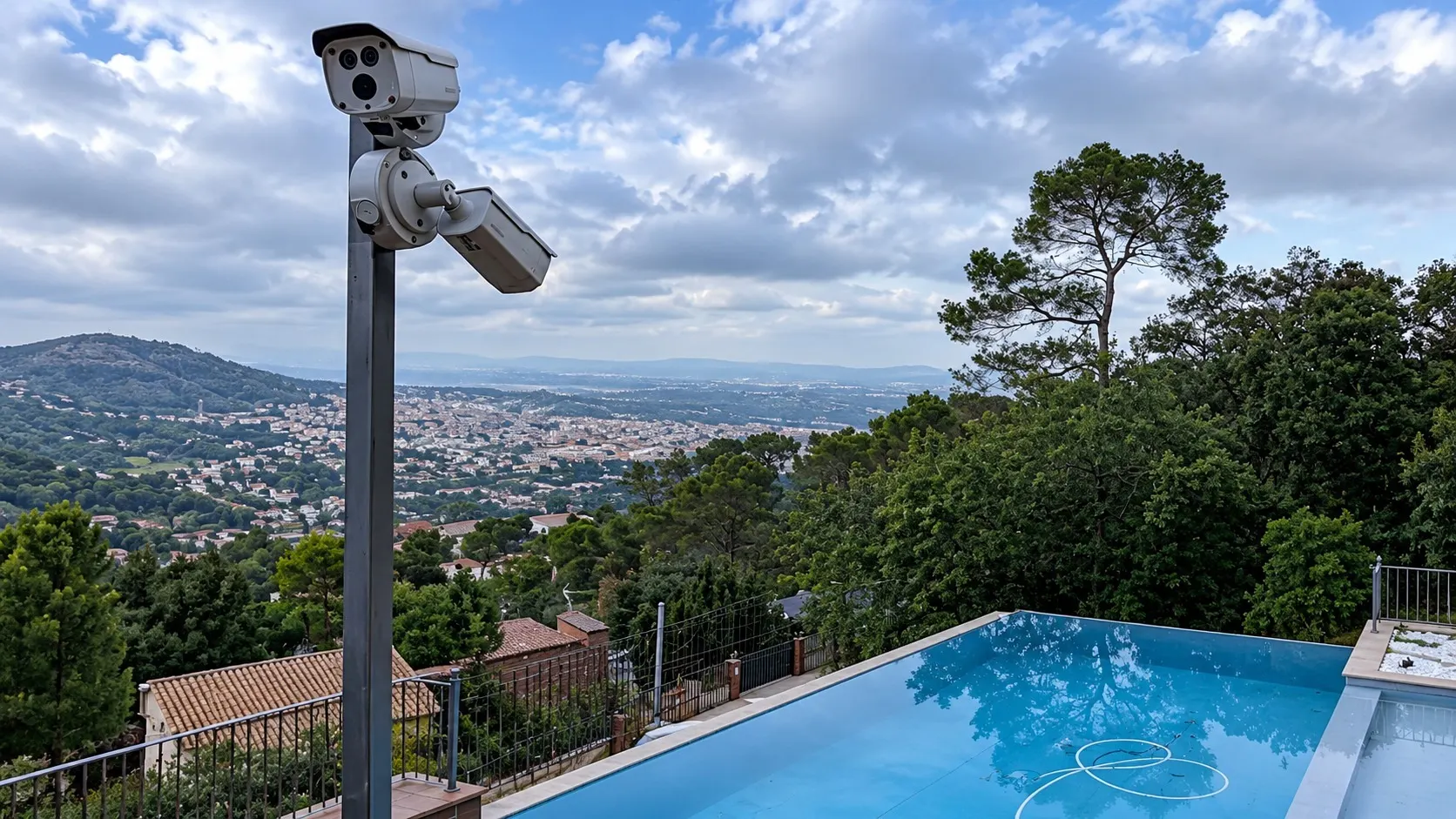
This is not the only case this year that has resonated in Barcelona. On April 28, the Agency imposed a fine of €6,000 and ordered the removal of four cameras installed inside a rented apartment by rooms, a very common practice in the city. The AEPD's guidelines clearly mark the boundary: recording the interior of one's own home is domestic use, but as soon as the camera captures the entrance, the facade, or a common area, the General Data Protection Regulation applies. And the responsibility remains with the owner even if the installation is done by a company.
“Before installing, we review what each camera will capture. A poorly oriented camera can end up in a complaint from a neighbour and a fine greater than the cost of the system,” say representatives from System Protek.
The company, which works with homes, neighbourhood communities, businesses, and tourist apartments, has directed part of its offering to scenarios that until recently were off the radar, such as properties without electricity or internet connection. The details of each system can be consulted on their website at System Protek video surveillance. The legal obligations, on the other hand, are the same for everyone: a visible informative sign, not recording public roads more than necessary, and deleting images within a maximum period of one month, unless needed for a complaint.
The next debate is already open. On October 6, the AEPD sent two warnings to municipalities whose projects included facial recognition and appearance search. The agency reminded that the existence of a technical function does not justify its use on its own, a criterion that will sooner or later reach domestic cameras with smart detection.
The Ministry of the Interior will publish data for the third quarter in the coming weeks. This will help determine whether the decrease in burglaries in the province continues or if the city of Barcelona remains stuck at the 2025 figures.

You may also like