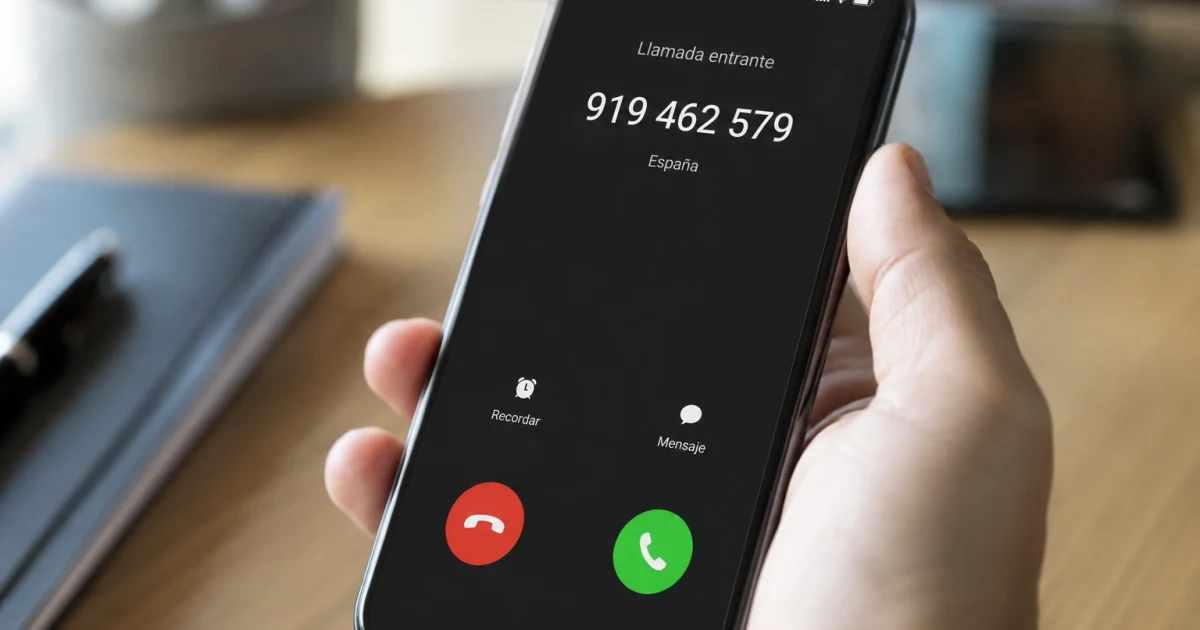
Your phone rings. You look at the screen and see an unknown number: 919462579. The age-old dilemma: do you answer or not? Spoiler: the short answer is no, and the reasons are quite clear. But let's break it down.
What is known about 919462579
First things first: this number has the prefix 91, which corresponds to Madrid. So far, so normal. The problem is that, as with many numbers in the 919 block, we are not dealing with a customer service line of any company that has requested your number. We are faced with one of the favourites of the most aggressive telemarketing in Spain.
The number has been reported 238 times and has accumulated over 73,000 registered spam calls, according to data collected by the user community on call identification platforms. This is no small figure. To give you an idea, there are numbers with fewer reports that have entire cities up in arms.
The danger score assigned by users is 7 out of 9, placing it in the high-risk category for spam or potential scams. At least three direct comments have been recorded about this number, all sharing the same common denominator: unsolicited calls, unclear identification, and clearly annoying behaviour.
Who is behind this number
Here comes the interesting, or rather uncomfortable, part. According to users who have had the pleasure of answering, the calls have been classified as telemarketing on 28 occasions, presumed scam on 14, and missed call on another 12. The most repeated words in user reports are: Vodafone, Yoigo, commercial, and telemarketing.
And the description that recurs among those who made the mistake of answering is revealing: one user explains that it is a salesperson posing as Vodafone, when in fact they operate for Yoigo. The argument they use is that "the contract period has ended" and that is why "they are offering you a discount". What is unsettling is that they handle real user data: account number, contracted products, and even received signup gifts. In short, they know more about you than you would like.
What users say
Real testimonies paint a pretty clear picture:
Carmen B. made it clear: "I was called from this number. An annoying call I hadn't requested. Added to the blacklist."
Teresa L. made the right decision: "I saw the number and didn't answer because they had called me before and it was spam. I was right not to answer."
Raquel V. had less luck: "They contacted me in a very annoying way. They didn't identify themselves properly. I asked them not to call me again."
And then there is the most striking case: an anonymous user reports that this number calls him 4 to 5 times a day, even on Sundays. When he answers, no one says anything, only a noise is heard, and they don't hang up. When he blocks it, they call from another similar number. Practically harassment in every sense.
Why the 919 prefix is a warning sign
It's no coincidence that this number starts with 919. Many telemarketing companies operate in Spain with assigned numbering blocks, meaning that dozens or even hundreds of consecutive numbers belong to the same entity. If you see a 919 that you haven't saved in your contacts, the chances of it being a legitimate call are quite low.
In fact, 919462579 has accumulated over 65,000 searches on just one of the query platforms, making it one of the most searched numbers by users in Spain wanting to know who is calling them. People don't search out of curiosity: they search because they have received the call and want to know if they should be concerned.
How these campaigns work
The pattern is well-known and quite systematic. First, they call you, sometimes hanging up without saying anything (the robot call that checks if the number is active). Then a salesperson calls who already knows you are a "recoverable customer". The pitch is prepared, the data is too, and the pressure to make a quick decision is part of the script.
Some of these numbers use masking technology to make the prefix appear national even though they operate from abroad, thus increasing the chances that the recipient will answer upon seeing an apparently Spanish number.
What to do if you receive a call from 919462579
The short answer: do not return the call. The long answer:
Block the number from your phone settings. Both on Android and iOS, the process takes less than ten seconds. If you have the patience to receive five calls a day but not to block it, this is for you.
Register with the Robinson List. It is the official registry in Spain for those who do not wish to receive unsolicited advertising. It's not magic, but it reduces calls from companies that respect the regulations. Those that do not respect it, well, they do whatever they want.
Report the number on specialised platforms. Databases that collect user information allow you to alert others before they make the mistake of answering; the consultation is free, anonymous, and does not require registration.
Do not say "yes" at the beginning of the call. There is documented practice where operators record the user's voice to try to splice the "yes" with an alleged acceptance of a contract or a debt. It sounds like a cheap sci-fi movie, but it happens.
And if you consider that the call has crossed the line from annoying to what could directly be a scam, the Spanish Agency for Data Protection (AEPD) has channels enabled for filing complaints. Companies that violate the General Data Protection Regulation (GDPR) or the Telecommunications Law may face considerable penalties.

You may also like