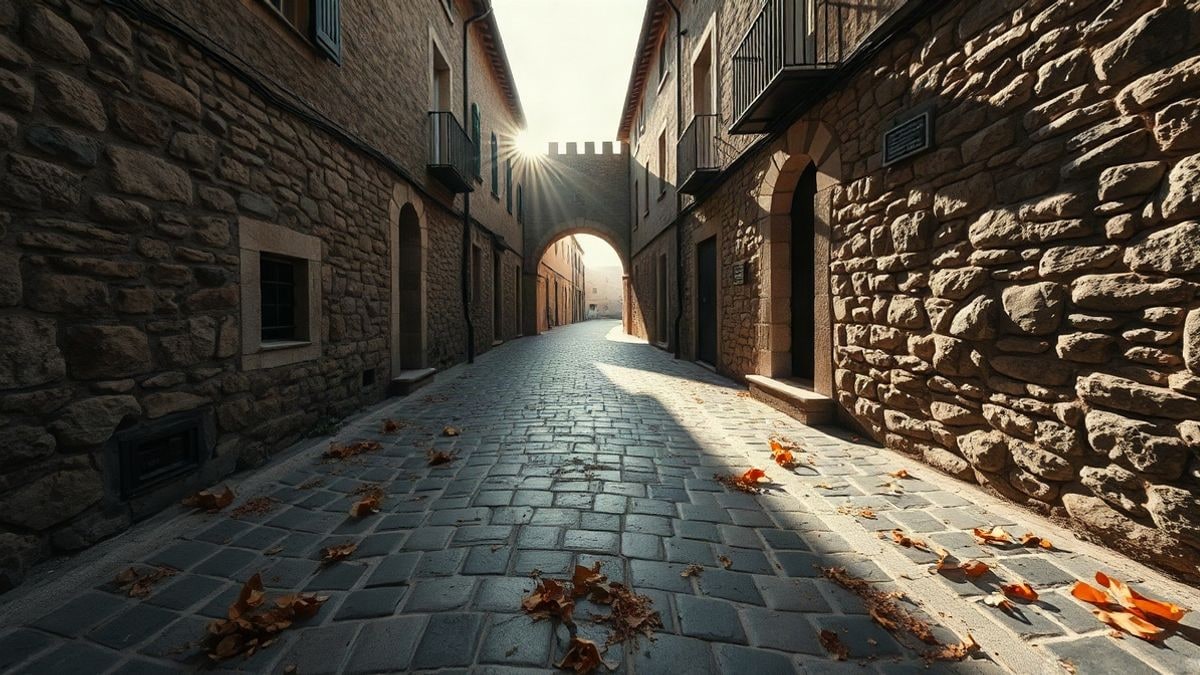
Ten villages in the interior of the province combine medieval heritage, castles, and rural landscapes without needing to reach the coast. Bagà, Cardona, and Berga are among the suggestions.
According to El Debate, the province of Barcelona offers much more than just beaches. Ten villages in the interior gather historical sites, castles, and rural environments at a reasonable distance from the Catalan capital.
In Berguedà, Bagà retains a layout of cobbled streets and the church of Sant Esteve. The bridge over the Bastareny and nearby trails complete the visit, which gains gastronomic appeal during mushroom season. Very close by, Castellar de n'Hug adds mountain architecture and Romanesque heritage, although its main attraction lies in the path to the sources of the Llobregat River.
In Cardona, the fortress houses a Parador and from there one can reach the Mountain of Salt, allowing heritage and landscape to be combined in one day. In Bages, Mura bets on its urban centre and the routes of the natural park of Sant Llorenç del Munt and l'Obac.
In Osona, Rupit and Pruit showcase two sides of rural life: the streets of the Rupit nucleus and the scattered farmhouses of Pruit, linked to agriculture and livestock. Tavertet features stone houses and views over the Sau reservoir.
Traditions hold significant weight in Berga, which preserves the plaza de Sant Pere and the church of Santa Eulalia. There, the Patum is celebrated, linked to Corpus Christi and inscribed by UNESCO on the list of intangible cultural heritage. Montclar, smaller in size, groups its houses around a square.
The selection concludes with Moià and Copons. In Moià, one can find the church of Santa María, the birthplace of Rafael Casanova, and the caves of Toll, located on the outskirts. In Copons, from the Anoia region, the arches of plaza Ramon Godó, the church of Santa María, and the ancient mills stand out.
The article does not include opening hours or access prices, so it is advisable to check these in each locality before setting off.

Trending on the web

You may also like