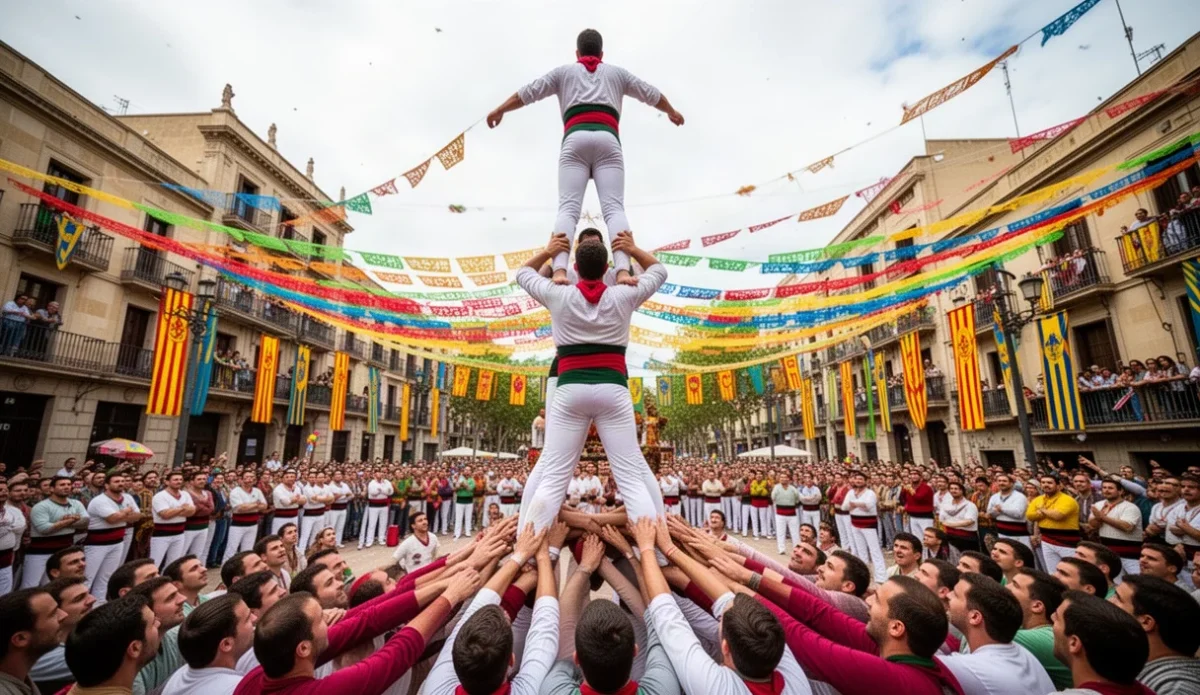
The Castellers de Vilafranca achieved a milestone by completing a four-base castell, marking a significant technical advancement in the tradition. This achievement comes a century after the castells faced near extinction.
The recent completion of a four-base castell by the Castellers de Vilafranca marks not only a technical milestone but also symbolizes the enduring spirit of this traditional Catalan practice. Once on the brink of extinction in the early 20th century, castells have evolved into an internationally recognized cultural emblem, celebrated for their complexity and community spirit.
In 2010, castells were inscribed on UNESCO’s representative list of intangible cultural heritage, highlighting their significance beyond regional festivities. Today, over one hundred active colles (teams) and thousands of practitioners keep this tradition alive. However, just over a century ago, castells faced serious challenges that threatened their very existence.
At the turn of the 20th century, castells were experiencing a decline due to various factors including economic crises and changing social dynamics. The last successful nine-story castell was completed in 1893, followed by dwindling performances and participation. A stark warning appeared in La Crónica de Valls in 1911: “Either we restore the ancient vigor of castells or we eliminate them from our celebrations.” This sentiment reflected widespread concern about preserving cultural identity amidst modern influences.
The decline was attributed to several reasons: population loss in key areas like Valls, economic hardship from vineyard diseases like phylloxera, aging participants unable to renew their ranks, and competition from emerging entertainment forms such as sports. Ideological shifts also played a role; some viewed castells as relics incompatible with contemporary values.
A pivotal moment came in 1926, when new colles emerged in Tarragona and El Vendrell. The Xiquets de Tarragona debuted during Santa Tecla festivities on September 23rd that year, reviving interest in this traditional art form. Their success inspired others; shortly after, Nens del Vendrell showcased impressive six-story constructions at Santa Teresa Fair.
This resurgence sparked what historians refer to as the Renaixença period—a renaissance characterized by technical advancements and increased popularity leading up to the Spanish Civil War. During this time, innovations such as distinctive uniforms for each colla and sequential performances became standard practices.
The revival can be linked to a broader societal shift where younger generations began viewing castells through a sporting lens—an activity associated with prestige rather than mere tradition. Influential figures like musician Pau Casals championed these efforts, further legitimizing castells within cultural discourse.
Despite interruptions caused by political turmoil during and after the Civil War, which saw authorities promote castells as symbols of regional pride under Franco’s regime, they survived due to their established community support base. The late 20th century brought renewed vigor with changes that embraced inclusivity—welcoming women into colles—and prioritizing safety measures.
The ongoing evolution culminated recently with Vilafranca’s groundbreaking achievement—a testament not only to technical prowess but also to resilience against historical odds. As communities gather around these towering structures today, they celebrate not just physical feats but also shared heritage that continues to unite Catalans across generations.
For those interested in witnessing this vibrant tradition firsthand or participating in local events featuring castells, upcoming performances can be found throughout Catalonia’s festive calendar—particularly during major local celebrations where teams showcase their skills amidst lively crowds.

You might also be interested in