A groundbreaking investigation has cataloged over 200 historical maritime graffiti in Catalonia, revealing their significance as cultural heritage. This project highlights the need for preservation efforts.
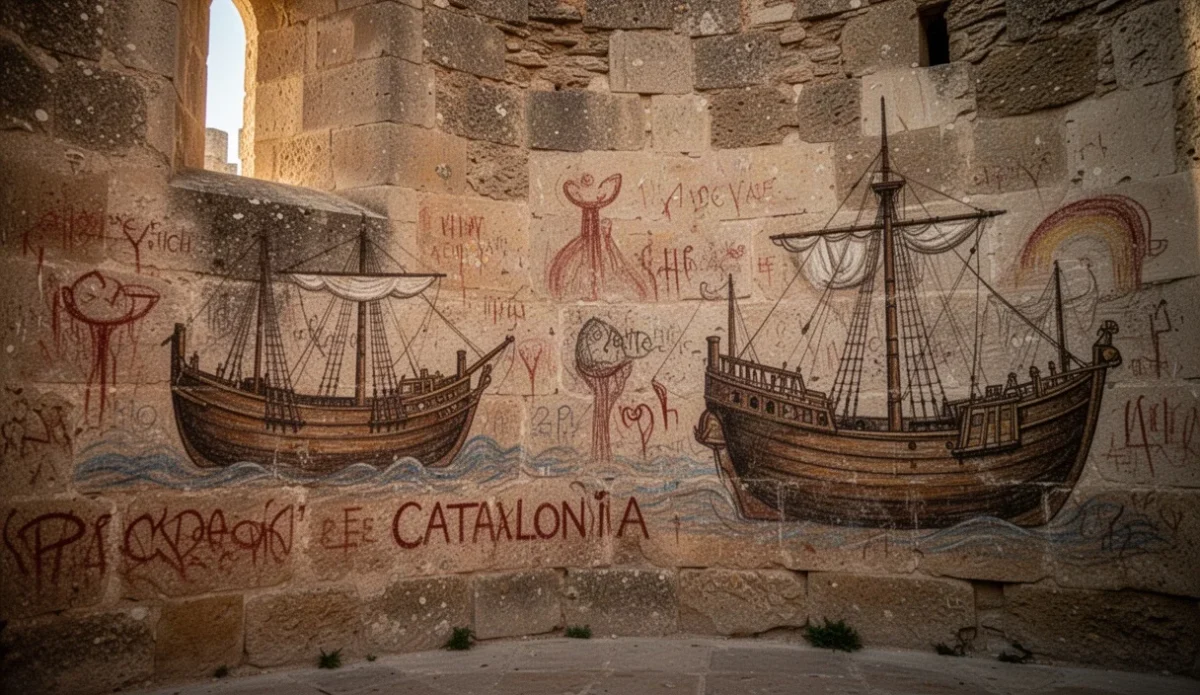
A recent study has unveiled a treasure trove of maritime graffiti hidden within the walls of castles, churches, and monasteries throughout Catalonia. Led by researcher Gemma García, this unprecedented project identified and analyzed 227 unique expressions of nautical art dating from ancient times to the contemporary era. The findings underscore the importance of these artworks as vital historical sources that deserve protection and recognition.
The research began in 2016 and was conducted in collaboration with the Museu Marítim de Barcelona and the Permanent Observatory of Maritime History and Culture in the Mediterranean. García noted that while previous studies have explored various types of graffiti across regions like Catalonia, Valencia, France, and Italy, this is the first comprehensive catalog focusing specifically on ship-related graffiti.
Among the notable discoveries is a depiction of a medieval vessel located in the former royal chapel of Santa Àgueda at Plaça del Rei, now part of Barcelona’s History Museum. More modern examples include those created by international brigades during the Spanish Civil War found at Castelldefels Castle.
García categorized these maritime drawings into five distinct groups based on their context: religious ex-votos for protection—such as a ship depicted in Tarragona Cathedral—symbolic representations reflecting desired freedom from imprisonment, realistic scenes akin to photographs, sketches recreating vessels, and spiritual symbols linking divine themes with human experiences. One particularly intriguing example connects to Noah’s Ark found in Cistercian monasteries like Santa Maria de Poblet.
This extensive cataloging effort aims not only to preserve these artworks but also to raise awareness about their cultural significance. Some pieces have already been lost since documentation began; however, initiatives are underway to protect remaining works. For instance, one 17th-century engraving will be preserved behind a metacrylate panel at Museu Marítim de Barcelona following its identification during this research.
García’s doctoral thesis titled *The Disappearance of Borders Between Sea and Land: The Graffiti of Vessels in Catalonia* from the University of Zaragoza encapsulates her findings. It will soon be available as a digital book on the Museu Marítim’s website.
While this inventory focuses primarily on Catalonia, García believes it could serve as a model for similar studies elsewhere in Spain or even internationally. The ongoing exploration into these historical artifacts reflects a broader trend towards recognizing often-overlooked aspects of cultural heritage that can provide insight into societal values across different eras.
As interest grows around preserving such unique expressions of history, local authorities are encouraged to engage with researchers like García to ensure these invaluable pieces do not fade into obscurity. For those interested in viewing some examples firsthand or learning more about this initiative, visits can be arranged through the Museu Marítim de Barcelona’s official website.

You might also be interested in