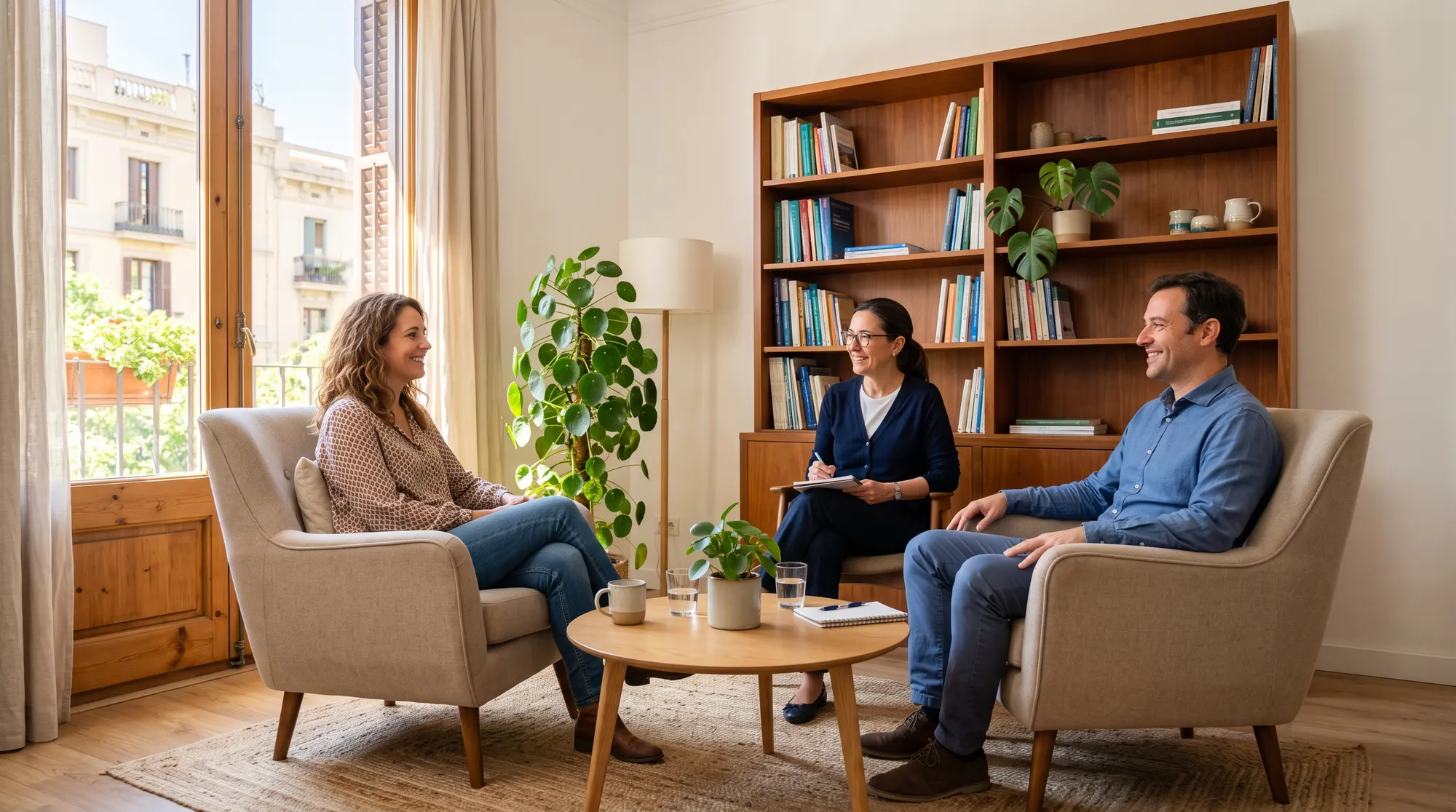

There are holidays that end and leave a strange feeling: we have changed our scenery, slept a bit more, and spent a few days away from work, but the tiredness is still there. Sometimes it’s even hard to return with the energy we expected to recover.
In such cases, it may make more sense to seek another type of break, from a getaway with fewer stimuli to a relaxation retreat designed to genuinely slow down the pace rather than simply fill the schedule with different plans.
The problem is that we often lump very different things under the term "rest." Travelling, dining out, visiting a city, or spending time with friends can be wonderful, but it doesn’t always help us recover. It depends on how we arrive at those days off and, above all, on the type of fatigue we are dragging along.
Some holidays are more tiring than they seem
It’s not hard to recognise the pattern. We finish an intense week, pack in a hurry, catch an early flight, and start a holiday that is already loaded with schedules, reservations, and travel. We have to see that museum, try that restaurant, make the most of the morning, and arrive on time at the next accommodation.
It can be a fantastic trip. What it may not be is restorative.
For a long time, it has been taken for granted that stopping work equates to resting. However, a person can spend several days without opening their email and still be subjected to a huge amount of stimuli, decisions, and rush.
Something less visible also happens. The body arrives at the holiday, but the mind takes a little longer. In the first few days, we still think about what is pending, check our phones almost reflexively, or feel that we should be doing something. Transitioning from a demanding routine to total disconnection doesn’t work like a switch.
That’s why some people start to relax just when it’s time to pack for the return journey.
Resting doesn’t always mean sleeping more
Sleeping is a fundamental part of recovery, but it doesn’t solve all types of fatigue. We can rest physically and still be mentally overwhelmed. The opposite can also happen: after months of little activity, moving more can be much more revitalising than spending several days lying down.
The key is to identify what is exhausting us.
When the burden is mental
There are times when we don’t make a particularly large physical effort, but we reach the end of the day without the capacity to think of anything else. Meetings, messages, small decisions, changes of context, notifications, and pending matters take up space.
That type of tiredness needs moments with few demands.
Going for a walk without looking at your phone, leaving an afternoon free of plans, or spending a few hours without having to decide what comes next may seem trivial, but it can make a difference. We are so used to filling our free time that sometimes it feels uncomfortable to find ourselves with an empty gap.
And perhaps that’s precisely why it works.
When sleep has become irregular
Sleeping in late for a few days helps, but it doesn’t always suffice to compensate for weeks of disordered schedules.
Our rest usually responds better to a certain regularity. Going to bed and getting up at approximately the same time, receiving natural light during the day, and reducing screen time at night are habits that are much less spectacular than a getaway, although they tend to have more impact in the medium term.
There’s no need to turn it into a rigid routine. It’s simply about stopping treating sleep as the space that remains free after everything else.
Spreading breaks throughout the year
Another common mistake is to rely entirely on summer holidays for recovery.
We spend months accumulating tiredness and expect to solve it in ten or fifteen days. Sometimes it works. Other times we arrive so exhausted that a good part of the holiday goes by simply trying to return to a normal state.
Distributing breaks better can be a more sensible strategy.
There’s no need to organise grand trips. A weekend without commitments, a day off during the week, or a nearby getaway can serve to break a period of heavy load before exhaustion accumulates.
These are less flashy breaks, but they have a clear advantage: they come sooner.
Travelling more slowly changes quite a bit
Our way of travelling is also changing. Instead of itineraries that try to cover as much as possible in a few days, it is increasingly appealing to stay longer in one place.
The so-called slow travel has a lot to do with that. Fewer transfers, fewer changes of accommodation, and more leeway to decide on the go.
It doesn’t mean spending the day doing nothing. It means avoiding that feeling that you have to constantly make the most of the trip.
Sleeping without an alarm one day, repeating a restaurant because we liked it, taking a walk without a specific destination, or spending an afternoon reading can seem like missed opportunities when we travel with an endless list of things to see. In reality, sometimes these are the moments that help us rest the most.
When we seek something more structured
Some people find it easy to disconnect on their own. Others find it much harder. For the latter, wellness programmes can offer a useful framework.
Instead of improvising every day, these types of stays usually combine quieter schedules, moderate physical activity, careful nutrition, contact with the environment, and treatments related to wellness.
The advantage isn’t necessarily in doing many things, but in not having to organise everything.
Within these types of proposals are centres like Palasiet Wellness Clinic & Thalasso, where the stay is focused on wellness and recovery, rather than conventional holidays filled with activities.
That said, it’s important to maintain reasonable expectations. A rest stay can help reduce the pace and recover habits, but it doesn’t replace professional attention when there is a health issue.
If tiredness persists for weeks, interferes with daily life, or is accompanied by persistent insomnia, anxiety, apathy, or other symptoms, it’s worth consulting a healthcare professional.
Nature helps, but it doesn’t work miracles
Spending time in nature is increasingly linked to rest experiences. It makes a lot of sense. It usually involves walking, exposure to natural light, getting away from traffic, and spending less time in front of a screen.
The problem starts when we also turn this into a competition.
We don’t need to complete a twenty-kilometre route to feel that we have made the most of the day. If the goal is to regain energy, it may be much more useful to walk for an hour calmly than to get up at five in the morning to reach a summit.
Rest has something to do with permission. Permission to do less, to go slower, and to not have a spectacular photograph to show afterwards.
Not everyone needs to rest in the same way
For someone who spends ten hours a day sitting in front of a computer, swimming, walking, or cycling during their holidays can feel fantastic. Someone with a physically demanding job may prefer just the opposite.
The same goes for social fatigue.
Some recover surrounded by friends. Others, after months of meetings, commitments, and constant conversations, need a few hours without talking to anyone.
That’s why copying someone else’s idea of rest usually serves little purpose. What we need changes depending on the moment.
Before booking a trip, it may be more useful to ask a simple question: what exactly am I tired of?
The answer can completely change the type of holiday that suits us.
The return journey is also part of rest
Many trips end on Sunday night, and by Monday morning we are already responding to emails, checking messages, and facing a full agenda.
That abrupt landing makes the feeling of rest last very little.
When possible, leaving a day’s margin before returning to work helps a lot. It’s also advisable to rescue some habits from the days off and maintain them in the routine: walking after lunch, having dinner earlier, protecting certain hours on the weekend, or keeping the phone away for a while.
There’s no need to change your whole life after a holiday. Sometimes it’s enough to prevent the only real break of the year from coming when we are already completely exhausted.
Perhaps that’s where the difference lies between resting for a few days and learning to recover better: understanding that rest shouldn’t only appear when we manage to close the laptop and pack a suitcase.

Trending on the web

You may also like