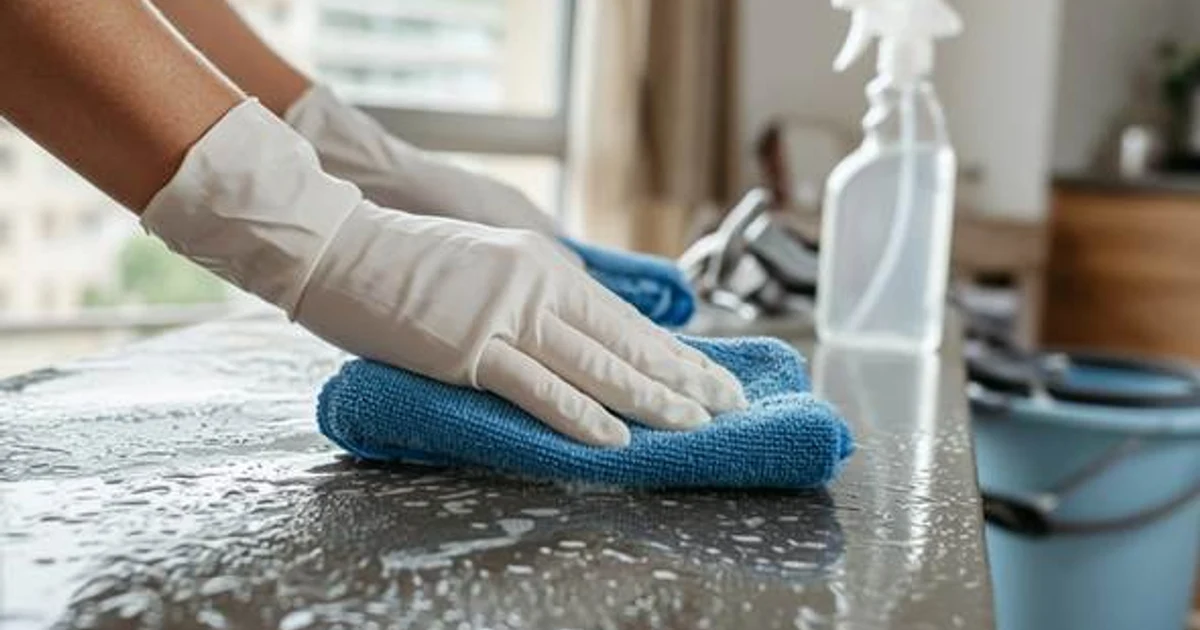
There is a silent change in habits in Barcelona flats. What a decade ago was a service associated with large homes in the upscale areas —having someone to clean at home— has become a regular expense in medium-profile households: working couples, families with children, professionals who work from home and do not want to spend Saturday vacuuming. The format that has taken hold is hourly cleaning: weekly or biweekly sessions of two to four hours, contracted from a company rather than an individual.
This is not just an anecdotal perception. The home services sector has been growing across Spain for years, driven by the double workday, an aging population, and a more recent phenomenon: remote work. Those who spend forty hours a week in their living room notice the house twice as much and dirty it twice as much. In Barcelona, where the price per square meter forces residents to maximise each space, homes have also become offices, gyms, and restaurants — and their maintenance is increasingly a task that more people prefer to delegate.
From word of mouth to online quotes
The traditional model —the trusted person recommended by a neighbour, paid in cash— still exists, but is losing ground for practical reasons. Without a contract or insurance, any incident (a broken window, a sick day, a holiday) becomes the homeowner's problem. And the responsibility is not minor: hiring someone off the books for domestic service exposes the household to fines and leaves the worker without coverage. The growing alternative is to hire a cleaning company in Barcelona that takes on that complete management: verified staff, registered and insured, replacements when the regular professional cannot attend, and a fixed hourly rate where the client knows exactly what they are paying.
Moreover, the sector has rapidly digitalised. The newest companies have eliminated the prior visit and cold quoting: the client describes their flat via WhatsApp or a web form and receives the price within hours, with subsequent communication —changes of day, incidents, extra services— resolved by message. This model mirrors what digital banks or online insurers have already normalised, applied to a sector that until recently operated with phone calls and notebooks.
How much does it cost to clean a flat in Barcelona in 2026
The market range in the city is currently quite narrow. Professional domestic cleaning hovers around 20 euros per hour, including products and travel, and companies usually apply discounts after a certain monthly volume. Prices below 15 euros should raise suspicion: at that price, a company that pays its workers cannot make ends meet.
With that reference, the actual expense of a household is easy to calculate. A weekly three-hour session —sufficient to keep a 70-80 square metre flat spotless— amounts to about 240 euros a month. A biweekly cleaning costs half that. One-off services are separate: a deep clean of an average flat ranges from 180-250 euros, a post-renovation clean is quoted per square metre (starting at about 8 euros), and move-in or move-out cleans —essential to recover the deposit in a rental market as tight as Barcelona's— usually close between 100 and 150 euros.
How many hours does a Barcelona flat need?
The reference that professionals use is indicative but useful: three hours weekly for a 70-80 square metre flat, four if there are small children or pets. Local architecture adds its own demands. Flats in Eixample or Gràcia, with ceilings over three metres, mouldings, antique carpentry, and hydraulic floors, accumulate more dust and require more time than a newly built flat of the same size —and some materials, like original hydraulic mosaic, require neutral products that do not damage the pigments, a detail that specialised companies know and home remedies often ignore.
And there is a local classic that is impossible to avoid: the blinds and the balcony. The dust and soot from a dense, traffic-heavy city necessitate including terraces, railings, and windows in the rotation much more frequently than in less compact cities. Anyone who has moved into a flat with a balcony on a street in Eixample discovers this in the first week.
The same phenomenon, inside companies
Outsourcing is not just domestic. With the widespread return to offices —whether fully or in hybrid models— offices and startups in the city have rediscovered that a clean workspace is part of the proposition to retain talent, and they hire office cleaning services with daily or alternate frequencies, almost always outside working hours to avoid interfering with activities. The 22@ district and the Glòries area, with their concentration of tech companies, are now among the most active sectors in Barcelona, alongside the classic office axis of Eixample and Diagonal.
For companies, the calculation differs from domestic —it is budgeted by frequency and area, with monthly contracts starting from about 300 euros— but the logic is the same: a professional service, with protocol, and someone who is accountable if something goes wrong.
What to look for before hiring
Liability insurance. This is the essential difference between a company and an individual: if something is damaged during the service, the company is responsible, not the client's wallet.
Continuity of the professional. Good companies always assign the same person to the same home. Trust and knowledge of the house —what products to use on each surface, where each item goes— become apparent from the third visit.
Included products and transparent pricing. Be wary of hourly rates significantly below market: they often hide separate travel costs, non-included products, or unregistered staff. The trend in the sector is moving in the opposite direction: a single rate, all-inclusive, and a written quote before starting.
Eco-friendly products. In homes with children, pets, or allergic individuals, more clients are demanding biodegradable and non-toxic products. This is no longer a premium extra: the most up-to-date companies offer it as standard.
The conclusion drawn from the sector's data is clear: in a city where free time is the scarcest commodity, paying not to clean has ceased to be a luxury. It is increasingly a fixed item in the Barcelona household budget —on par with the gym or streaming platforms, with one advantage: the results are visible as soon as you open the door to your home.

Trending on the web

You may also like