Since October 3, 2026, Law 8/2026, of July 2, for the eradication of asbestos has been in force in Catalonia. Among its new features is one that directly affects the real estate market: the certificate of presence or absence of asbestos, which must be provided when selling or renting a property.
The purpose is essentially informative. Those acquiring or renting a property must be able to know if there is asbestos in it at the time of the transaction. The law itself recognises this access to information as a right of citizens and also obliges professionals involved in the sector to ensure the delivery of the certificate.
How is it being applied?
Here appears one of the most relevant aspects: the law has come into effect before its regulatory development is complete. The future regulation must specify the definitive characteristics of the certificate and who is authorised to issue it.
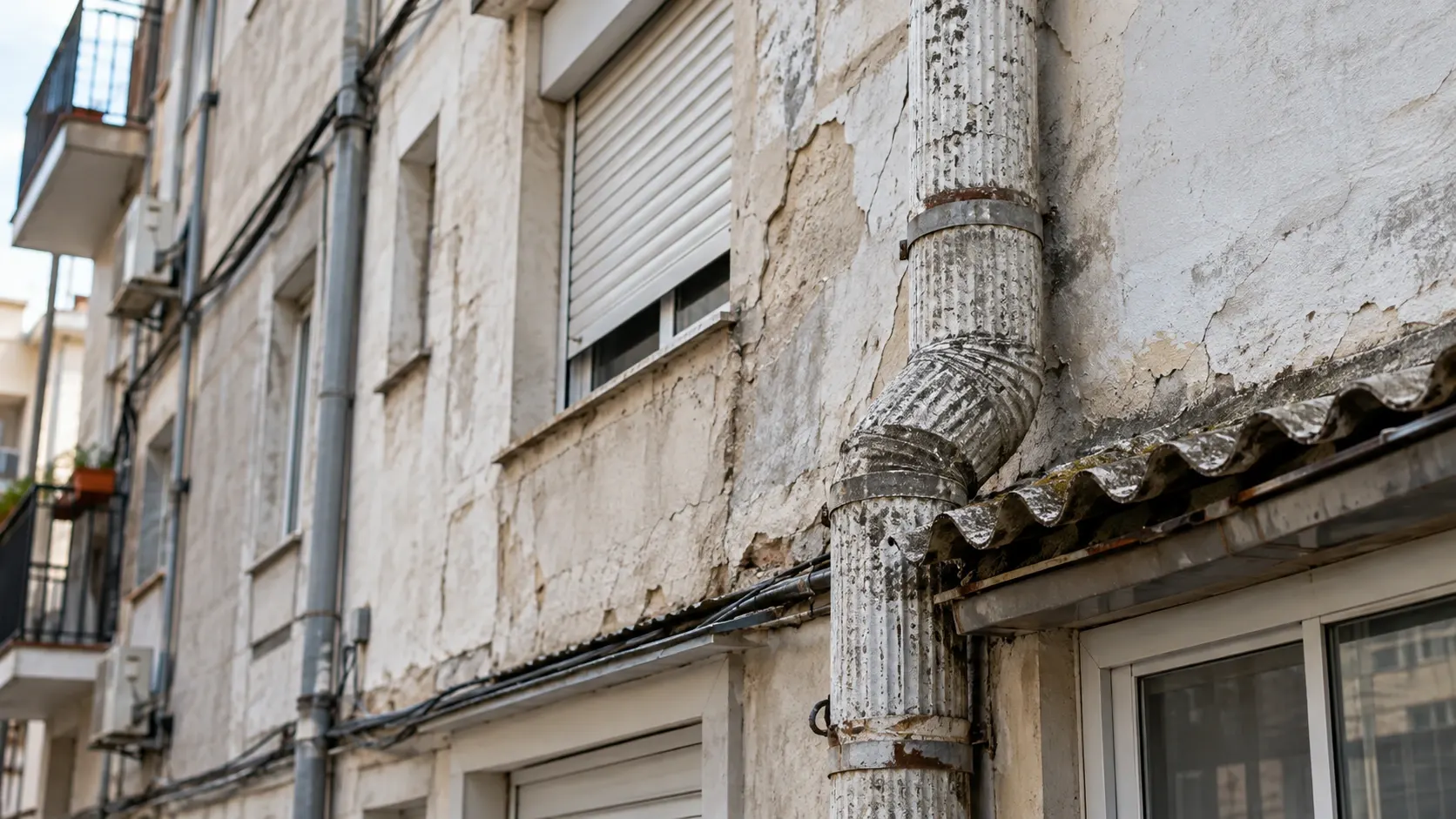
In the meantime, the Agència de Residus de Catalunya has published a basic model. According to its criteria, the obligation applies to properties built before 2002. The document must determine, at a minimum, whether there is visible asbestos and, when present, indicate the condition of the material and the risk it may pose to individuals. Architects, technical architects, engineers, and technical engineers can currently issue these certificates within their respective competencies.
There is an important distinction: a visual inspection can identify materials likely to contain asbestos, but confirming that a specific material actually contains asbestos may require laboratory analysis. The College of Technical Architecture of Girona has specifically highlighted this difference.
Moreover, if the transaction only affects an individual entity of a building — for example, a flat, office, or commercial space — the model from the Agència de Residus states that the certificate can refer exclusively to that unit.
A new factor for the real estate market
In practice, the certificate adds a new step to the sales and rentals of a significant part of the Catalan real estate stock, but it also provides information that may not have been available to buyers and tenants until now.
The days leading up to its enforcement revealed certain difficulties. idealista/news reported the concerns of notaries, registrars, financial entities, and property agents regarding issues such as processing, cost, or the practical scope of the requirement, especially in the absence of the definitive regulation.
From Fotocasa, on the other hand, the measure has been presented as a significant change in the documentation required for real estate transactions and as part of a broader framework aimed at identifying, managing, and progressively removing asbestos.
The common denominator is, therefore, twofold: there is consensus on the importance of knowing the presence of a hazardous material before buying or renting, while the main objections focus on how to implement this obligation efficiently and uniformly while the regulations are still being developed.
From the certificate to safe removal
The certificate should not be understood as an isolated measure. It is part of a law whose aim is to identify, control, and progressively remove materials containing asbestos, reducing the risks associated with exposure.
Detecting asbestos also does not mean it can be handled or removed without further ado. Its management requires specific procedures and qualified professionals. For owners and communities needing to transition from identification to intervention, resources like Lomills allow locating companies specialised in asbestos removal services in Barcelona, facilitating access to the right professionals to carry out these jobs in a controlled manner.
With the new law, the presence of asbestos thus ceases to be secondary information in a real estate transaction. The certificate introduces greater transparency in sales and rentals and, at the same time, serves as another piece of a much broader strategy: to locate existing asbestos and ensure that its management and removal are carried out with the necessary guarantees.

Trending on the web

You may also like