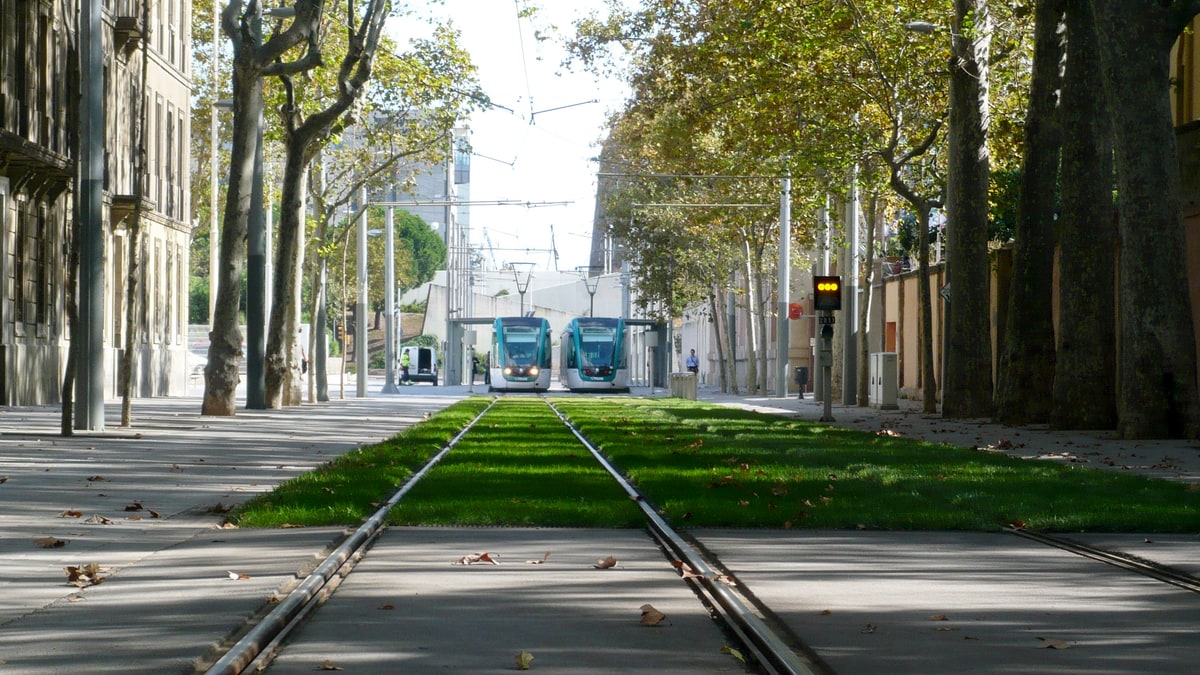
The Barcelona City Council and the ATM are tendering this week for the works to connect the tram between Verdaguer and Francesc Macià. The complete connection is expected to be operational in 2031.
The tender for the tram connection works between Verdaguer and Francesc Macià will be launched this week, as announced by the Barcelona City Council and the Autoritat del Transport Metropolità (ATM). The works are expected to last 40 months, aiming to start this summer.
The project will be divided into three blocks: the tram infrastructure, the redevelopment of the Diagonal, and a collector that, according to the council, will double the city's hydraulic capacity at a key point. The tender has been divided into 5 lots.
The total estimated investment amounts to €120 million from the council, of which €65.5 million will go to the collector and €54.5 million to the redevelopment. The ATM will contribute €97 million, financed by the Generalitat.
For residents, the most visible change will be the distribution of lanes. From Zona Universitària to Francesc Macià, the two inbound lanes will become bus lanes, and private traffic will move to the three lateral lanes.
During the works, according to the City Council, two lanes on each side will be maintained for private vehicles and buses, ensuring that traffic is not interrupted at any time. Only occasional closures will occur when absolutely necessary.
The redevelopment covers a stretch of 2.8 kilometres and an area of 115,000 square metres. The project plans for 16,000 square metres more for pedestrians and 18,900 square metres of new green space.
Additionally, 8,700 square metres and a four-metre-wide bidirectional bike lane will be reserved. On the sides, between paseo de Sant Joan and calle Pau Claris, motorised traffic will be reduced to two lanes in each direction.
Estimates place the journey between the two ends of the Diagonal at less than 40 minutes once the tram is complete. The first deputy mayor, Laia Bonet, highlighted the results of the first phase:
“We are talking about a network that, with just the first phase, has allowed a 30% increase in users, and the complete connection will enable 75 million trips per year.”
The winners of the tenders will be known in spring 2027, according to Bonet, and the total connection is expected for 2031.

Trending on the web

You may also like