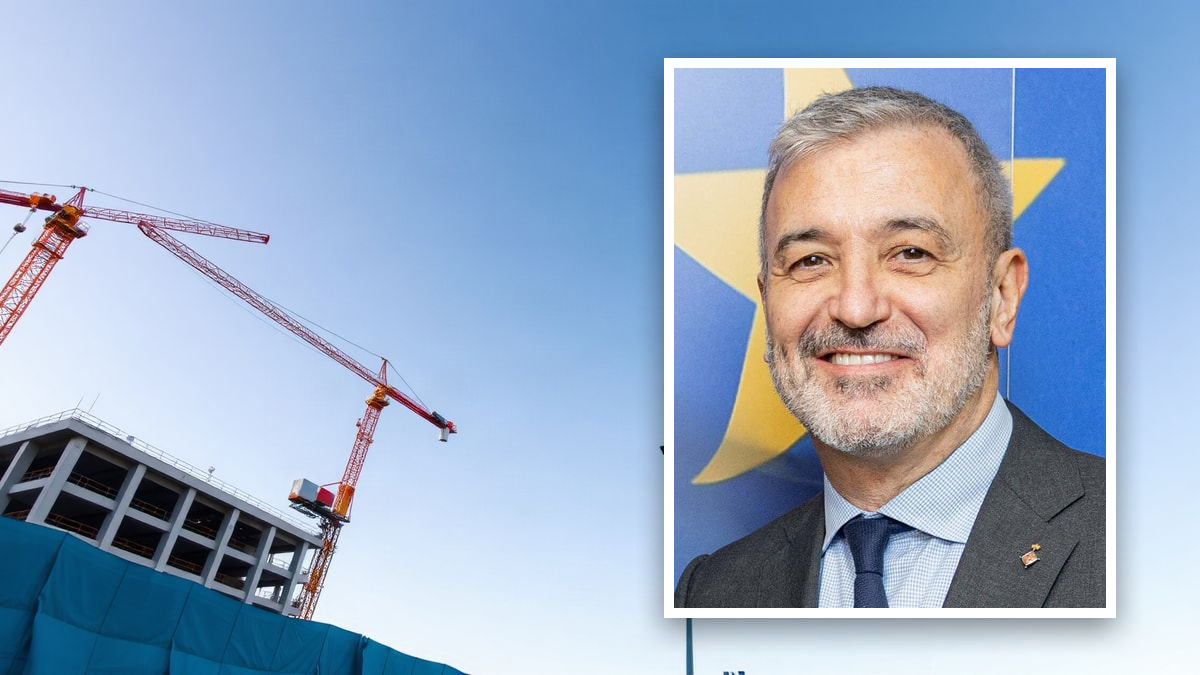
The Mayor of Barcelona, Jaume Collboni, has visited the works at DFactory Barcelona, which will expand from 17,000 m² to nearly 60,000 m². The inauguration of the expansion is scheduled for February 2027.
The Mayor of Barcelona, Jaume Collboni, toured the expansion works of DFactory Barcelona this morning, accompanied by the Deputy Mayor, Jordi Valls, and the Chief Architect of the Barcelona City Council, María Bohigas. The visit was guided by the Special State Delegate in the Consorci de la Zona Franca de Barcelona, Pere Navarro, and the General Director of the entity, Blanca Sorigué.
The tour started in front of the current building and continued through the ground floor of the Cubo building, designed for civic events, concerts, and exhibitions. The delegation also entered Building A, which will house laboratories, production centres, and offices for industrial innovation companies, and the ground floor of Building D, a service building that will function as a social centre for the district.
According to the schedule set by the consortium, the Cubo building will be completed by the end of November, with the installation of its large screen, and the urbanisation of the main avenue and the agora will be finished. In December, work will continue on the façades and roofs of Buildings A and D, as well as the surrounding area of both.
The works on Building B will begin in January 2027. The main milestone will arrive in February 2027, with the inauguration of the expansion. From March onwards, the Cubo building will host its first official event, and Buildings A and D will start operating, with the first companies expected between March and April.
“Barcelona has always been an industrial city, and we want it to remain so, adapting its industry to the great challenges of the 21st century,” stated Jaume Collboni.
The area of DFactory Barcelona will increase from the current 17,000 m² to nearly 60,000 m². The overall vision for the complex, called DFactory Barcelona District, is to reach 100,000 m².
Pere Navarro has argued that the city's industry must be innovative, digitalised, and sustainable, and integrate into the urban environment. For the residents and workers in the area, the change will mean new activities in the district, with a Cubo building open to events and a social space in Building D.

Trending on the web

You may also like