
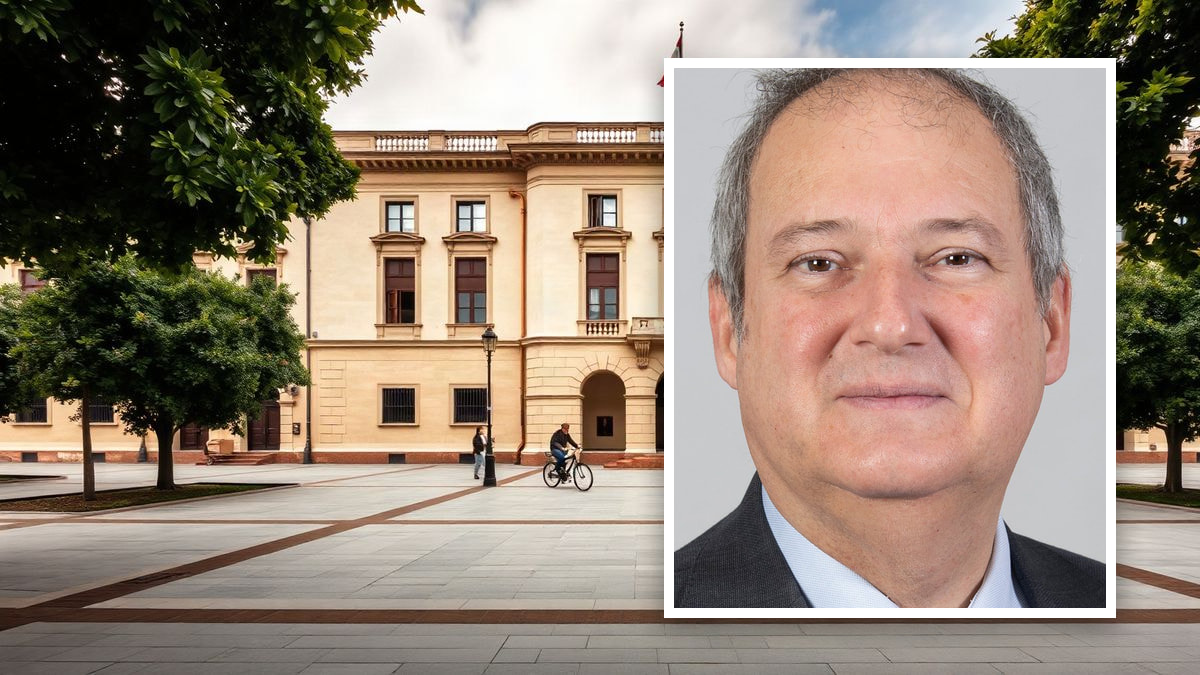
The PSC concentrates its campaign in municipalities it has governed for years, with L'Hospitalet de Llobregat as a major target. The party aims to mobilise an electorate that votes less than average in the city.
Pedro Sánchez's options to remain at the helm of the Government after the elections on 29 November largely depend on what happens in the metropolitan area of Barcelona. According to Crónica Global, the PSC has strengthened its campaign in cities it has been governing for decades, where theoretically it would not need extra effort to win.
These include L'Hospitalet de Llobregat, Santa Coloma de Gramenet, Sant Adrià de Besòs, Sabadell, Viladecans, and Sant Joan Despí. In almost all of them, the socialists have already made a stop or will do so in the next week and a half.
Candidate Jordi Hereu believes that these elections are different from previous ones, which forces the party to change its campaigning approach. It needs to explain the alternative to the continuity of the PSOE to voters who traditionally do not go to the polls and who may be attracted by Vox's proposals.
In the most populated municipalities, the PSC is directly competing with Santiago Abascal's party for undecided voters and abstentionists, which according to the party itself could lead to historic mobilisation. In Catalonia, the PP only contributed six seats to Alberto Núñez Feijóo's candidacy, compared to the 19 seats that the PSC mobilised for Sánchez in 2023. Vox aims for a surpass and the popular party fears falling behind.
The strategy has its contradictions. The PSC has withdrawn its Senate lists in the constituencies of Tarragona and Girona, a decision that has generated criticism, and the party's first secretary, president Salvador Illa, has had to defend the move on several occasions.
In L'Hospitalet, the PSC dedicated this Tuesday to the Samontà area, with the presence of the number two for Congress in Barcelona, Eva Granados. Hereu was not in the city because he had the Council of Ministers in Madrid. Samontà includes socially complex neighbourhoods like La Florida and La Torrassa.
The area concentrates nearly 140,000 people in just two square kilometres, and more than 35% of its residents are of foreign origin. In the last elections, fewer people voted there than in the rest of the city, where participation was 62%, 11 points below the Spanish average. The socialists aim to exceed 75%.
It is a territory that Vox considers its own, where it seeks to attract undecided voters with messages about insecurity, immigration, and job and housing precariousness. For the PSC, the challenge is to bring back to the polls an electorate that has voted less in those neighbourhoods.
Hereu urged in his speech that no one gets distracted and defended the Government's management:
«What is at stake on 29 November is continuing with a government that has increased the Minimum Interprofessional Wage (SMI) from 736 to 1,286 euros».
This increase was approved by the Council of Ministers in its meeting on the same Tuesday. The residents of L'Hospitalet and the rest of the municipalities in the belt will be able to vote at polling stations on 29 November.

You may also like