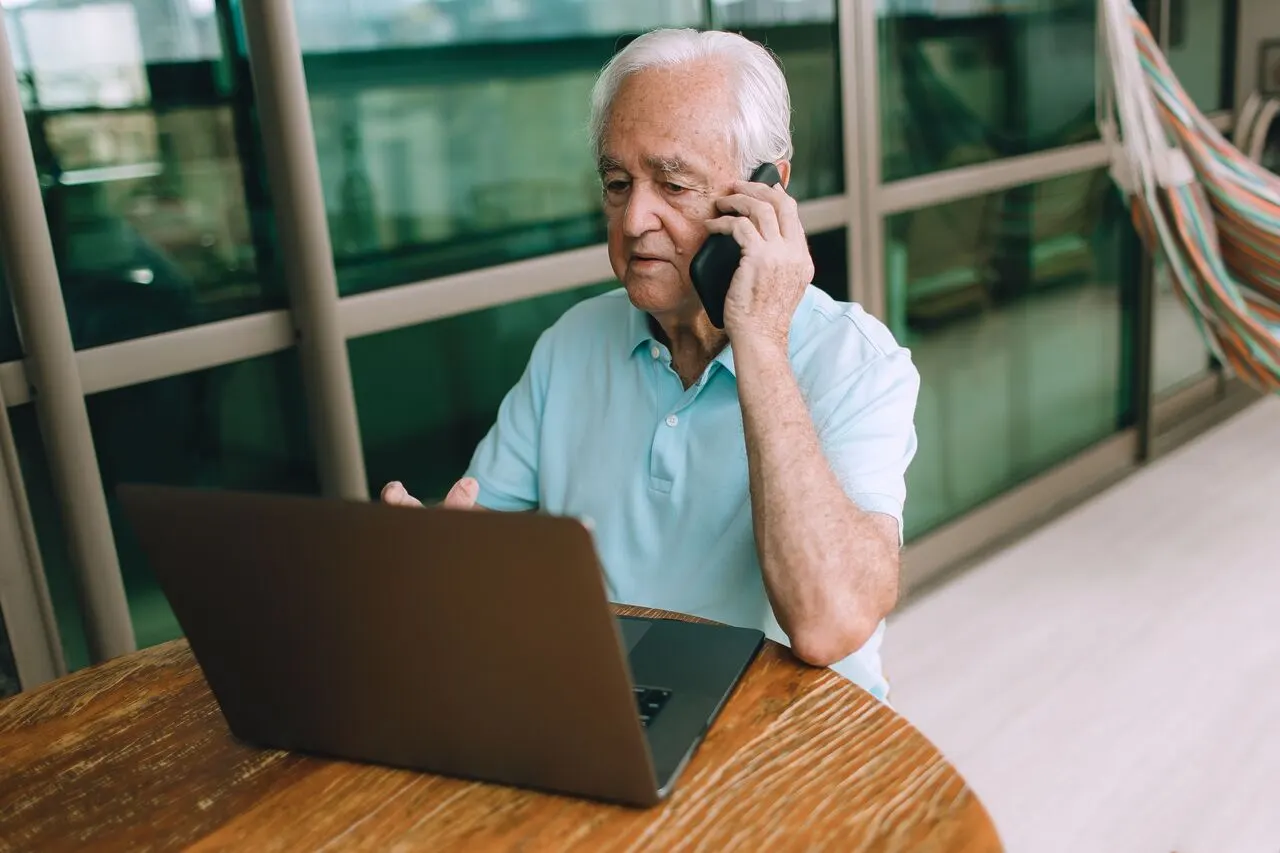
Living alone at an advanced age means being able to gain autonomy despite age. There are elderly individuals who do their shopping, go for walks, visit family, and manage their homes without daily assistance. However, concern arises unexpectedly in specific situations such as a fall, dizziness, or any mishap where it becomes difficult to reach the phone. Teleassistance was created precisely to shorten the response time in those moments.
The person has a system to request help and contact a care centre without having to make a conventional call. Depending on the contracted modality, they can use a button, a device installed at home, a mobile application, or a smartwatch.
How Does Teleassistance Work?
The most well-known systems incorporate an emergency button that can be worn as a bracelet or pendant. Pressing it establishes communication with the care centre, where a professional assesses what is happening and acts according to the situation. If necessary, family members can be notified or the appropriate emergency resources mobilised.
Technology has significantly expanded these possibilities. A teleassistance service for the elderly can currently include care both inside and outside the home, geolocation, activation by voice, or applications for family members. SICOR Teleassistance El Corte Inglés, for example, offers home and mobile solutions, as well as features like medication and appointment reminders, follow-up calls, and telephone guidance from various professionals.
This evolution is particularly important for those who maintain an active lifestyle. The traditional system was very home-bound. Mobile devices allow coverage to continue during a walk, a visit, or a trip to run errands.
In What Situations Might It Be Recommended?
Age, in itself, says little. Two people aged 75 may have completely different needs. To assess teleassistance, it is advisable to observe how each person lives and what difficulties may arise in their routine.
It can be especially useful when an elderly person spends many hours alone, has mobility issues, or a history of falls. It is also an option that families often consider when they live far away or cannot be available permanently.
Another common scenario arises when there are lapses in medication or medical appointments. Some services allow for scheduling reminders and making follow-up calls. In these cases, the utility goes beyond responding to a specific emergency and enters the realm of daily companionship.
Autonomy Also Matters
Installing teleassistance at home may initially generate some resistance. Some interpret the button as a sign of dependence when they still feel perfectly capable of organising their life. Presenting it as a support tool, rather than a form of surveillance, helps to better understand its purpose.
The decision should always, if possible, include the opinion of the person who will use the service. It is also advisable to explain how the device works, practice making a call, and ensure they know how to use it correctly. A button kept in a drawer is of little use when an emergency arises.
For family members, these systems provide another practical element. Some modalities include applications from which they can know the user's location, always under the corresponding conditions and authorisations, or establish safety zones. This can be useful in certain cases of disorientation during outings.
Finally, there is a basic issue that deserves to be remembered, which is that teleassistance complements the family, healthcare, or professional support that a person may need, but does not replace in-person care when it is necessary.
Its main value is to maintain an accessible help channel while the person continues with their daily life. For someone who wishes to continue living in their home, preserving their habits, and moving independently, knowing that they can request assistance with a simple gesture can provide security for both them and their surroundings.

Trending on the web

You may also like