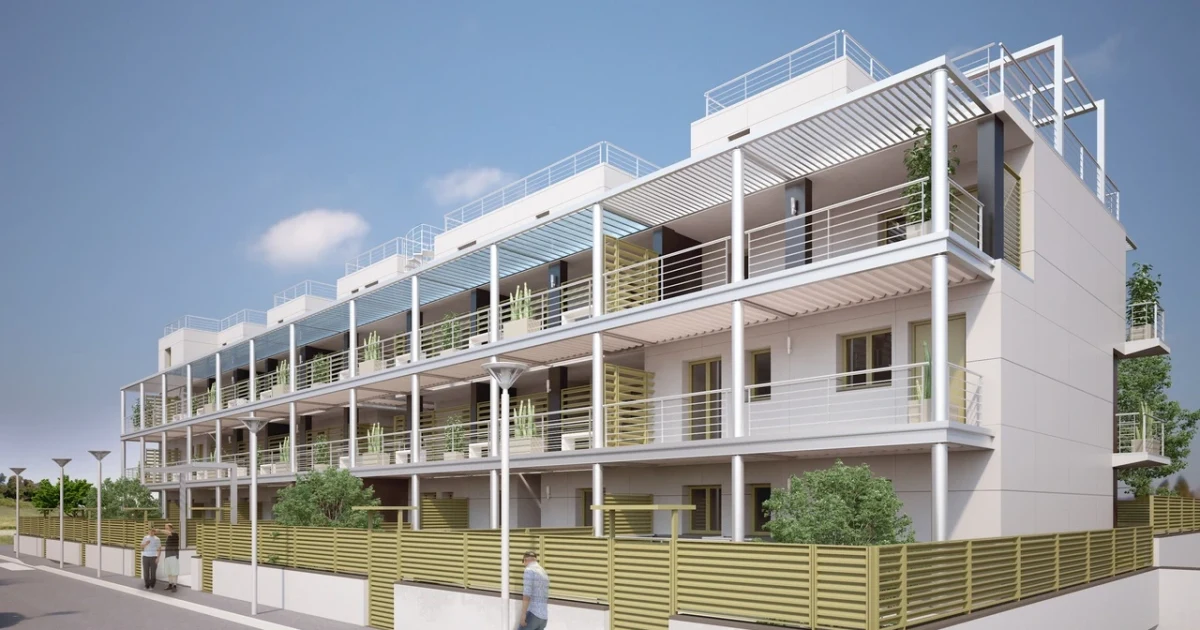

In Catalonia, the single-family housing model is in decline. According to a recent analysis by the Agència d’Habitatge de Catalunya, only 18% of new constructions are single-family homes, a figure that starkly contrasts with the 35% they represented a decade ago. This change reflects a trend towards urban densification promoted by authorities such as president Salvador Illa.
Densification versus Suburban Expansion
Over the years, especially between 1985 and 2005, more than 200,000 single-family homes were built in Barcelona, but the 2008 crisis marked a turning point. Since then, growth has been minimal, and townhouses have lost prominence to apartment blocks. Geographer Francesc Muñoz, director of the Observatori de l’Urbanització, explains that this type of construction was popular in past decades due to its appeal as an affordable alternative for those looking to escape the high real estate costs in Barcelona.
Despite a slight uptick in construction since 2014, the total number remains low. In recent years, around 3,000 single-family homes have been built annually. Most are located in areas such as Lleida, some municipalities in the Pyrenees, and coastal areas like the Costa Brava. However, these numbers are far from reaching pre-economic collapse levels.
As time goes on, housing preferences are also changing. Detached houses have begun to gain ground over townhouses, becoming the most desired option among buyers. This trend can be attributed to their perception as more exclusive products and less vulnerable to economic fluctuations.
“The detached house is a very exclusive real estate product,” says Muñoz.
However, this preference poses significant urban planning challenges. Professor Alejandro Giménez Imirizaldu, an urbanism expert, warns about the environmental and social implications of this dispersed residential model. “If we all aspire to this, we will run out of planet in two days,” Giménez points out.
As Catalonia seeks solutions to improve its urban infrastructure and reduce its ecological footprint, there is an urgent need to reconsider how these suburban areas are developed. The lack of adequate public transport has left many residents dependent on cars, thus increasing pollutant emissions.
“Water consumption per person can be three or four times higher in areas with a high proportion of single-family homes,” warns Muñoz.
Addressing these challenges requires not only a reevaluation of the current model but also innovations that allow for better integration of these dispersed communities within the existing urban fabric. Alternatives such as selective densification or creating more functional suburban centres that offer adequate services without sacrificing environmental quality are proposed.
As we move towards a new urban era, it is crucial to find effective ways to adapt existing infrastructures and promote greater sustainability without falling into nostalgia for outdated past models. The key will be to rethink how to rebuild and connect dispersed territories to create more cohesive and resilient communities in the face of future economic and environmental challenges.
Although the path towards sustainable urbanization is complex, it is clear that Catalonia must face these changes with vision and innovation if it wishes to ensure a livable future for its citizens.

You may also like