
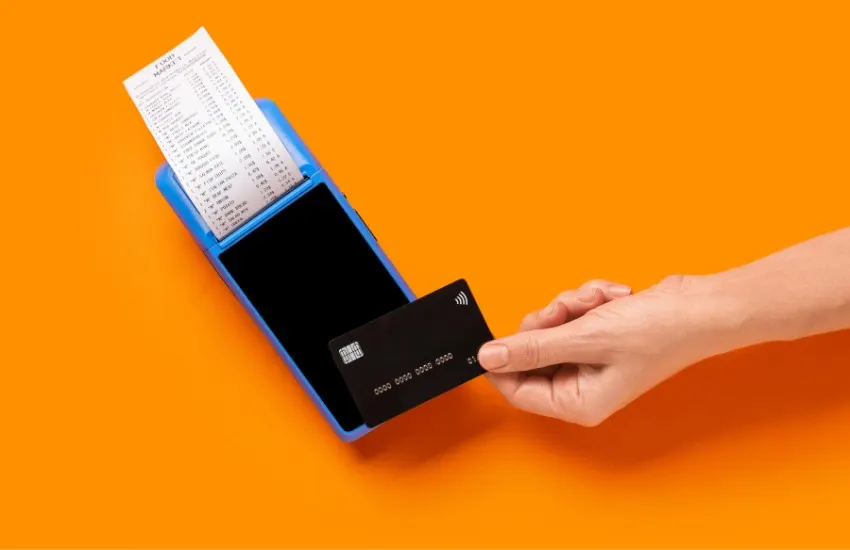
A twenty-year-old man was arrested on August 25 in Barcelona, accused of eight scams amounting to around €13,000 in the vicinity of Sants station and Eixample. The method was the same in all cases: he showed a supposed payment receipt or a banking app on his mobile screen, and the seller handed over the product, convinced that the money was on its way. It never arrived. The case, reported by EFE at the end of August, summarises a trend that the Mossos d'Esquadra have been describing for months: scams are increasingly infiltrating the payment process, rather than the product itself.
Four Cases in Four Months
The list for the year in the city is long and varied. In May, the Sant Martí investigation unit arrested two individuals who, using stolen mobiles, made transfers, payments via Bizum, and online purchases totalling €14,600, with the help of third parties who lent their accounts. In July, the Horta-Guinardó unit dismantled a network in Cerdanyola, Mollet, Ripollet, and Montcada that had used 1,600 identity documents belonging to others to obtain over €131,000 in twelve days. In August, the arrest for the fake receipts. And on September 14, in Sarrià-Sant Gervasi, the Mossos thwarted a $418,000 cryptocurrency operation set up with the pattern known as RIP Deal, in which the perpetrators only managed to collect a thousand.
Four different modalities with a common denominator: in all cases, there was a moment when someone believed the payment was real. The network dismantled in July illustrates how far the method can go. With third-party identity documents, the arrested individuals opened accounts, applied for consumer loans, and contracted services in the names of people who only discovered the fraud months later when they received a debt claim for something they had never contracted. In twelve days, the network obtained over €131,000 and had €13,500 in cash seized. It is the industrial version of what the Sants arrestee was doing by hand: presenting a document, receipt, or identity as authentic when it was not.
Knowing Who You Are Paying
These scams attack trust in the payment method. A receipt on a screen is just an image, an app with the bank's logo can be anything, and an account in the name of a third party is a red flag in any purchase. The useful verification, therefore, falls on the person receiving the payment. Before moving money, it is advisable to know which second-hand platform holds the amount until delivery, which banking app is the official one, which online store uses its real domain, and in the realm of screen entertainment, which online casinos are reliable, a question that rankings like Estafa.info answer with a list of authorised operators in Spain and their evaluation criteria, a sector exclusively accessible to adults, with spending limited from the account itself.
None of these verifications require technical knowledge. They require time, usually less than it takes to complete the purchase, and a rule that investigators repeat in every case: payment is confirmed in the account of the person receiving the money, not on the screen of the person paying. A seller who waits to see the deposit in their bank before handing over the product has nothing to fear from a fake receipt.
The Mossos' Method
The Mossos' Virtual Police Region has summarised their advice in three verbs: do not click, do not download, do not call. This applies to the link received via SMS, to the app that requests installation from the supposed buyer, and to the number that needs to be called to "confirm" a payment. The force has also warned that scams related to online purchases spike during the Christmas period, and that unknown charges on cards, accounts, and Bizum account for nearly 60 percent of the cases they handle, with individuals aged between 46 and 64 being the main victims. By November 30, 2025, the Mossos had recorded 73,489 cyber scams in Catalonia, and in the Vallès region, the figure for Sabadell, 1,828 cyber crimes throughout 2025, gives an idea of the scale in a single medium-sized city.
The most recent case in the city, the $418,000 luxury watch fraud thwarted by the Mossos, shows the same mechanism in the high-end market: a cryptocurrency transaction that the perpetrators presented as completed and which never took place. The Mossos press release details how it was blocked.
When the Money Has Already Left
If the payment has already been made, it is essential to notify the bank immediately to try to block the transfer, then report to the Mossos providing the advertisement, the seller's profile, and the receipt, and, if there is a company behind it with a name and NIF, claim to the Agència Catalana del Consum. This summer, the agency published instructions for families affected by the closure of a travel agency in L'Escala, a case that this newspaper followed when the Mossos investigated the scam that affected 200 families, and the procedure was the same: report first, claim afterwards.
Catalonia closed 2025 with 73,179 cases of cybercrime, a 3.8 percent decrease from the previous year, with computer scams as the main modality. The Mossos recommend reporting every attempt, even if it has not been completed, so that the pattern is recorded.

Trending on the web

You may also like