
The Catalan transport company Sagalés, founded in 1641, operates nearly 800 buses in Catalonia and the Balearic Islands, generated over 100 million in 2025, and employs 1,800 people. It now faces the electrification of its fleet and the challenge of autonomous buses.
The transport company Sagalés celebrates 380 years of activity with a fleet of nearly 800 buses serving a large part of Catalonia and the Balearic Islands. The company, based in the province of Barcelona, generated over 100 million euros in 2025 and employs around 1,800 people, according to elconfidencial.com.
At the helm of the company is Ramón Sagalés, representative of the thirteenth generation of the founding family. Its history dates back to 1641, when Ramón's ancestors were traginers (carriers) who transported wool to supply the markets of Barcelona. Over time, the business shifted towards ice: they took advantage of nearby ponds to extract frozen blocks that were taken to the old market of Borne, where they were used to preserve meats and other foods.
For nearly two centuries, ice transport was the main activity until the advent of electricity and domestic refrigerators in the 19th century put an end to that business. The family reinvented itself when locals began asking them to take them in their carriages to the market. This improvised service marked the shift from goods transport to passenger transport.
“With the arrival of domestic refrigerators, the business ceased to make sense,” summarises Ramón Sagalés.
In 1920, horses were replaced by the first gasoline buses. The Civil War interrupted growth: the republican side seized the company and allocated its vehicles for troop transport. After the conflict ended, the family had to start practically from scratch. “We went to the French border to recover what was left of the buses, and with two of them completely wrecked, we managed to assemble one that could circulate again,” Ramón recalls.
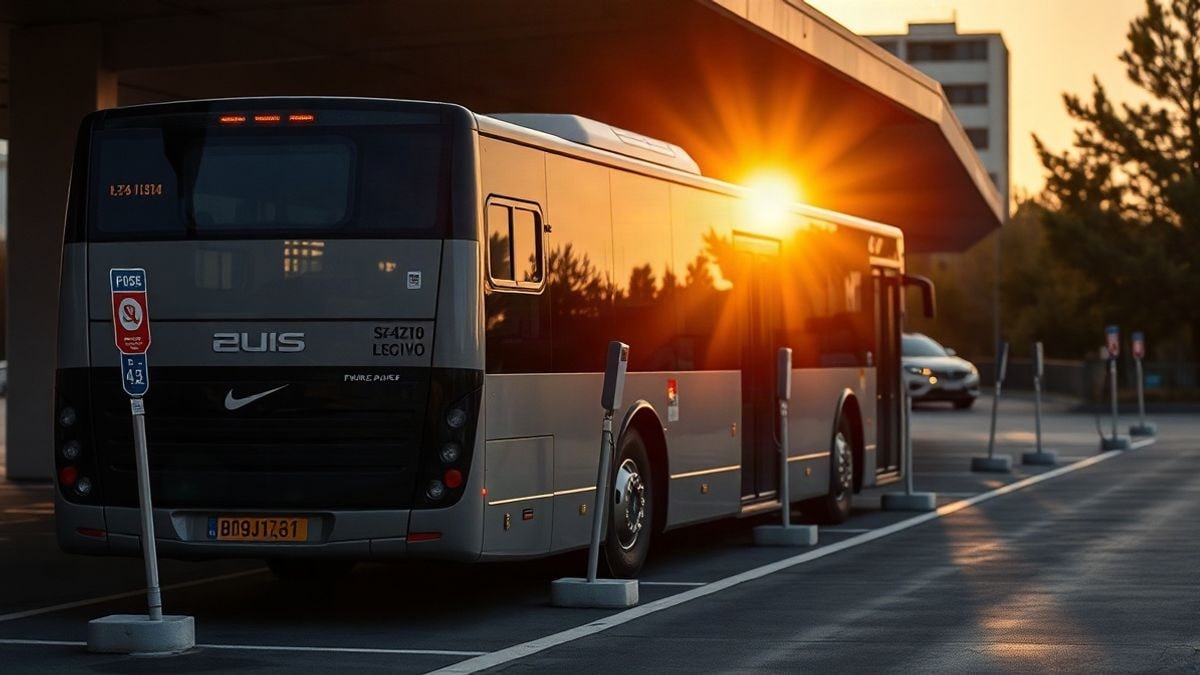
Now, the challenge is electrification and data management. Sagalés already has between 30 and 40 electric buses, nearly 3% of its fleet, and is adapting its garages with new charging points. The company has also tested technologies such as hydrogen, although for now it is betting on carbon-neutral fuels (HVO) and higher-capacity batteries.
In parallel, the company is strengthening its systems department to centralise information and connect its tools. “The department that will grow the most in the coming years will be systems and technology,” assures Ramón. The goal is to advance towards the autonomous bus and anticipate breakdowns through predictive maintenance systems.
The company began a modernisation strategy in 2018 that is now accelerating. For the residents of the Catalan municipalities where it operates, the fleet renewal will translate into quieter vehicles with fewer emissions on routes connecting regional capitals with Barcelona and other cities. The company has not specified timelines for the mass incorporation of electric buses but maintains its plan to adapt garages and expand charging points.

Trending on the web

You may also like