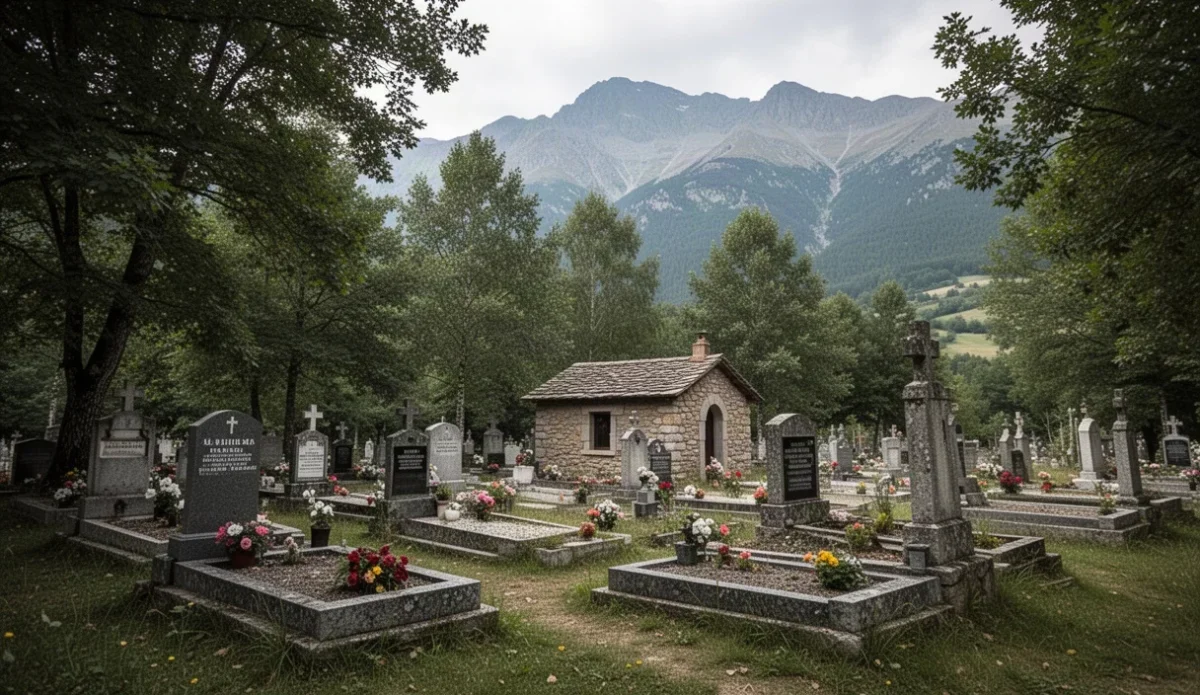
The tiny village of Bausen has gained attention for its civil cemetery dedicated to a tragic love story. This site, recognized as a cultural asset, reflects the community's deep connection to its past.
In the remote village of Bausen, nestled in the Val d’Aran region of Catalonia, a poignant tale of love and defiance has taken root in the form of a small civil cemetery. This site, dedicated to Teresa Estampa and Sisco Bugat, symbolizes not only their enduring love but also the community’s resistance against societal norms that sought to separate them.
Bausen is one of the northernmost municipalities in Catalonia, with just around sixty registered residents. Its isolation has preserved its quaint charm, characterized by cobblestone streets and traditional wooden homes with slate roofs. The village is surrounded by breathtaking natural landscapes that attract visitors seeking tranquility and connection to history.
The legend begins with Teresa and Sisco, who were born just months apart in 1883. Their romance faced obstacles due to their familial ties as second cousins. When they sought permission to marry from their local priest, Joaquín Tellosa, they were met with demands for an expensive dispensation from Rome—a fee they could not afford. Instead, they opted for a civil wedding on April 5, 1907.
Tragically, Teresa passed away at the young age of thirty-three due to chronic illness on May 10, 1916. In an act that reflected both community solidarity and rebellion against clerical authority, the villagers constructed a simple grave for her after Tellosa refused her burial in sacred ground due to her non-traditional marriage. They built four stone walls around her resting place in just hours and inscribed on her tombstone: “To my beloved Teresa.” This act turned into a cherished symbol of love within Bausen.
“A small cemetery can hold great stories,” said local historian Joan Carles Riera Socasau during his research into this unique site.
The cemetery has since been recognized as a cultural asset since 2020 and remains well-maintained by locals who honor Teresa’s memory each year. The descendants of Sisco and Teresa continue to visit Bausen from France where they settled after fleeing during the Spanish Civil War.
Riera Socasau’s investigation into this historical narrative reveals complexities surrounding their story. While it is widely accepted that there was tension between Sisco and Tellosa over their marriage choices, historical records suggest that obtaining a dispensation may have been more feasible than previously thought given that many marriages in Bausen had similar familial connections.
Moreover, Riera points out discrepancies regarding why Teresa was denied burial in consecrated ground; it appears more likely she was buried there due to judicial orders rather than clerical refusal alone. His findings challenge previous assumptions about Bausen’s status as home to possibly the smallest civil cemetery in Spain or even its singularity within Val d’Aran.
The annual celebration of Sant Ròc on August 16 further cements Bausen’s cultural identity. Locals gather at the chapel dedicated to this patron saint known for protecting against plagues—a fitting homage considering the trials faced by past generations.
Visitors looking to explore this enchanting village can find it approximately thirty minutes from Vielha by car. The journey offers scenic views through mountainous terrain leading directly into Bausen’s picturesque landscape filled with history waiting to be uncovered.

You might also be interested in