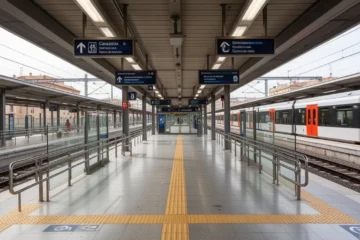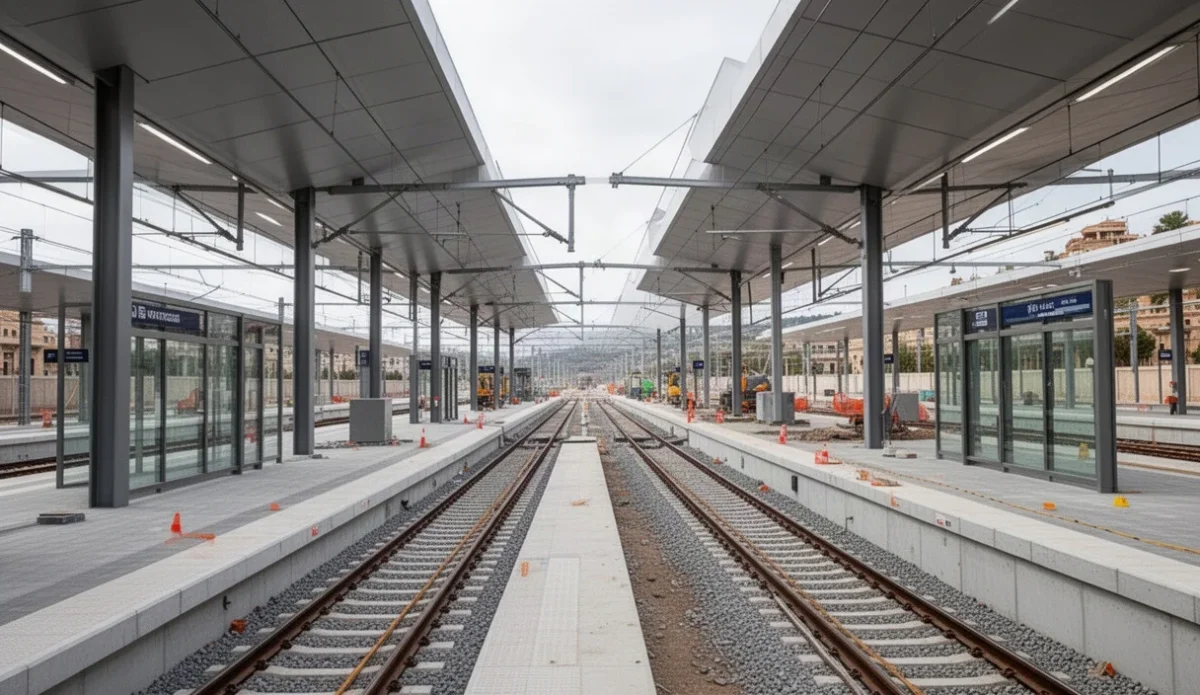
The Catalan government aims to manage all 200 Rodalies stations, currently owned by Renfe and Adif, as part of a broader infrastructure overhaul. This move is expected to enhance service reliability and passenger experience.
The Catalan government is set to assume control of all 200 railway stations in the Rodalies network, a significant shift aimed at improving service quality for commuters. Currently, these stations are owned by Renfe and Adif, but under new agreements, the newly established company Rodalies de Catalunya will manage them starting with the R1 line.
This transition comes as part of a long-term investment plan initiated in December 2020, which promised an initial budget of €6.346 billion, later increased to €8.037 billion. The goal is clear: end decades of neglect in Catalonia’s railway infrastructure and boost passenger numbers by 50%.
The current administration has reported that approximately 70% of the planned investments are underway, focusing on enhancing tracks, electrification systems, and introducing new trains expected to operate by 2027. However, despite these advancements, many users still feel that improvements have yet to be realized.
Sílvia Paneque, the current Minister of Territory and the fourth person to hold this position in a decade, emphasized that future investments will prioritize projects with immediate positive impacts on services. Recent surveys indicate that Rodalies remains one of the least favored transport options among Catalans.
The ownership structure reveals that out of the total stations, 94 belong to Adif, while 106 are under Renfe’s jurisdiction. The majority are located outside Barcelona’s metropolitan area. Notably, key stations like Passeig de Gràcia and Sants fall under Adif’s management.
The R1 line will be the first transferred to Rodalies de Catalunya as per agreements made between PSOE and ERC in November 2023. This transfer includes all associated stations since they are currently managed by Renfe.
This change reflects a broader strategy where other lines such as R4 will also follow suit. The R3 line presents unique challenges due to its mixed ownership; however, it remains a priority for investment due to urgent infrastructural needs.
A number of stations have already undergone significant renovations including Colera and Port Aventura. These upgrades focus on accessibility improvements such as new elevators and expanded platforms capable of accommodating longer trains with increased capacity.
The ongoing projects include major works at Sagrera station—expected completion by 2032. Other enhancements aim at addressing historical grievances related to rail access in areas like Sant Feliu and Montcada.
The construction efforts extend beyond just transfers; new stations are being developed at locations like Reus Bellissens and Parets del Vallès while others remain in project drafting stages across Girona and Tordera.
A particularly noteworthy project is underway at Molins de Rei station after years of delays due to multiple bidding processes. With an investment exceeding €9 million planned for its completion by summer 2027, this station aims to facilitate better connectivity for R1 line trains currently terminating at L’Hospitalet de Llobregat.
This ambitious overhaul signifies not only a shift in operational management but also reflects a commitment from the Catalan government towards modernizing public transport infrastructure—a critical aspect for enhancing daily commutes across the region.

You might also be interested in