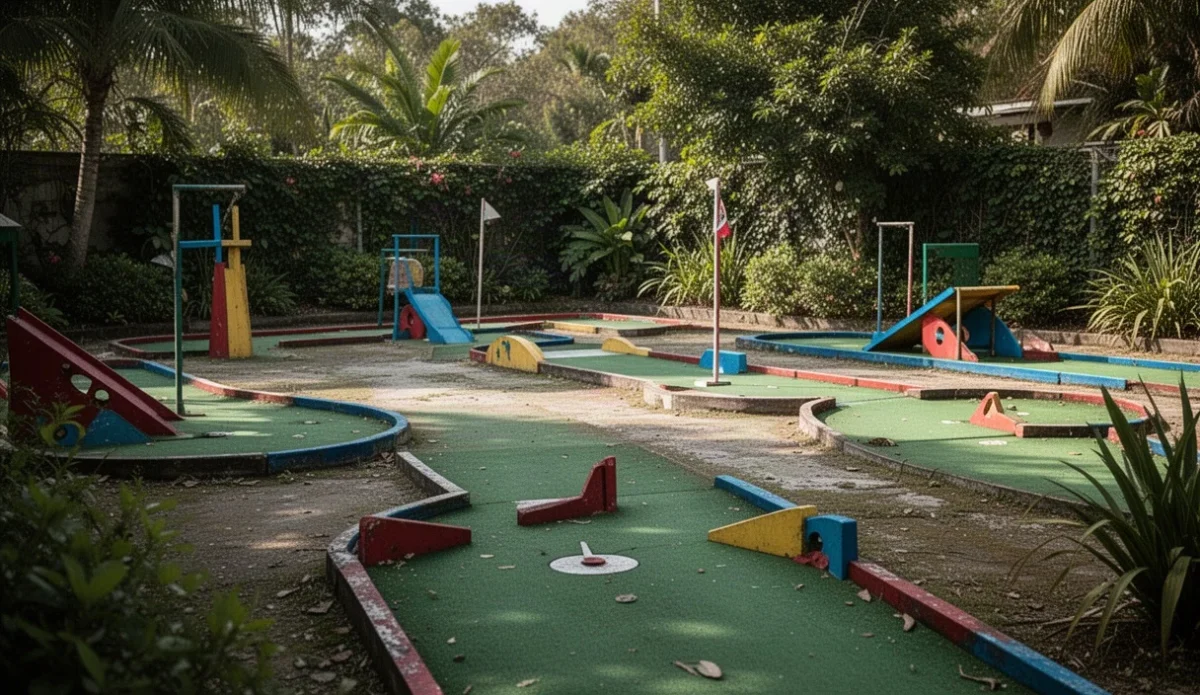
The absence of minigolf courses in Barcelona highlights a cultural disconnect as the sport thrives elsewhere. Local enthusiasts seek alternatives outside the city limits.
Barcelona, a city renowned for its vibrant culture and diverse recreational offerings, surprisingly lacks any minigolf facilities. While other countries celebrate this leisure activity with dedicated federations and championships, in Barcelona, minigolf has become a mere footnote in summer activities. The city’s historical relationship with the sport reveals a stark contrast to its current state; just over a century ago, it was a favored pastime among the aristocracy.
The decline of minigolf in Barcelona is evident as residents seeking this unique experience must venture far beyond city limits. The nearest course is located at Karting Minilandia, nestled along the Castelldefels highway. This facility features 18 holes, recently renovated to include various obstacles and charming miniature constructions. However, it lacks some of the whimsical elements that once characterized traditional minigolf courses.
Further afield, options abound for those willing to travel. In Sitges, El Vinyet offers earthy holes that have also seen recent improvements. Salou’s Los Peces stands as a classic destination on the Costa Daurada, while Bowling Golf Calella caters to northern tourists eager for an engaging round.
The roots of minigolf in Barcelona trace back to the early 1930s when it first captured public interest. Historical archives reveal that on January 9, 1931, La Vanguardia announced plans for a miniature golf course on Calle Esperança in what is now La Bonanova neighborhood. By April of that year, another course opened at Golf Condal on Rambla de los Estudios—an event described as attracting considerable attention from high society due to its aristocratic appeal.
During that era, several venues introduced mini-golf experiences across the city: from Hotel Orient’s festive hall to Montjuïc’s Maricel Park and even Tibidabo amusement park between 1931 and 1939. However, these establishments were short-lived; by mid-century, only sporadic attempts kept the spirit alive until they too faded away.
A notable resurgence occurred in 1953 at Sala Bikini—an entertainment venue aiming to replicate American-style leisure with bowling and mini-golf under one roof. Unfortunately, this establishment succumbed to urban development during Barcelona’s Olympic preparations in the early ’90s.
The last significant attempt came with Central Golf at Maremagnum—a rooftop course featuring nine artificial grass holes—but it disappeared early in the new millennium. Today’s landscape leaves many wondering why such an enjoyable pastime has not taken root again within city limits.
José Luis Hinojosa, president of the Spanish Minigolf Association—a largely amateur organization—attributes this stagnation to multiple factors: limited demand for mini-golf compared to traditional golf and insufficient public support since it lacks Olympic status. He notes that unlike countries like Sweden or Germany where enthusiasm thrives regardless of weather conditions or sports recognition,local preferences lean heavily towards conventional golf.
This cultural gap raises questions about how cities can adapt their recreational offerings to meet evolving interests while still honoring historical traditions. For those determined not to miss out on this quirky sport while living in Barcelona,planning trips outside city boundaries may be necessary.

You might also be interested in