

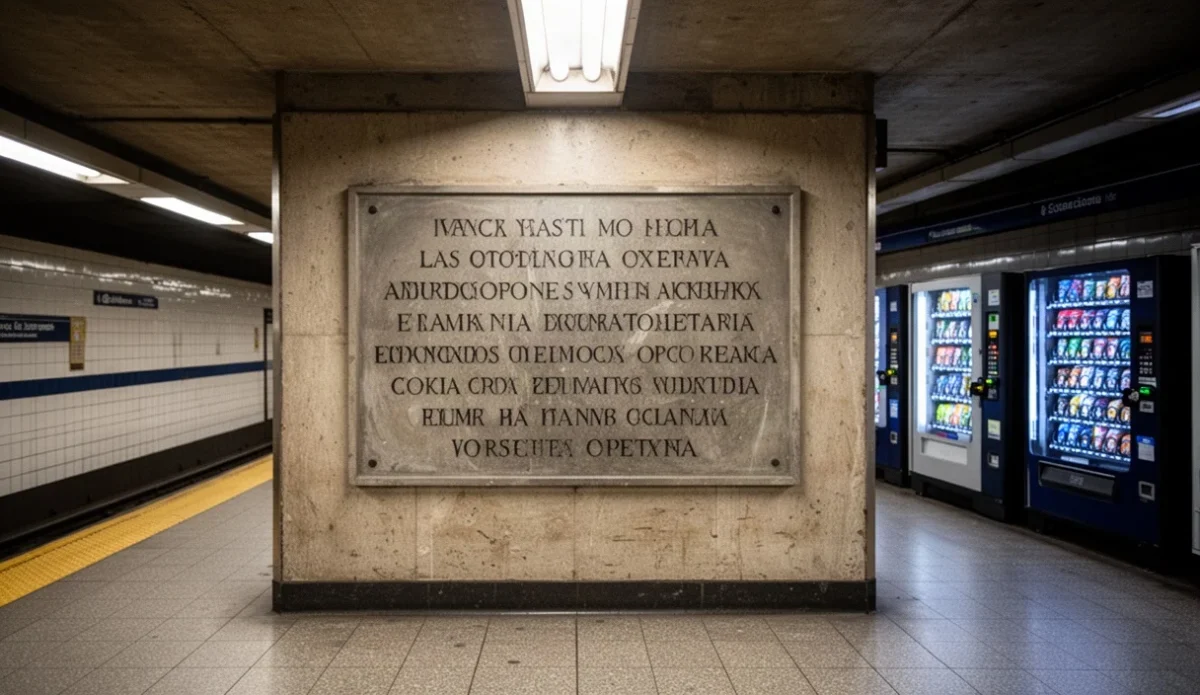
A new plaque at Espanya station commemorates Esteve Terradas, the engineer behind the city's Transversal metro line, built during a politically charged era. The tribute is notable for its use of Latin and indirect reference to Terradas.
A century after its construction, a plaque honoring Esteve Terradas has been unveiled at the Espanya metro station in Barcelona. This tribute marks the significant contribution of the engineer who was instrumental in developing the Transversal line, which connected Plaça Catalunya to La Bordeta. Uniquely, the inscription is presented in Latin and refers to Terradas indirectly as “a Barcelonan author born of our good race,” omitting his name entirely. This choice raises questions about historical recognition and cultural memory.
The Transversal line was originally conceived as an underground railway linking various train companies across Barcelona. Construction began in January 1924 and concluded in January 1926, coinciding with a tumultuous period under dictator Miguel Primo de Rivera. The project not only transformed public transport but also played a crucial role during the International Exposition held in Montjuïc in 1929.
Terradas took over the project in early 1923, reimagining it from a simple railway link into what would become one of the world’s largest metro systems. At that time, the vault of Espanya station boasted an impressive diameter of 27 meters, making it a remarkable engineering feat.
The significance of this development cannot be understated; it marked one of Barcelona’s most transformative periods until the Olympic Games in 1992. The metro system facilitated access to key areas and reshaped urban mobility for generations.
However, this homage comes with historical complexities. The plaque’s installation aligns with aesthetic choices imposed by Primo de Rivera’s regime, which sought to appropriate public projects for propaganda purposes. Notably, architect Josep Puig i Cadafalch was removed from his position overseeing the exposition project as part of broader efforts to centralize control over cultural narratives.
Despite its historical importance, many passersby may overlook this plaque due to its discreet placement above vending machines on the platform leading to Fondo. It serves as both a reminder of Barcelona’s rich engineering heritage and an invitation for reflection on how history is remembered—or forgotten—in public spaces.
For those interested in exploring this piece of history firsthand, Espanya station can be accessed via Line 1 or Line 3 of Barcelona’s metro system. Visitors are encouraged to take note of this unique tribute while navigating their journeys through one of Europe’s most vibrant cities.

You might also be interested in


