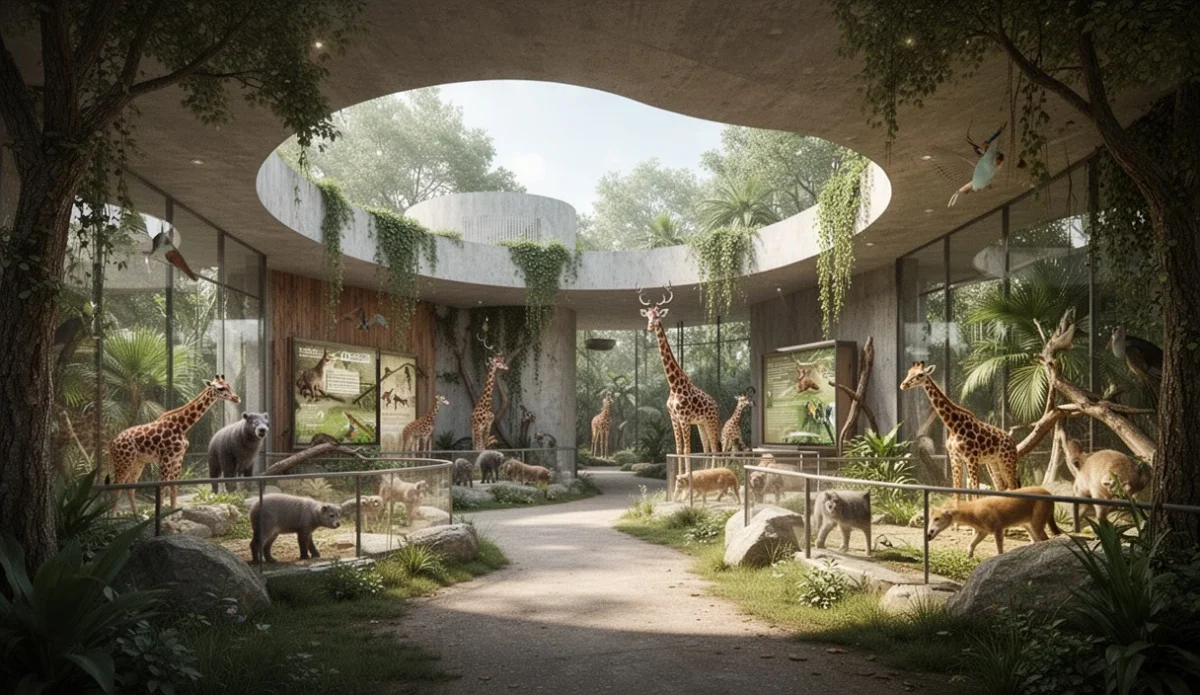
Five international teams have been shortlisted to design the Bioscope, a new facility at Barcelona Zoo aimed at educating visitors about biodiversity. The project represents a significant investment in conservation and scientific research.
The Barcelona Zoo has announced the selection of five finalist teams competing to design the Bioscope, an ambitious new facility dedicated to exploring the origins and evolution of life on Earth. This initiative is part of a broader strategy to transform the zoo into a leading center for biodiversity preservation, with an expected opening in 2030.
The competition attracted 14 submissions from around the globe, showcasing a diverse array of architectural and museographic expertise. The finalists will now develop their proposals, which will be evaluated based on architectural quality and their ability to integrate scientific content with immersive experiences.
The selected teams include renowned architects and engineers known for their work on significant cultural projects worldwide. Among them are:
B720 Arquitectura led by Fermín Vázquez; Pich-Aguilera Arquitectes with Kengo Kuma & Associates; Brullet de Luna i Associats; Enric Ruiz Geli Project featuring Elisabeth Diller; and Miquel Mariné.
This diverse group brings together professionals who have contributed to some of Europe’s most notable cultural institutions, highlighting the global interest in creating a space that merges education with conservation.
The Bioscope will span approximately 7,000 m², comprising three floors and outdoor areas within the zoo’s premises. It aims to provide visitors with an engaging journey through evolutionary history while addressing contemporary challenges in biodiversity conservation.
Visitors can expect interactive exhibits featuring species involved in conservation efforts or those pivotal in evolutionary history, including amphibians, fish, reptiles, and invertebrates. This facility is designed not only as an educational resource but also as a research hub collaborating with universities and conservation organizations.
The project represents one of the most significant investments in Barcelona Zoo’s transformation towards a model focused on biodiversity preservation and scientific outreach. With an estimated budget of €18 million, fully funded by BSM (Barcelona de Serveis Municipals), it underscores the city’s commitment to environmental education.
This initiative follows historical precedents where zoos worldwide have evolved from mere exhibition spaces into centers for learning and conservation. For instance, similar transformations have occurred at institutions like San Diego Zoo Global, which has successfully integrated educational programs into its mission over decades.
As these five teams embark on developing their proposals over the coming months, they will be tasked with creating not just an architectural marvel but also a meaningful educational experience that resonates with visitors of all ages. The final decision will shape how future generations engage with our planet’s rich biodiversity.
The next steps involve public consultations where community feedback may influence final designs before construction begins. As anticipation builds for this groundbreaking project, interested parties can stay updated through Barcelona Zoo’s official channels regarding timelines for public engagement opportunities.

You might also be interested in