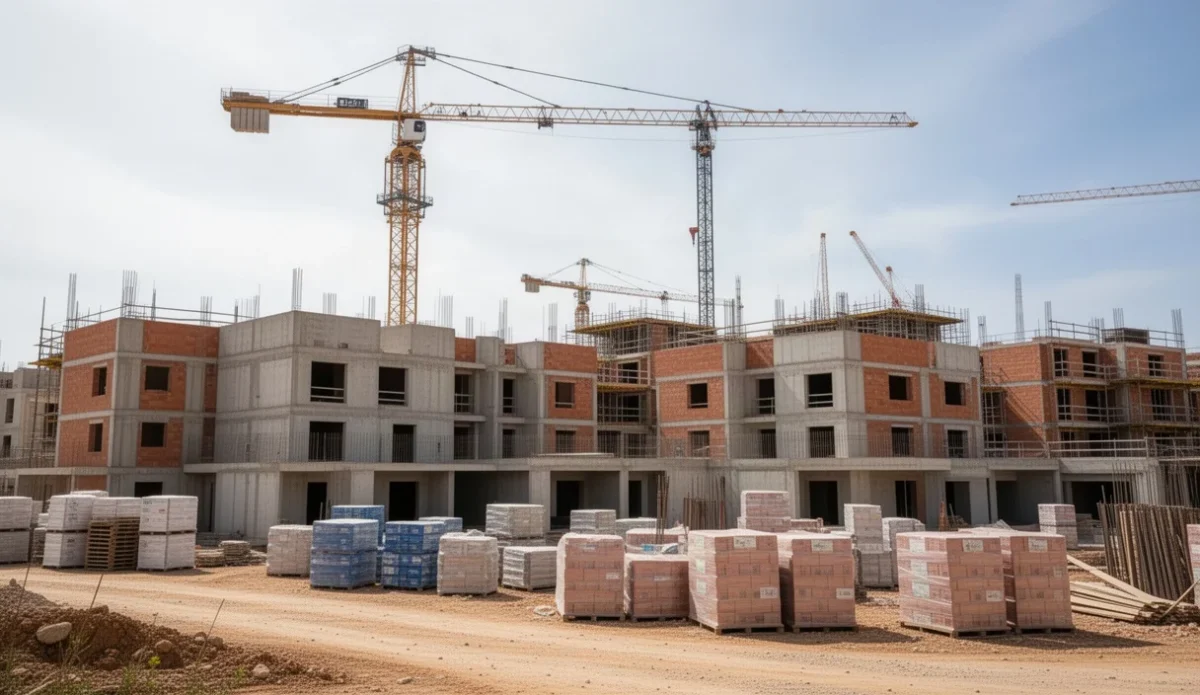
The Generalitat's public land reserve has attracted private builders, with four lots awarded to construct nearly 2,000 affordable rental units. This marks a significant step in addressing housing shortages.
The recent initiative by the Generalitat of Catalonia to accelerate the construction of affordable housing through a public land reserve has garnered considerable interest from private developers. In the first bidding round, which served as a litmus test for business engagement, eight proposals were submitted, resulting in the awarding of four lots capable of producing up to 1,940 rental units. The companies Corp and a partnership between Copisa and Visoren will spearhead these initial developments.
This response from the construction sector is crucial for advancing part of a broader plan aimed at delivering 50,000 public rental homes, championed by Salvador Illa. While the Generalitat and local municipalities provide the land, the execution and management largely depend on private sector involvement. A lack of interest could have necessitated a reevaluation of this strategy.
Corp secured two lots through its subsidiary Landetic, allowing for 1,065 new homes, while Copisa and Visoren obtained two additional lots totaling 875 units. These projects will be distributed across various municipalities within Barcelona’s metropolitan area as well as regions like Vallès Occidental and Oriental, Central Catalonia, Ponent, Alt Pirineu, Camp de Tarragona, Penedès, Girona, among others.
The lands are being leased under a surface right agreement lasting 75 years, ensuring that ownership remains with public entities while allowing companies to invest in and manage these affordable rental properties during that period. This model aims to balance public interests with private investment capabilities.
The first call for proposals identified 670 municipal plots suitable for approximately 22,000 homes. However, not all sites were equally appealing or ready for development due to varying urban conditions. To facilitate financing and project viability across different profitability levels, larger plots were grouped into territorial lots.
The next phase focuses on less attractive smaller plots; currently up for bid are 59 small sites, spread across 40 municipalities that could yield an additional 783 homes. Most of these sites allow for developments capped at 20 units each and are located in areas with limited resources and populations.
This smaller scale often leads to higher costs and reduced profit margins—factors that complicate attracting interested developers. To mitigate these challenges, individual bidding processes have been introduced alongside more flexible procedures. If a developer or cooperative submits a proposal without competition within one month, they may receive direct allocation; otherwise, a competitive bidding process will ensue.
Certain criteria prioritize rental agreements along with cooperatives and self-promotion initiatives while emphasizing industrialized construction methods as well as maintenance plans. Six companies have already expressed interest in this latest round of offerings.
A second call has also been launched by the government where municipalities have made available at least 170 additional plots, potentially accommodating another 8,300 homes. While this municipal mobilization expands available options significantly, integrating any plot into the program is just the beginning; subsequent steps include resolving urban planning issues along with financing arrangements and obtaining necessary licenses before construction can commence.
The collaboration between public entities and private developers remains vital to realizing this ambitious housing plan. The positive response from bidders indicates momentum towards activating new housing projects that could alleviate some pressures in Catalonia’s tight real estate market.

You might also be interested in