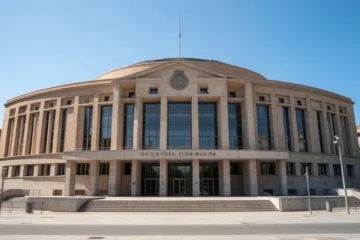
The Area Metropolitana de Barcelona (AMB) celebrated its 15th anniversary on June 19, 2026, at the Parlament de Catalunya, highlighting its unique governance model that combines municipal autonomy with metropolitan oversight. This event underscored the importance of collaborative politics in managing a region that encompasses 36 municipalities and serves a population of approximately 3.3 million residents.
A model of governance and collaboration
Antonio Balmón, the executive vice president of AMB and mayor of Cornellà de Llobregat, emphasized the significance of this milestone by drawing a comparison between Barcelona and Madrid. He noted that while Madrid’s airport is managed directly by the city’s mayor, Barcelona benefits from having El Prat de Llobregat as an autonomous municipality within the metropolitan framework. This structure allows for more effective governance across various sectors such as transportation, waste management, urban planning, and water supply.
The anniversary celebration featured prominent figures including President Salvador Illa and former president José Montilla, who participated in discussions about the AMB’s achievements and future challenges. The event served not only as a commemoration but also as a platform to address ongoing issues such as securing stable funding for metropolitan services amidst rising demands for public accountability.
Balmón described the current phase of AMB as one of consolidation characterized by political consensus among major parties despite a socialist majority. He stated that ensuring stable financing remains a critical challenge alongside advancing policies aimed at fostering community cohesion and enhancing management capabilities in urban planning.
The roots of AMB can be traced back to historical events leading up to its establishment in 2011 under Law 31/2010. The dissolution of the Corporación Metropolitana de Barcelona (CMB) in 1987 marked a significant turning point that reshaped regional governance structures. Following this dissolution, two sectoral agencies were created to manage transportation and environmental services separately.
Research conducted by scholars at Institut Metròpoli indicates that the disbandment was partly motivated by concerns over centralized power under then-mayor Pasqual Maragall. The subsequent formation of AMB aimed to rectify past governance issues while providing essential services across its jurisdiction.
The future roadmap for AMB includes addressing pressing needs such as reforming fiscal policies to prevent annual losses exceeding 40 million euros, which are critical for maintaining investment levels within its 1.4 billion euro budget reliant on state transfers. Additionally, plans are underway to secure contracts worth 1 billion euros for water supply management across eight cities within the metropolitan area.
Xavier Trias, former mayor and first president of AMB, cautioned against destructive dynamics that could undermine progress made over the past fifteen years. His remarks resonate with ongoing debates about expanding AMB’s territorial scope versus consolidating existing frameworks effectively.
Balmón stated: “The main challenge remains ensuring stable financing while advancing coexistence policies.”
This sentiment reflects broader discussions among stakeholders regarding whether to pursue an expanded vision for Greater Barcelona or focus on strengthening current administrative capacities without overextending resources.
The essence of AMB lies in its commitment to serving all municipalities within its jurisdiction equitably while redistributing resources from Barcelona city itself. As it moves forward into another decade, maintaining this foundational goal will be crucial amid evolving political landscapes and increasing demands from constituents seeking improved public services.
The celebration not only marked an important milestone but also served as a reminder of the ongoing work required to ensure effective governance in one of Europe’s most dynamic metropolitan regions.

You might also be interested in