A new collaboration protocol between Sant Adrià and Barcelona aims to enhance urban development along the Besòs River. This partnership will focus on major projects that promise economic growth and improved connectivity.
The recent signing of a collaboration protocol between Sant Adrià de Besòs and the City Council of Barcelona marks a significant milestone in urban development for both municipalities. The agreement, formalized by Sant Adrià’s mayor, Filo Cañete, and Barcelona’s mayor, Jaume Collboni, establishes a permanent Joint Commission aimed at coordinating large-scale urban, economic, and social projects. This initiative is crucial as it positions Sant Adrià as a key player in the ongoing transformation of the Besòs axis.
Major projects set to reshape the area
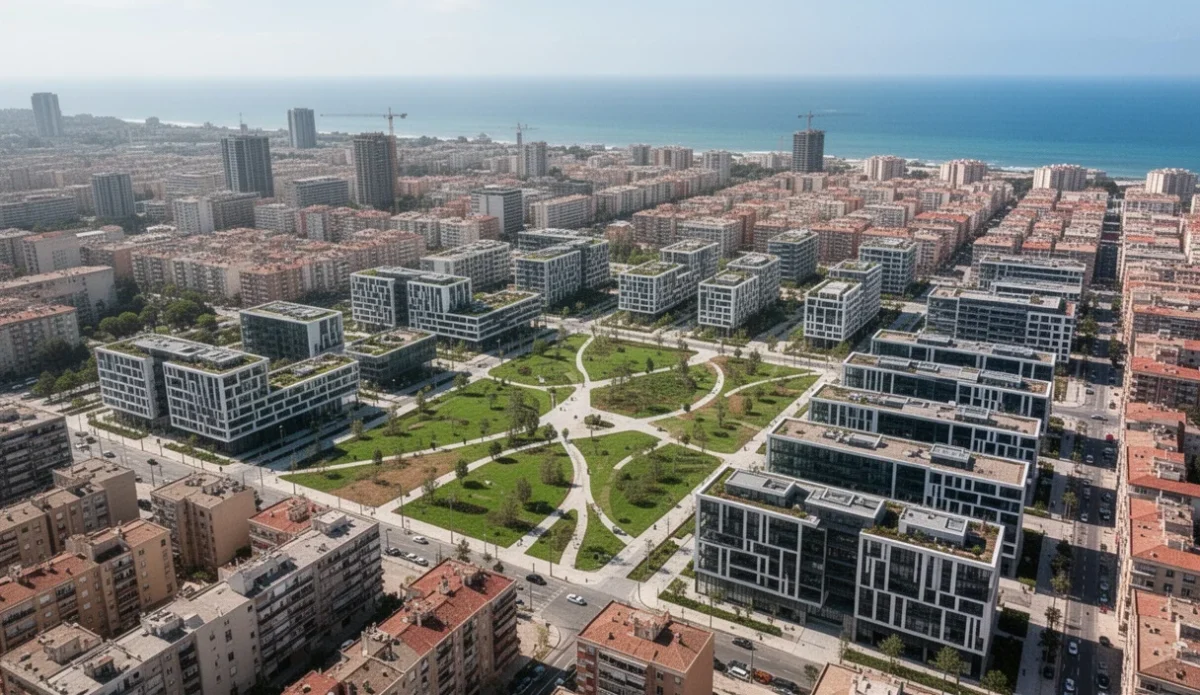
Among the most ambitious undertakings is the expansion of the Diagonal Besòs Campus. This project is poised to become a leading hub for knowledge, innovation, and economic activity in Spain. It includes plans for new public facilities from the Generalitat, student housing, business spaces, and over 20,000 square meters of green areas. Spanning 7.7 hectares, this development will feature up to 150,000 square meters of buildable space that enhances connections among universities, research institutions, and businesses.
Catalunya Media City: A cultural landmark
The transformation of the iconic Tres Chimeneas site into Catalunya Media City stands out as an emblematic project within this collaborative framework. This historic location will evolve into an international reference point for audiovisual industries, digital culture, and video game sectors. Surrounding this center will be significant urban developments that include 1,783 residential units, with 714 designated as affordable housing, alongside public amenities and commercial spaces. Additionally, a vast coastal park covering 10 hectares will connect residents with both the sea and the Besòs river park.
Improving mobility across municipalities
The planned transformations also prioritize enhanced mobility in the region. Key initiatives include extending Trambesòs services and constructing new pedestrian bridges over railway lines to improve access between neighborhoods. These efforts aim to eliminate existing barriers caused by infrastructure such as railways and major roads like Gran Via or Ronda Litoral.
A boost for local economies
The economic revitalization of Sant Adrià is another cornerstone of this partnership. The industrial zones shared between Sant Adrià and Barcelona encompass 175 hectares, hosting around 750 companies that collectively generate approximately 13,000 jobs. Their strategic proximity to key projects like Sagrera or 22@ positions them favorably for attracting investments related to Industry 4.0 technologies and circular economy initiatives.
Sustainable waterfront initiatives underway
The waterfront area is set to receive substantial investment in coming years; Barcelona has earmarked over 100 million euros for its maritime facade transformation while Sant Adrià advances its ReViuBesòs project aimed at restoring natural habitats at the river’s mouth with an investment of 2.7 million euros, largely funded by European sources. This initiative seeks not only ecological restoration but also aims to enhance biodiversity while reconnecting residents with their natural surroundings.
A brighter future for historically challenged neighborhoods
The regeneration efforts extend into neighborhoods such as Mina and Besòs-Maresme where investments exceeding 500 million euros are directed towards improving public spaces, rehabilitating homes, fostering social cohesion, and creating economic opportunities in areas long burdened by socio-economic challenges.
This newly formed Joint Commission will also tackle issues related to connectivity across both banks of the Besòs River while managing shared resources like groundwater effectively. As these plans unfold, they signal a transformative era where Sant Adrià emerges from its peripheral status within metropolitan strategies into a central role in shaping a vibrant economic landscape along the Besòs corridor.

You might also be interested in