A minor strike by the Sindicato Ferroviario has left Rodalies users in Barcelona frustrated and confused. Despite low participation, many commuters reported delays and irregularities.
Commuters at the Sants station in Barcelona are grappling with confusion and frustration as a minor strike by the Sindicato Ferroviario disrupted Rodalies services on Monday. With only 5.85% of workers participating, Renfe claimed that the impact was minimal, yet many passengers experienced delays and irregular train schedules.
Ingrid, a regular user of the R4 line, expressed her resignation:
“Ya ni miro los horarios, cojo el tren que pasa,”
indicating that she no longer checks schedules but boards whichever train arrives first. This sentiment was echoed by others who noted that their travel experiences felt similar to any other day despite the strike.
The Sindicato Ferroviario organized this protest to voice concerns over the closure of a maintenance workshop in Miranda de Ebro and ongoing privatization efforts within Renfe Mercaderies. The union argues that these changes threaten public rail services across Spain.
The Department of Empresa i Treball had mandated minimum service levels during peak hours, ensuring that 66% of trains operated between 6 AM and 9:30 AM, as well as from 5 PM to 8 PM. Outside these hours, only 33% of trains were scheduled. However, many passengers reported that even with these measures in place, their journeys were still fraught with uncertainty.
A representative from Promoció del Transport Públic (PTP) criticized the overall reliability of Rodalies services:
“The strike is just one more factor contributing to an already unreliable service,”
highlighting ongoing issues with punctuality and service quality.
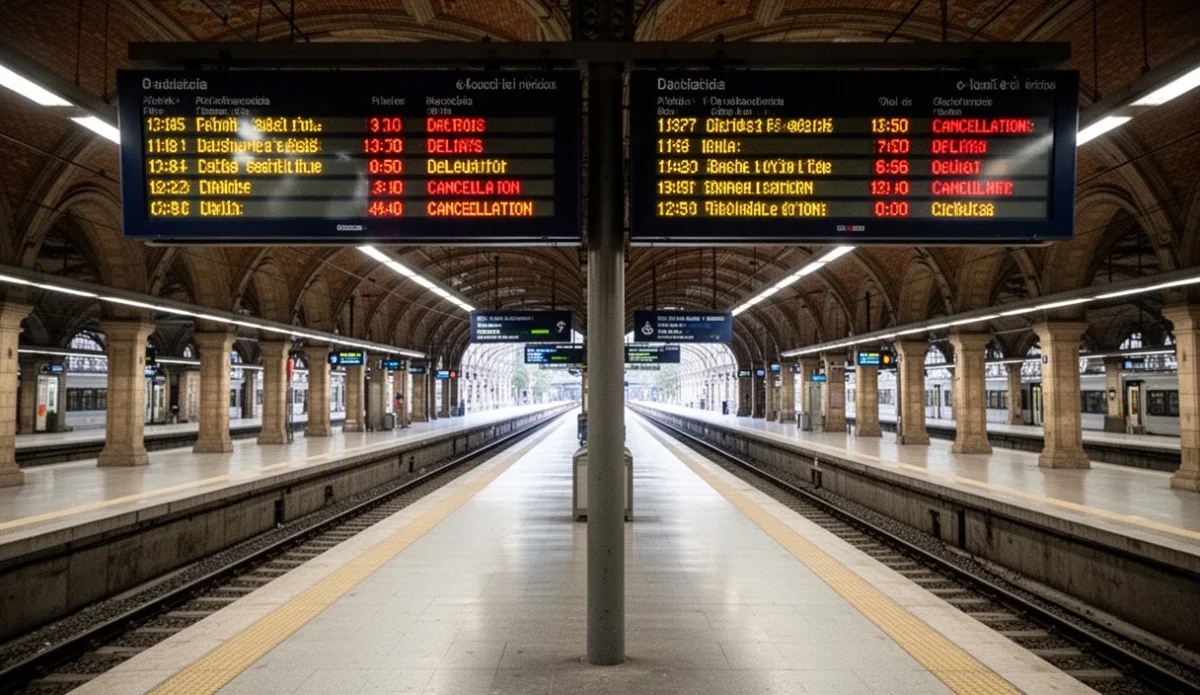
The atmosphere at Sants station reflected a typical summer morning; tourists with luggage mingled among commuters unaware of the disruptions caused by the strike. Announcements over the PA system warned travelers about potential alterations to their journeys due to industrial action.
User Encarna Valero noted that her train was not particularly crowded:
“Los trenes han ido pasando,”
attributing this to school vacations leading to fewer daily commuters. Other passengers like Anna Garrido were caught off guard by the strike’s occurrence but found their trains operating smoothly nonetheless.
The president of PTP, Carles Garcia, summarized the situation succinctly:
“Rodalies funciona tan mal que no hay demasiada diferencia entre un día de huelga y uno en el que no haya.”
He lamented that late notice for this strike meant minimum services were hastily arranged without proper planning.
This Monday’s disruption is part of a broader pattern affecting rail services across Spain. Renfe reported no cancellations for high-speed AVE or AVLO trains during this time frame. However, another round of strikes has been announced for July 15th by the Sindicato Ferroviario, suggesting ongoing unrest within Spain’s railway sector.
If you plan to travel via Rodalies in coming weeks, it may be wise to check real-time updates on train schedules through Renfe’s official channels or consider alternative transport options during peak travel times when disruptions are most likely.

You might also be interested in