The Bilateral State-Generalitat Commission agrees to advance the transfer of the R1 without setting a timeline. The meeting coincides with the fourth consecutive day of incidents in Rodalies.
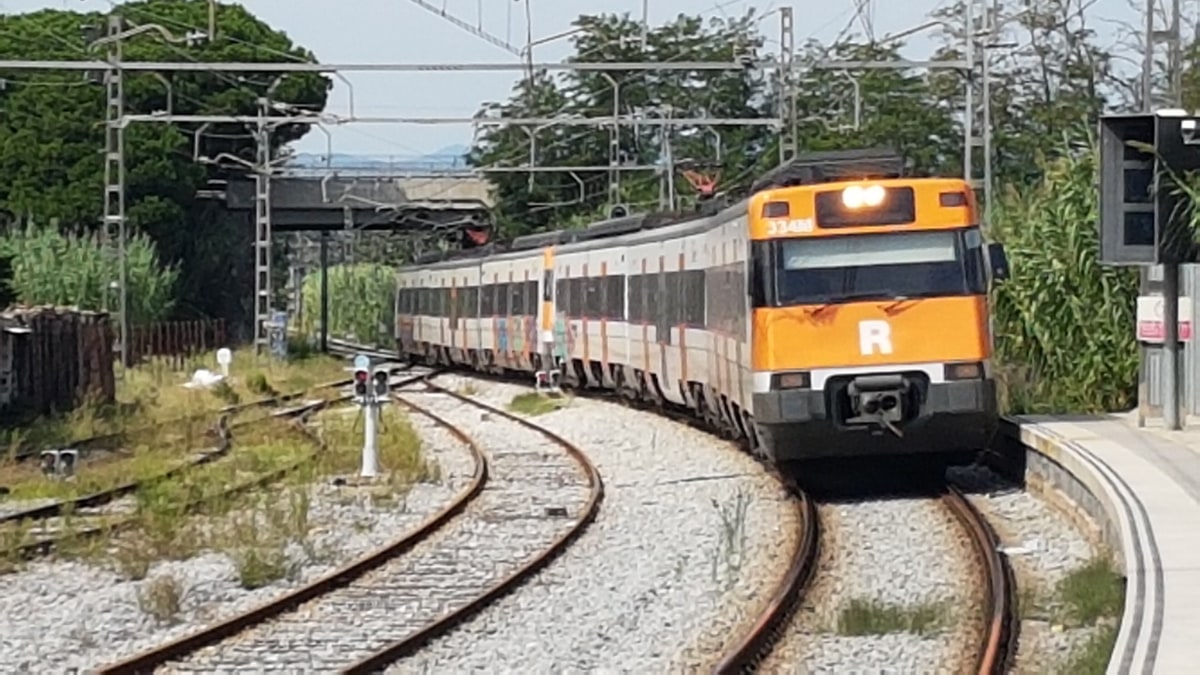
The Bilateral State-Generalitat Commission has agreed to advance the transfer of the R1 of Rodalies, although no date has been set. According to La Razón, the summit took place on the same day that users reported delays of over an hour on that line.
The meeting, the fourth of the legislature, was held at the Palau de la Generalitat, just hours before the start of the campaign for the general elections on November 29. The Govern did not hold a press conference for institutional neutrality and released the agreements in a statement.
The agreement tasks the working group on the transfer with promoting the necessary regulatory changes, both state and Catalan, for the new management model. It will also need to process the legal instruments that regulate the relationship with Adif and the State Agency for Railway Safety. The affected section runs from Sagrera (Barcelona) to Maçanet-Massanes (Girona).
“to advance” in the transfer
In parallel, the Joint Commission of Economic and Fiscal Affairs, held virtually, agreed on transfers from the State to the Generalitat amounting to €1.148 billion for the operation of Rodalies and Regionals between 2025 and 2028. Of this, €928 million covers the operating deficit in 2026 and 2027.
The service has not been operating normally throughout the week. On Monday, the director of Rodalies, Òscar Playà, attributed the delays to an increase in absences among train drivers, something that Semaf denied, blaming a shift change that forces the service to start at Sants. On Tuesday, the 24-hour strike left half of the minimum services uncovered, and the Generalitat opened an informational file on Renfe and deployed 67 buses for reinforcement.
On Wednesday, the general strike reduced the service to 25% during peak hours. Today, according to Renfe, all lines are experiencing delays from early morning due to overnight rains and the strike, with the R1, R2, and R4 being the most affected. Renfe has set up a road reinforcement service and has apologised to users.
On the roads, both governments agreed to extend the agreement for the AP-7 and AP-2 for the rehabilitation of the pavement, for €75 million, with works planned for 2027 in the provinces of Barcelona, Tarragona, and Girona. According to the Govern, the AP-7 records up to 150,000 vehicles daily, about 25,000 of which are heavy vehicles.
The airports are also on the agenda. A Bilateral Airport Body has been created that will allow the Generalitat to participate in the strategy for the airports of Barcelona, Girona-Costa Brava, Reus, and Sabadell. A working group must present, before the end of the first quarter, a proposal for a protocol for the Orbital Railway Line.
From ERC, its number three in Barcelona for Congress, Jordi Albert, considers the measures insufficient and laments a lack of ambition from the Govern and the government of Pedro Sánchez. From Junts, Mònica Sales described the meeting as a propaganda operation and asked Salvador Illa to postpone it. The Minister of the Presidency, Albert Dalmau, responds that the agreements represent a step forward for self-government.

You may also like