
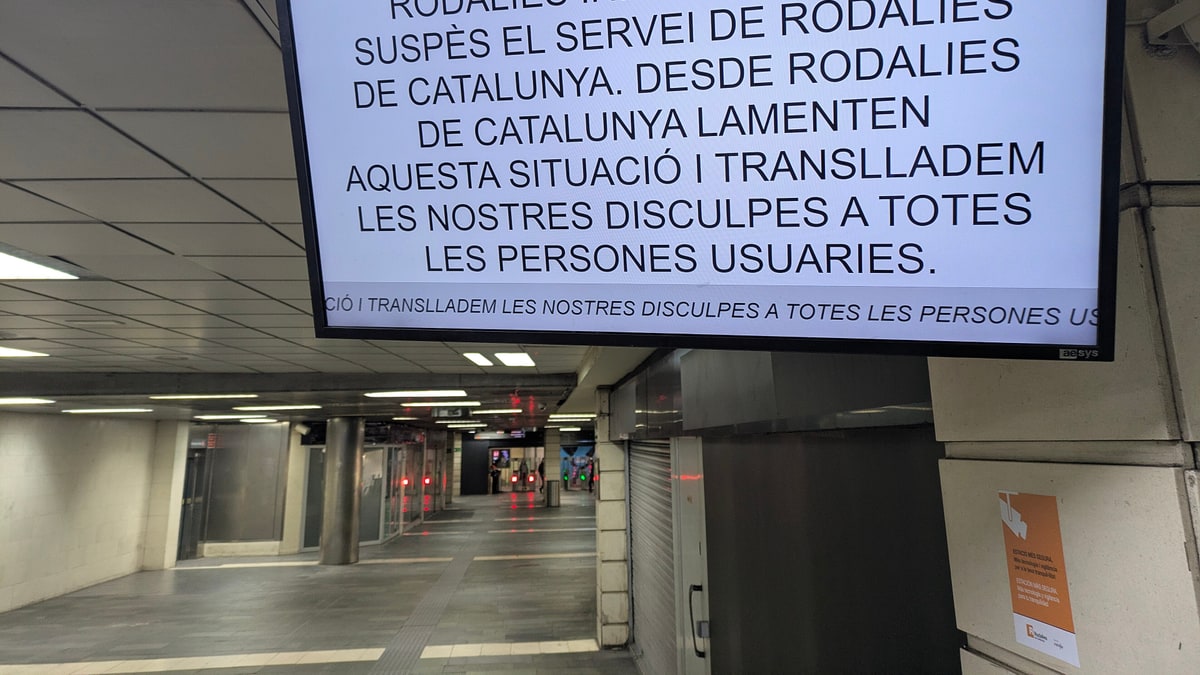
The Generalitat has opened an informational investigation into Renfe due to the incidents of the last week in Rodalies, and economic sanctions could be applied if a breach is confirmed.
The Generalitat has opened an informational investigation into Renfe for the incidents recorded during the past week in the Rodalies network, as reported by El Periódico de Catalunya. The Govern wants the operator to explain why minimum services were not met during the strike days and why so many trains were cancelled or arrived with delays that, on the worst days, exceeded two hours.
If it is proven that the company has breached agreements with the Govern, the holder of the service, economic sanctions could be applied. The director of Rodalies, Òscar Playà, confirmed this during a media briefing amid the railway sector strike called for this Tuesday.
Just before two in the afternoon, 43% of the trains that were supposed to run were still not operating. Sources from the Department of Territory indicate that a second investigation will also be opened for Renfe to clarify why minimum services were not met on this day either.
Renfe will need to explain, among other things, why at least 73 drivers selected for minimum services decided not to work last Tuesday. The councillor for Territory, Housing and Ecological Transition, Sílvia Paneque, has pointed out that some of them have already submitted a medical leave certificate, which would exempt them from responsibility.
“A small group of people” would have caused the breach, according to the councillor herself, who specified that the strike “only occurred within the group of drivers”.
Playà links the increase in absences to the Urda accident and the first strike of SEMAF, called on October 29. According to his data, the absences of drivers have increased by 12% since then, and he framed it within a state-level labour conflict.
Paneque also requested that Renfe open investigations into the workers who, having received the notification correctly, did not attend their posts. These procedures are distinct from those of the Generalitat, although they operate similarly: first, an informational investigation to clarify the facts, and then a decision on whether there is sufficient evidence to impose sanctions.
For now, there are no known deadlines for resolving these investigations, so Rodalies passengers will have to continue monitoring the service status through Renfe's usual channels.

You may also like