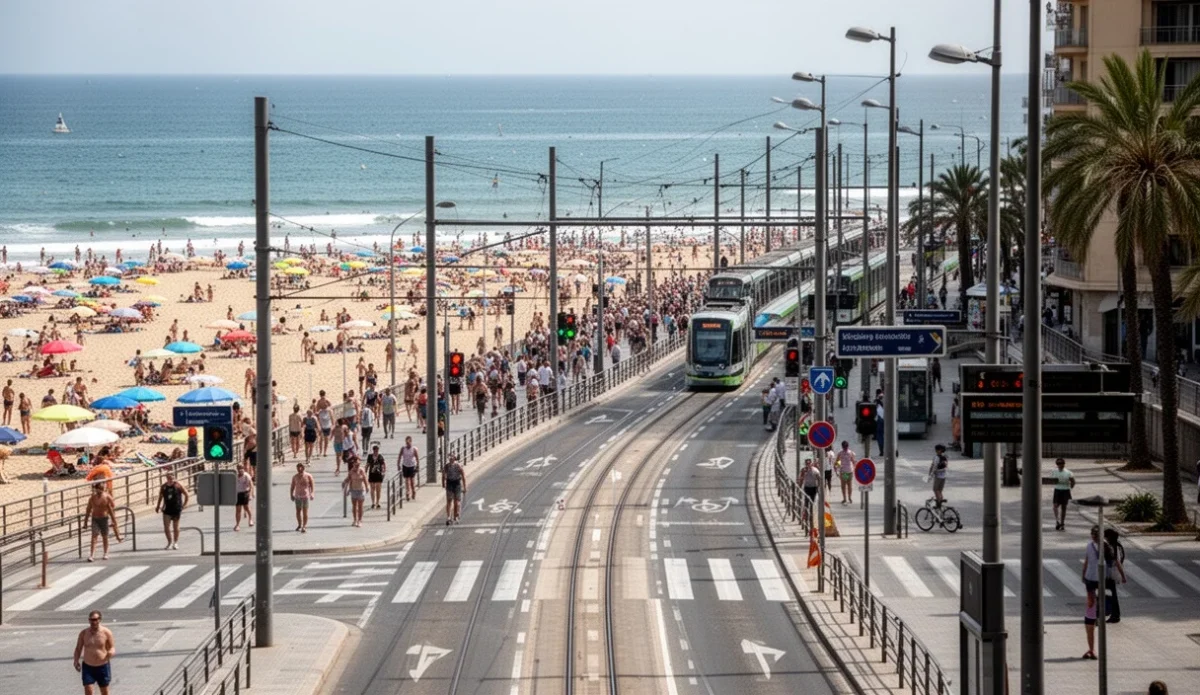
Residents of Barcelona’s coastal neighborhoods, particularly La Barceloneta and Poblenou, are sounding the alarm over a growing crisis linked to overwhelming tourist pressure. Local community organizations have issued a statement highlighting that the current tourism model is jeopardizing daily mobility and social harmony in these areas.
Tourist congestion disrupts daily life
The situation has escalated to a point where access to beaches becomes congested on a daily basis. Public transport systems are struggling under the weight of demand, with packed buses and overcrowded metro stations becoming commonplace. Residents report that public transportation is unable to cope, severely impacting their ability to navigate their own neighborhoods.
Adding to this chaos is the irregular circulation of various vehicles in public spaces. Urban buses frequently face delays due to taxis, ride-sharing vehicles, bicycles, and other traffic that often flouts regulations. This has led to an increasingly inefficient and unreliable transport system.
The community groups also express concern over what they describe as “extreme overcrowding” in public spaces. Constant throngs of visitors create tensions among residents and lead to incidents of incivility that exacerbate existing problems.
In their statement, these organizations argue that the current model prioritizes visitor numbers over the rights of locals to mobility and quality of life. They emphasize that this is not just a seasonal issue but rather a persistent challenge throughout the year.
In light of these circumstances, coastal neighborhoods are calling for immediate and structural measures. Key demands include reducing tourist pressure to alleviate saturation in affected areas and ensuring efficient operation of public transport with improved frequency tailored to current needs.
Furthermore, they urge authorities to enforce traffic regulations strictly, ensuring smooth operations for urban buses while prioritizing local mobility over tourist influx. There is also a call for new investments in public transportation aimed at balancing the current mobility landscape.
“The situation is unsustainable,”
assert community representatives who warn that these coastal neighborhoods “can no longer endure” such conditions without significant changes.
The statement has garnered support from several key organizations including the Federació d’Associacions Veïnals de Barcelona (Favb), the Associació Veïnal de la Barceloneta, and the Associació Veïnal del Poblenou.
This growing discontent reflects broader concerns about sustainable tourism practices in urban environments worldwide. As cities grapple with balancing economic benefits from tourism against quality of life for residents, Barcelona’s experience serves as a critical case study on how unchecked visitor numbers can strain local infrastructure.
The demands from La Barceloneta and Poblenou resonate beyond their borders; they echo similar calls from other global cities facing tourist saturation issues. The need for innovative solutions that prioritize both visitor experiences and resident well-being has never been more pressing.
If local authorities fail to act decisively on these demands, there may be long-term repercussions not only for residents but also for the city’s reputation as a desirable destination. Sustainable management strategies must be developed urgently if Barcelona aims to maintain its charm while accommodating millions of visitors each year without compromising its residents’ quality of life.

You might also be interested in