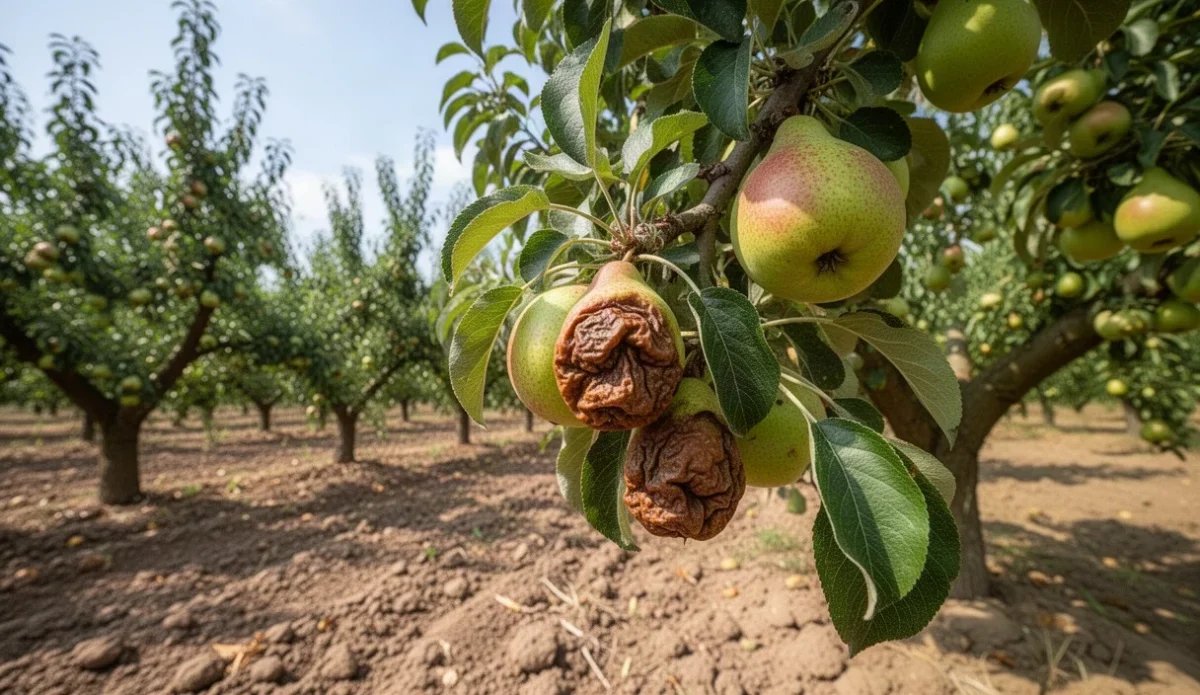
The conference pear harvest in Lleida has begun under extreme heat conditions, leading to significant production losses. Farmers are seeking solutions as temperatures soar above 36 degrees Celsius.
The annual harvest of the conference pear, a variety that dominates Catalonia’s production with 40% of the total yield, commenced this week in Lleida. However, farmers are grappling with unprecedented challenges as a prolonged heatwave has pushed temperatures beyond 36 degrees Celsius, causing severe stress to the trees and resulting in estimated production losses of up to 80% in some orchards.
Jaume Gardeñes, head of the vegetable sector at Unió de Pagesos, reported that around 60% of farms are experiencing similar issues. The extreme weather has led many farmers to implement anti-frost sprinkler systems as a temporary measure to alleviate the effects of the heat.
The conference pear is not native to Catalonia; it originates from northern European countries characterized by cooler and wetter climates. This makes it particularly vulnerable during hot summers like this one. Gardeñes noted that pears from affected trees are measuring between 5 and 8 millimeters smaller than usual due to the stress caused by high temperatures. Additionally, significant losses occurred during flowering, compounding the challenges faced by growers.
The forecast for production is grim: more than 60% of farms anticipate yields dropping between 40% and 80%, with many potentially falling below 8,000 kilos per hectare. As a response, some farmers have experimented with various strategies to mitigate heat impacts. Only about 8% of farms have access to anti-frost systems capable of cooling down their crops effectively.
The situation has prompted urgent discussions with the Department of Agriculture regarding varietal conversion plans aimed at adapting to climate change. Gardeñes emphasized that given the increasing temperatures associated with climate change, there is a pressing need for growers to shift towards varieties better suited for hotter conditions.
The economic implications are also concerning; Gardeñes expects prices for conference pears will range between €1 and €1.20 per kilo. If prices fall below this threshold, farmers may struggle to cover their production costs.
This year’s harvest serves as a stark reminder of how climate change is reshaping agricultural practices in Catalonia. As farmers navigate these challenges, they remain hopeful for support from agricultural authorities and an eventual adaptation strategy that ensures sustainability in future seasons.
The ongoing situation highlights not only the immediate impact on local agriculture but also raises questions about long-term food security in regions reliant on specific crops vulnerable to climate fluctuations. For those interested in supporting local agriculture or purchasing pears directly from producers, visiting local markets or farm stands can provide fresh options while helping sustain struggling farmers during these challenging times.

You might also be interested in