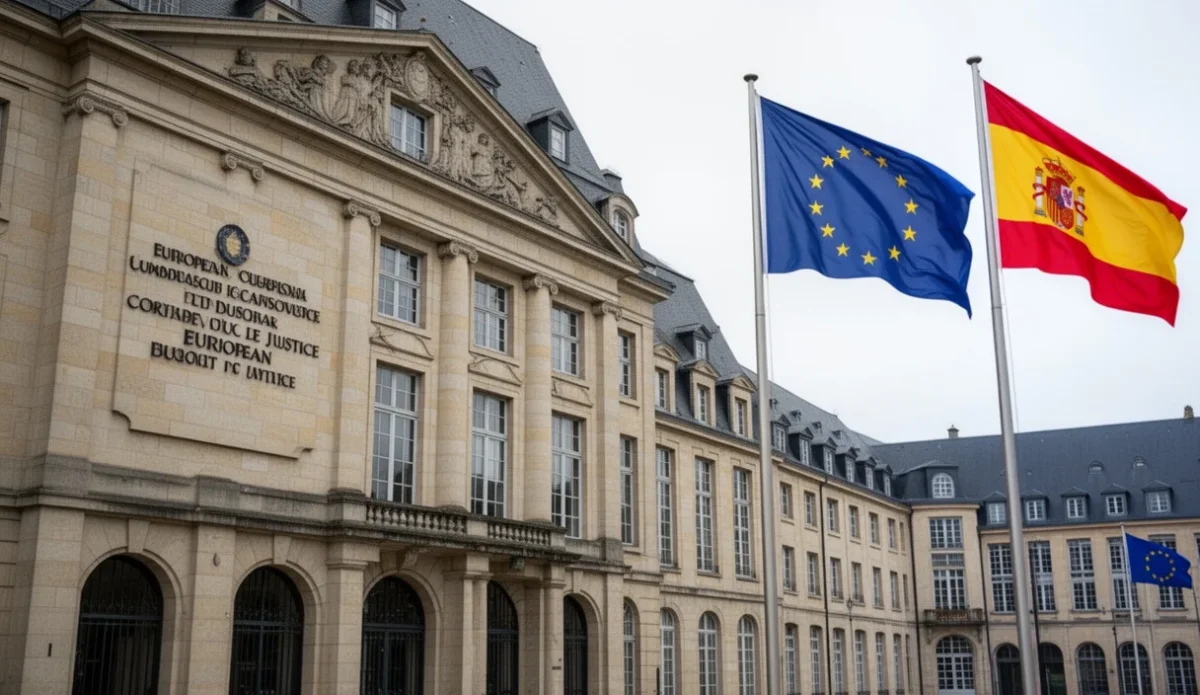
The European Court of Justice has validated Spain's amnesty law for those involved in the Catalan independence movement, marking a significant step towards reconciliation. This ruling could reshape political dynamics in Spain.
The European Court of Justice (ECJ) has made a landmark decision by upholding Spain’s amnesty law aimed at individuals convicted or prosecuted during the Catalan independence crisis. This ruling, announced today, is seen as pivotal for fostering reconciliation in a region still grappling with the aftermath of its contentious push for independence.
Nearly nine years after the October events of 2017, when Catalonia declared independence in a move that was largely symbolic and met with immediate governmental backlash, the ECJ has concluded that the amnesty law does not violate European legal standards. This decision is expected to have profound implications for both Spanish politics and regional relations.
In October 2017, Spain faced a critical juncture following the application of Article 155 of its Constitution, which allowed Madrid to take control over Catalonia’s government. The dilemma was stark: should the state impose harsh penalties on separatist leaders or seek a more conciliatory approach to mend relations with Catalonia? The hardline faction within the Spanish government prevailed at that time, leading to severe repercussions for many involved.
“The amnesty law has been deemed beneficial for reconciliation,” stated an ECJ representative during the announcement.
This ruling comes after years of political turmoil marked by protests and legal battles surrounding the actions taken by Catalan leaders. In subsequent years, various judicial proceedings led to prison sentences for several prominent figures associated with the independence movement. However, these sentences were met with widespread criticism and calls for leniency from various sectors within Spain.
The Spanish government’s response evolved over time; notably, in June 2021, Prime Minister Pedro Sánchez’s administration granted pardons to some imprisoned separatists as part of an effort to ease tensions. This act was controversial but aimed at paving a path toward dialogue and resolution.
Historically speaking, this situation mirrors other instances across Europe where governments have grappled with separatist movements. For example, Italy faced similar challenges during its own regional autonomy debates in previous decades but ultimately found ways to integrate dissenting voices into national discourse without resorting to punitive measures.
The recent ECJ ruling underscores a shift towards recognizing that reconciliation may be more effective than retribution in resolving deep-seated political conflicts. As Sánchez noted previously: “We must open new avenues for dialogue.”
“This is not just about legalities; it’s about healing wounds,” remarked Marta Pascal from PDECat.
In light of this ruling, political dynamics are likely to shift significantly within Spain. Alberto Núñez Feijóo from the Popular Party recently expressed his willingness to engage constructively with Catalan leaders—a notable departure from previous stances that emphasized strict opposition to any form of autonomy or concession.
The implications extend beyond mere politics; they touch upon broader themes of unity within Europe itself. The ECJ’s endorsement reflects an understanding that stability across member states hinges on inclusive policies rather than exclusionary practices.
As Spain navigates this new chapter post-ruling, citizens are encouraged to stay informed about upcoming discussions between regional leaders and national authorities aimed at fostering collaboration and understanding. Public forums will be held throughout July where community members can voice their opinions on how best to move forward together.

You might also be interested in