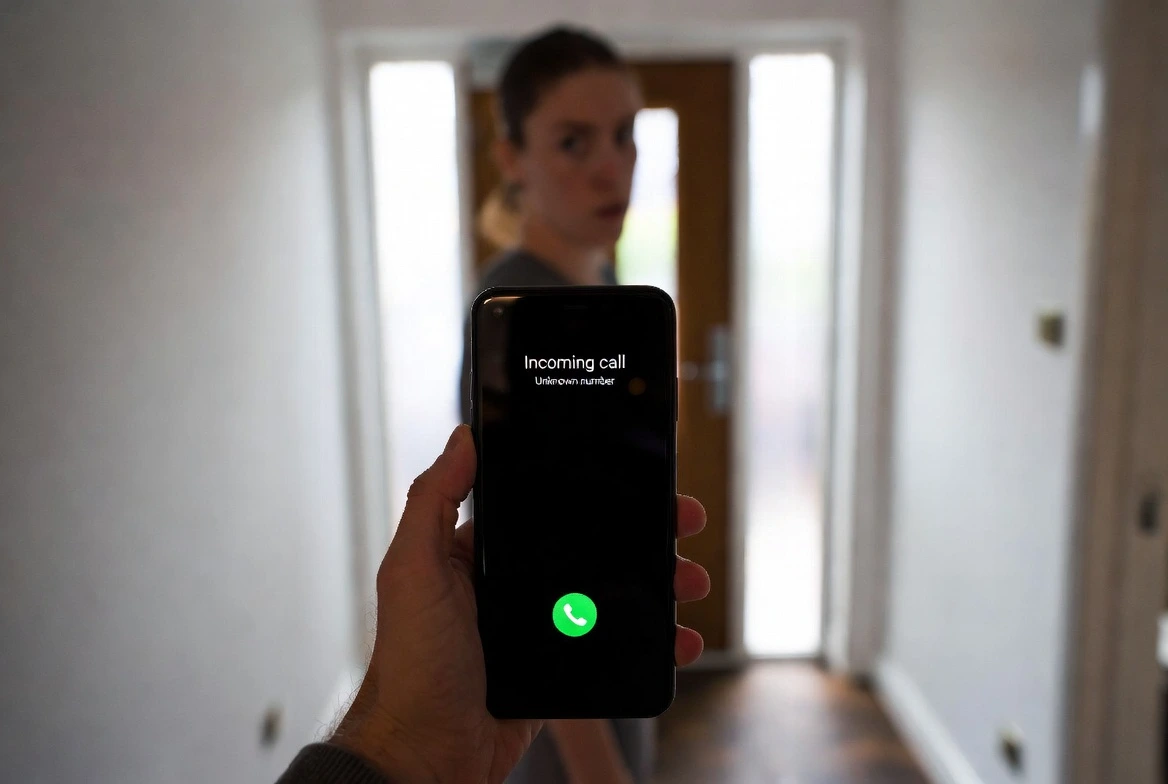
The number 02033222305 has been searched over 100,000 times in UK phone lookup databases. That alone tells you something: a lot of people across the country have picked up the phone, looked at this number with suspicion, and immediately headed to Google. If you’re here, you’re one of them, and you’ve come to the right place.
What is 02033222305?
This is a London landline number, registered under the 020 prefix, which covers the Greater London area and surrounding zones. The network operator behind it is AQL (previously known as (aq) Limited), a telecoms company that provides VoIP and number assignment services to businesses across the UK.
The short answer to who’s behind it: Amazon. More specifically, Amazon Logistics, the company’s own delivery arm. The number appears to be used by Amazon delivery drivers or automated systems to contact customers when a parcel is on its way or when there’s an issue completing a delivery.
Why Amazon would call from a London landline
Here’s where it gets slightly confusing. Most people would expect a delivery driver to ring from a mobile, not a fixed London number. The reason is simple: Amazon’s logistics operation uses centralised VoIP systems that mask the driver’s personal mobile and route calls through a company number. This explains why you might receive a call from 02033222305 even if the driver is standing outside a house in Manchester or Edinburgh.
Is 02033222305 safe or a scam?
This is the question that brings most people here, and the honest answer is: it depends on the context.
The overwhelming majority of reports rate this number as safe. Hundreds of users have confirmed receiving calls from 02033222305 minutes before a parcel was delivered, exactly matching their Amazon tracking notifications. In those cases, it’s a genuine Amazon delivery driver trying to confirm access, locate an address, or notify you that a parcel has been left in a safe place.
However, a smaller but notable number of users have flagged suspicious behaviour linked to this number. Common red flags reported include:
- The caller didn’t know your address and seemed to be fishing for personal information
- Aggressive or unusual tone during the call, quite unlike a delivery driver trying to drop off a parcel
- No pending Amazon orders at the time of the call
- Calls received when no delivery was expected, with no corresponding notification in the Amazon app
One pattern worth noting: if a delivery driver is genuinely calling you, they would typically be using a mobile number starting with 07, not a London landline beginning with 020. That’s a legitimate point, and it’s one of the reasons some users remain sceptical.
The verdict
If you have an Amazon order in transit and received a call from 02033222305, it’s almost certainly your delivery driver. Check your Amazon app for a real-time tracking notification and you’ll likely see it matches. Safe to answer, and worth picking up.
If you have no active Amazon orders and this number rings you out of nowhere, treat it with caution. Do not confirm any personal details, do not say “yes” to anything, and hang up if the conversation feels odd. Scammers increasingly impersonate Amazon delivery services to extract information or get a verbal “yes” that can be repurposed for fraudulent purposes.
What to do if you missed a call from 02033222305
Missing a call from this number when you’re expecting an Amazon delivery is not the end of the world. Here’s what to do:
Check the Amazon app first. Go to your orders and look at the tracking page. If the driver attempted delivery, there will usually be a status update. In many cases, the parcel will have been left in a safe place or with a neighbour, and the driver will have uploaded a photo as proof.
Do not call 02033222305 back. This is important. The number is used for outbound calls and there’s no guarantee you’ll reach anyone useful. If you need to rearrange delivery, do it directly through your Amazon account or the official Amazon customer service line.
Check for a calling card. Amazon drivers often leave a physical card or digital notification if they couldn’t complete a delivery. That will give you your official options for re-scheduling.
How to protect yourself from nuisance calls in the UK
One of the most effective steps you can take is to register with the Telephone Preference Service (TPS), a free service for UK consumers that allows you to opt out of unsolicited sales and marketing calls. It won’t stop every unwanted call, but it significantly reduces them and gives you grounds to report those that do come through.
Beyond TPS, there are a few practical habits worth building:
- Never confirm personal information to an inbound caller, even if they claim to be from a company you trust
- Hang up and call back through an official number if you’re unsure about the identity of a caller
- Use your phone’s built-in blocking tools if a number turns out to be genuinely nuisance
- Report suspicious calls to the Information Commissioner’s Office (ICO) or Action Fraud if you believe you’ve been targeted
According to Amazon’s own data, during the first quarter of 2025, phone-based scams targeting Amazon customers increased sharply, with account issue scams representing 82% of cases and order-related scams accounting for the remaining 16%. The context here matters: scammers are getting more sophisticated at impersonating delivery and customer service scenarios, making it harder to tell genuine calls apart from fraudulent ones.
A quick rule of thumb
Amazon will never ask you for your password, payment details, or personal data over a phone call. If any caller claiming to be from Amazon requests this kind of information, it is a scam, full stop. Hang up immediately and report the number.
The same applies to any unexpected call asking you to confirm an order you don’t recognise, visit a link, or take any kind of urgent action. Legitimate delivery companies do not operate that way.
How to block 02033222305
If you’ve decided you don’t want calls from this number, blocking it is straightforward on any modern smartphone.
On iPhone: Go to the recent calls list, tap the information icon next to the number, scroll down and select “Block this Caller.”
On Android: Open the Phone app, find the number in your call history, press and hold it, and select “Block/report spam.”
Most network providers in the UK also offer call-blocking services directly through your account settings or via dedicated apps. If nuisance calls are a regular problem rather than a one-off, it may be worth looking into a dedicated call-screening solution.

You might also be interested in