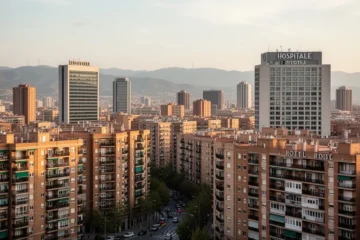
Hotel occupancy rates in Barcelona are set to rise this summer, contrasting with declines in other Spanish destinations. This trend reflects a growing interest in the Catalan capital despite geopolitical uncertainties.
As the summer season approaches, Barcelona’s hotel industry is poised for a significant boost, with occupancy rates projected at 36% for July, 24% for August, and 35% for September. These figures, released by PwC and Cehat during a presentation in Madrid, indicate a positive outlook compared to last year and outperform other major Spanish cities.
The report highlights that Madrid’s hotel occupancy is lagging behind Barcelona, with forecasts showing only 28% in July, dropping to 17% in August, before recovering slightly to 28% in September. This stark contrast underscores Barcelona’s appeal as a tourist destination.
Despite challenges posed by international instability and geopolitical tensions, the overall tourism sector in Spain is showing signs of improvement. Nationally, revenues from direct bookings have surged by 19% compared to last summer, with an average nightly rate of 202 euros.
Catalonia specifically has seen an increase of 13% from last year, reaching an average price of 196 euros per night. This growth reflects not only the resilience of the tourism sector but also a shift towards higher-quality accommodations.
The report also notes an increase in air connectivity across Spain during the summer months. Notably, passenger numbers from Italy are expected to rise by 10.8%, while travelers from the UK will see a growth of 7.7%. All airlines operating within Spain are increasing their flight schedules this summer.
A deeper analysis reveals that European tourists maintain stable interest in Spain, while American travelers continue to show increasing enthusiasm for visiting. However, there has been a slight decline in interest from Latin America, Southeast Asia, and Australia.
The presence of domestic travelers is also on the rise as low unemployment rates encourage more spending on travel within Spain. Key indicators such as revenue per available room (RevPAR) have increased by 6%, now averaging around 85 euros. The growth is particularly pronounced among five-star hotels, aligning with Spain’s strategy to enhance its high-end hospitality offerings.
The report anticipates continued growth into the fall season as well. Projections indicate that revenues will climb by 17%% nationally during the last quarter of 2026—27%% in Madrid and 7%% in Catalonia—with average nightly prices expected at 201 euros% in Madrid and 182 euros% in Catalonia.
This upward trend is further supported by increased flights from Italy anticipated between October and December—a notable increase of 15.4%. The demand among Italian travelers appears cyclical but currently favors Spain as a prime destination..
The president of Cehat expressed concerns regarding housing shortages affecting tourism sustainability: “This issue cannot be resolved merely through decrees; it requires genuine commitment,” he stated while criticizing bureaucratic delays in granting construction permits.
This sentiment highlights ongoing challenges facing urban planning efforts across Spanish municipalities.

You might also be interested in