
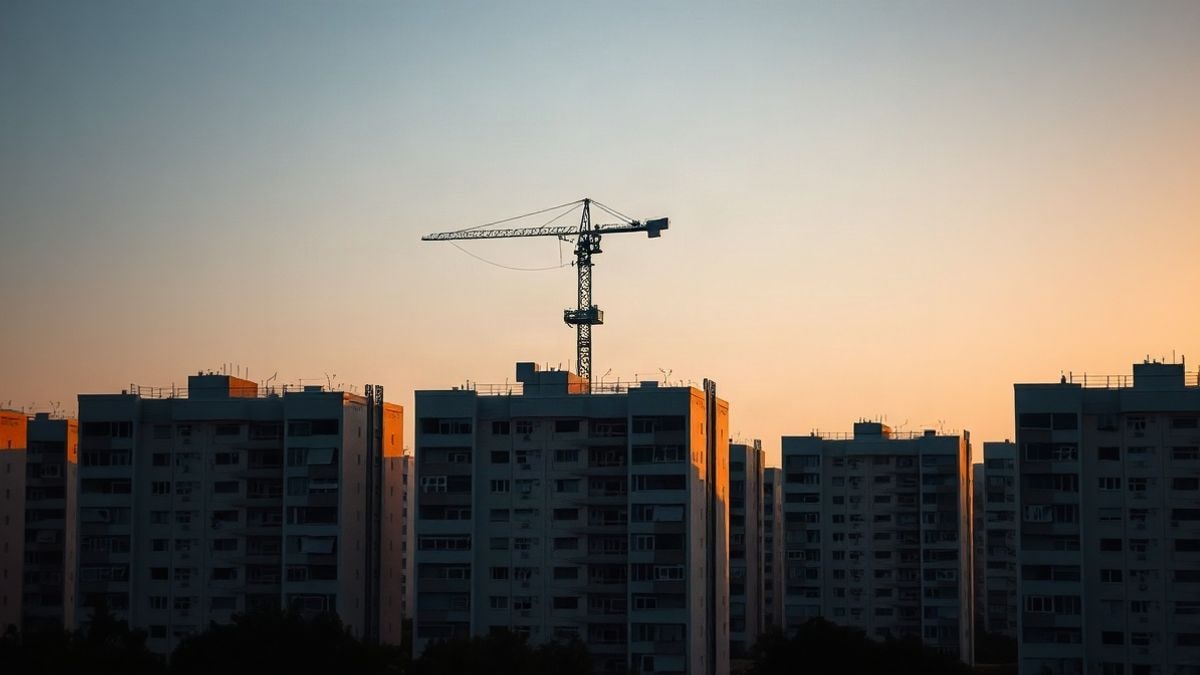
The economic report from the new mixed society plans to demolish up to 1,752 homes in Besòs and Maresme. Only 105 million will be allocated for rehabilitation, compared to 270 for replacement.
An economic document from the new mixed society for Besòs and Maresme anticipates demolishing up to 1,752 homes spread across 84 homeowners' associations. This figure contrasts with the announcement made in May by Mayor Jaume Collboni, who spoke of investing up to 415 million euros over the next ten years to rehabilitate the housing stock in the neighbourhood.
The report allocates 270 million for replacing homes and 105 million for rehabilitating them. The commission for Ecology, Urbanism, Mobility and Housing of the Barcelona City Council initially approved the society, which will be called Impulsem Futur Besòs-Maresme, with votes in favour from PSC, Junts, BComú, and ERC. Vox voted against.
Following a campaign of municipal inspections, the document divides the nearly 4,000 homes affected into three groups. 1,550 have minor damage and require basic rehabilitation, 650 have severe damage and need comprehensive rehabilitation, and 1,752 present very severe deficiencies that necessitate their replacement.
The report sets an average compensation of 100,000 euros per home, using the expropriation of Trinitat Vella as a model. Of the affected households, 1,500 would be entitled to relocation: 600 would go to Sector Prim and 900 to new blocks in the neighbourhood itself. The other 300 homes would receive only the compensation.
To proceed with the demolitions, it is necessary to modify the Metropolitan General Plan. According to the document, this modification would be approved between 2028 and 2029, and the expropriations and demolitions would begin in 2030. The same modification would allow for the construction of 2,325 homes: the 1,500 for relocations and another 825, half of which would be protected and the other half for the free market.
The document also calculates a scenario without demolitions, in which all homes would be rehabilitated. This scenario only includes a budget and treasury forecast. The balances and profit and loss account are prepared solely based on the demolition hypothesis.
Councillor BComú Lucía Martín initially voted in favour but criticised the content of the report. According to her, the document anticipates demolishing 45% of the neighbourhood.
“They even anticipate that 300 families will be left without the right to relocation, thousands of people on the street.”
Martín also reminded that, although the council justifies the society due to an emergency situation, the works would not begin until 2028.
“This is not urban regeneration, nor does it resemble it.”
The first deputy mayor and head of Urbanism, Laia Bonet, defended the society as an extraordinary response to a problem that, in her view, requires a change of scale.
“We needed to make a leap in scale. And this involves speeding up. And this involves committing budget. And this involves seeking allies.”
The councillor from PP Sonia Devesa justified her support “for the responsibility to the neighbourhood,” although she reproached the government for its delay and the proximity of a new electoral cycle. The spokesperson for Vox, Liberto Senderos, described the proposal as irresponsible and electoralist.
“A lot of fluff to mortgage the next mayor.”
For the residents of Besòs, the calendar marks the horizon. The demolitions would not begin before 2030, and the society still needs to overcome the final approval and the modification of the Metropolitan General Plan, which the document places between 2028 and 2029.

Trending on the web

You may also like