
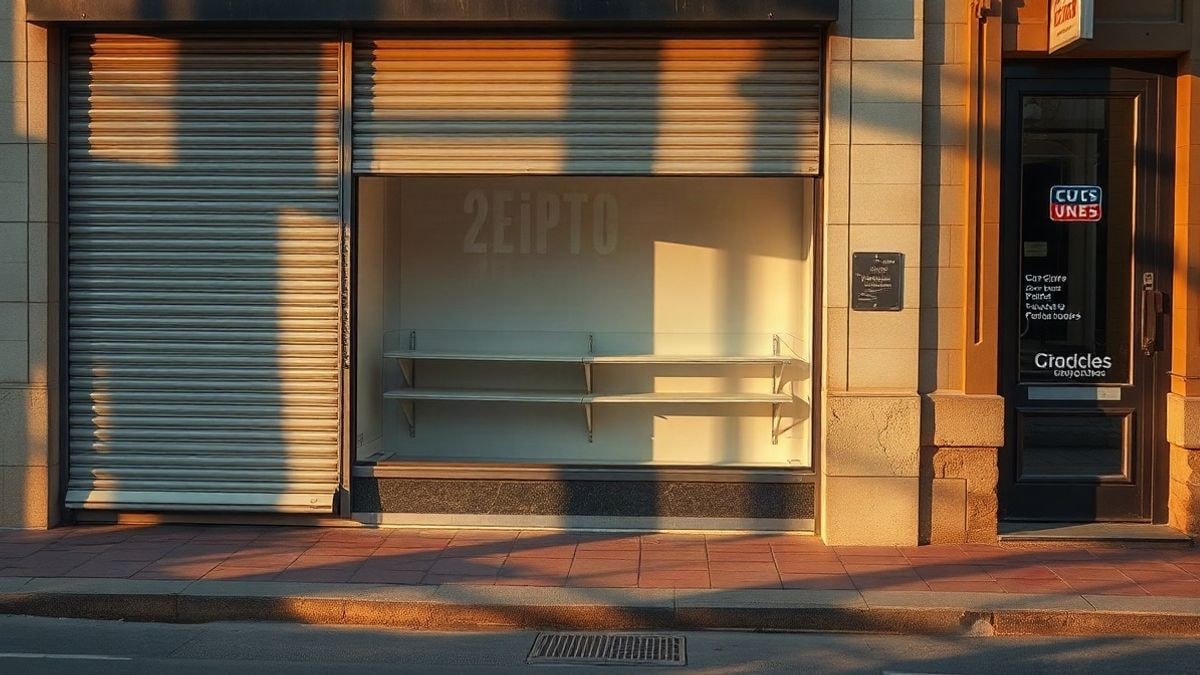
Barcelona's City Council wants Congress to regulate the rent of bars, restaurants, and shops. The early elections delay the proposal until the next legislative session.
Small traders in the Catalan capital have been witnessing the rising costs of their premises for some time. The Barcelona City Council now wants a law to limit these increases, although the initiative will have to wait for the next legislative session due to the early elections.
According to a survey of the sector, the average rent for a shop in the city rose from €1,362 in 2023 to €1,555 in 2024. This is an increase of nearly €200 in just one year, and the discontent among traders is evident.
The president of Barcelona Comerç, Pròsper Puig, has expressed the association's concern over this increase. He explained that the entity is in contact with the municipal government to analyse the situation.
The council has committed to preparing a report on the issue. However, both the City Council and the traders acknowledge that the ability to act directly does not lie with the municipality.
The urban leasing law (LAU) is state law, so the State should regulate the rental market. Any cap on commercial contracts would require reforming that law, something that can only be approved by the Congress of Deputies.
The Generalitat has exclusive competence in housing, but commerce is another area. Therefore, even though the City Council wants to limit the prices of premises, the responsibility lies with Congress.
The Deputy Mayor for Economic Promotion, Raquel Gil, explained that the intention is to intervene in areas where real estate pressure most adversely affects economic activity:
“Real estate pressure is causing economic activity, especially for small entrepreneurs, to be the most affected”
The increase does not affect all streets equally. In Passeig de Gràcia and Rambla de Catalunya, new contracts rose from an average of €3,808 per month between 2019 and 2024 to €7,180, an increase of 89%. In Gòtic, Sant Pere, and Barceloneta, the figure rose from €2,422 to €4,371 in the same period.
Several historic establishments have announced their closure in recent years, primarily due to the rising rent. This occurs while Barcelona is European Capital of Proximity Commerce, a recognition that highlights small businesses. According to data from the INE, nearly 11,000 businesses have been lost in Catalonia over the last decade.
International franchises are increasingly occupying premises that previously housed local businesses. According to the cited data, 75% of businesses in the capital have owners with Spanish nationality, nearly four points less than two years ago, and 25% of traders are foreigners.
Meanwhile, the City Council is negotiating with the Generalitat the incorporation of the right of first refusal and retraction in the commercial sector, to prevent the closure of iconic shops. The proposal on commercial rent will not be debated in Congress until the next legislative session.

Trending on the web

You may also like