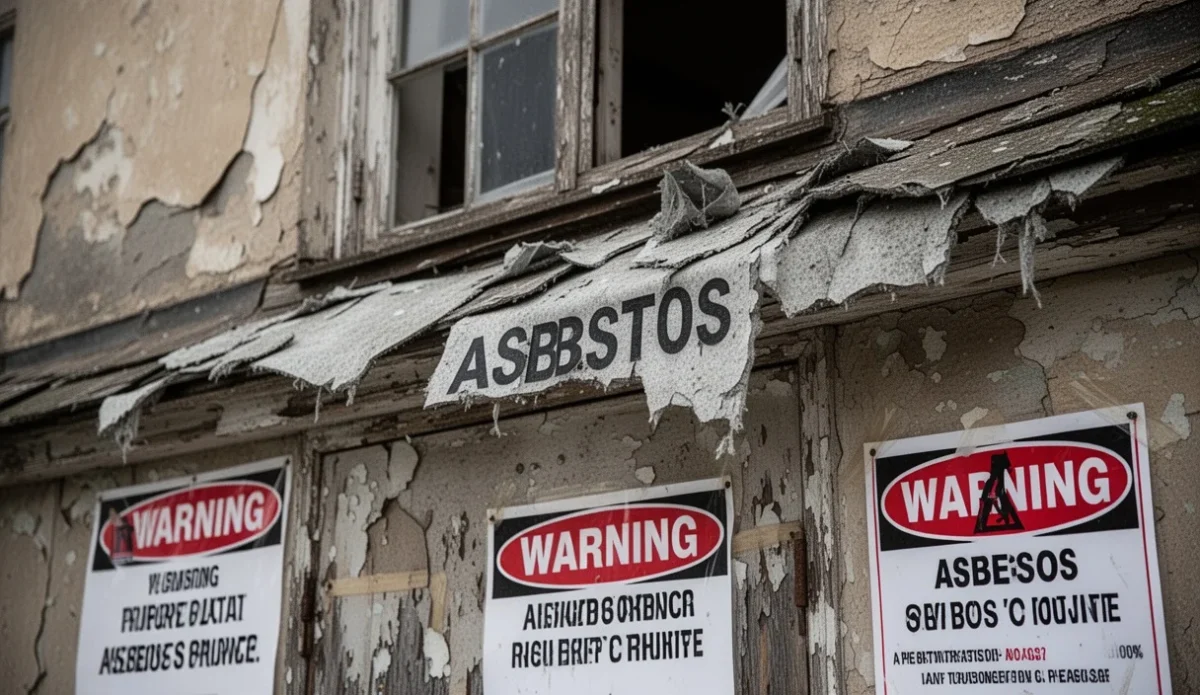
The Confederation of Neighborhood Associations of Catalonia has welcomed the new asbestos law, marking a significant step in public health. However, they express fears about its implementation and effectiveness.
The recent approval of the Asbestos Eradication Law in Catalonia marks a historic milestone as the region becomes the first autonomous community in Spain to enact specific legislation targeting this hazardous material. The Confederation of Neighborhood Associations of Catalonia (CONFAVC) celebrated this achievement during a press conference held in Barcelona, emphasizing that it is the culmination of years of advocacy and mobilization by local communities.
The law aims to eliminate asbestos from public spaces and residential areas, addressing a serious public health concern linked to cancer. CONFAVC representatives highlighted that this legislative victory was not handed down but rather earned through persistent pressure from various social and labor organizations committed to safeguarding public health.
Over recent years, CONFAVC has raised awareness about high-risk situations involving asbestos found in buildings, roofs, walls, and even some soil types. Their efforts included organizing the IV State Convention on Asbestos, which took place last November in Sabadell alongside labor unions UGT and CCOO. This convention produced a roadmap for action against asbestos exposure.
A key feature of the new law is that it empowers citizens to take action if local governments fail to address asbestos issues in sensitive areas like school roofs or residential courtyards. Additionally, it recognizes the role of neighborhood movements by ensuring their participation in forums related to asbestos management.
Financial provisions are also part of this legislation; specifically, an additional clause mandates that the Generalitat must ensure adequate funding for municipalities through multi-year allocations and resources from the Asbestos Eradication Fund. However, CONFAVC cautions that these financial mechanisms need further clarification to avoid becoming mere intentions without practical application.
Despite these advancements, several critical shortcomings have been identified by CONFAVC. Notably, while municipal commissions on asbestos are encouraged by the law, they are not mandated. This lack of obligation represents a missed opportunity for robust local governance regarding asbestos management.
The organization also criticized provisions concerning municipal censuses. They argue that allowing a regional census to replace local ones when not conducted could hinder effective enforcement since no clear deadlines or penalties are established within the law.
A significant point raised was the exclusion of asbestos inspections from mandatory Technical Building Inspections (ITE). According to CONFAVC, integrating such inspections would facilitate widespread detection and management of asbestos risks across housing stock more efficiently than current methods allow.
The role of the Catalan Waste Agency is another area where clarity is needed. This agency will be responsible for managing grants, authorized landfills, accredited companies, and citizen participation mechanisms under this new framework. The effectiveness of this law hinges on how well these resources and capabilities are defined and implemented by this agency.
“A law without control mechanisms and clear obligations risks becoming ineffective,”
warned Jordi Giró, president of CONFAVC. He emphasized that rigorous implementation with transparency and sufficient resources is crucial so that no municipality falls behind due to lack of means.
Giró reaffirmed his organization’s commitment: “We are part of the solution; we do not just act as whistleblowers: we bring territorial experience, neighborhood knowledge, and mobilization capacity.” He insisted that their roadmap will continue focusing on being vigilant partners with citizens to ensure progress towards eradicating asbestos without setbacks.
This landmark legislation opens up avenues for community engagement while raising essential questions about its execution moving forward. Residents concerned about potential exposure can stay informed through local government announcements regarding upcoming initiatives aimed at implementing these new regulations effectively.

You might also be interested in