The hydraulic sawmill in Alòs d'Isil will resume operations on August 28, marking a significant revival of local heritage. Restorations by FustÀneu have made this possible.
The long-awaited reopening of the hydraulic sawmill in Alòs d’Isil is set for August 28, after being dormant for over a decade. The sawmill, which collapsed due to flooding in 2013, has undergone extensive restoration thanks to the efforts of the local association FustÀneu. This initiative not only revives a crucial piece of local history but also aims to educate visitors about traditional wood processing methods.
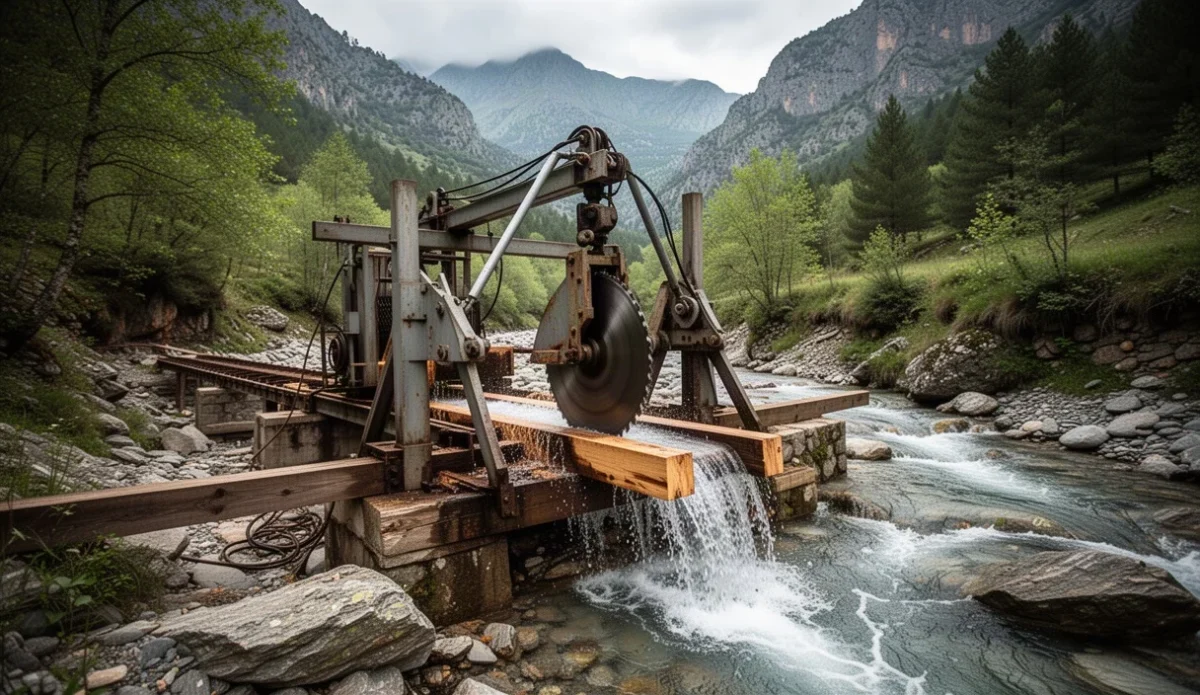
The sawmill, historically significant to the Pallars Sobirà region, utilizes water power to operate its machinery, transforming logs into beams and planks. The restoration involved cleaning the water channel and repairing damaged components, allowing the mill’s wheel to turn once again. As part of the event ‘Recuperamos los aserraderos de los valles de Àneu’, visitors will witness firsthand how hydraulic energy can be harnessed for woodworking.
FustÀneu’s commitment extends beyond mere restoration; they envision making this process accessible for educational purposes. The association believes that showcasing this traditional technique will help preserve an essential aspect of their cultural heritage.
This particular sawmill has a storied past; it was originally built after a fire destroyed its predecessor in 1953. It served as a community resource, owned by local residents who relied on it for their livelihoods. The recent repairs have transformed it into a demonstration site where volunteers can share knowledge about historical practices with visitors.
Hydraulic sawmills were once common in forest-adjacent villages, utilizing flowing water to power their operations and significantly contributing to local economies until the advent of electricity in the early 1970s. Today’s reopening marks not just a revival but also an opportunity for locals and tourists alike to engage with this unique aspect of regional history.
The restored facility is modestly sized, constructed from wood with stone walls, strategically located next to a river with ample water flow—ideal conditions for both logging and milling activities. Visitors can expect an immersive experience that highlights both the craftsmanship involved and the ecological significance of using renewable energy sources.
As preparations continue for the grand reopening, FustÀneu encourages community members and tourists interested in learning about sustainable practices and historical technologies to attend. This event promises not only nostalgia but also an insightful look into how communities once thrived through ingenuity and respect for natural resources.
For those planning to visit on August 28th, details regarding parking are available at the visitor center nearby. Attendees are encouraged to arrive early as demonstrations are expected to draw significant interest from both locals and tourists eager to witness this historic revival.

You might also be interested in