
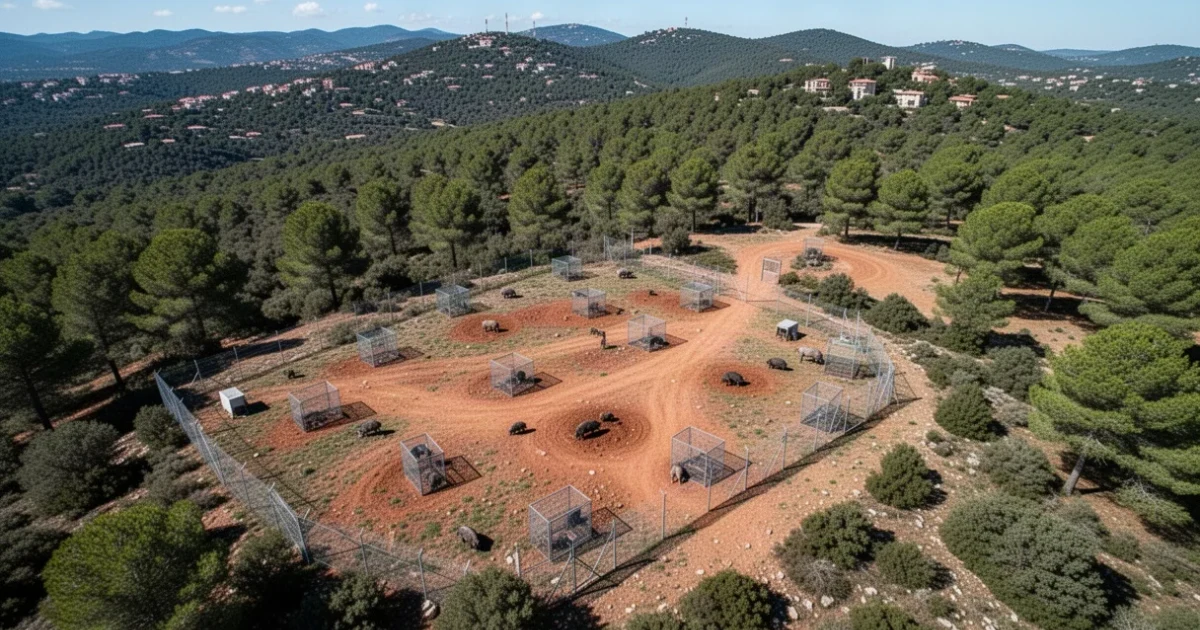
The detection of five new African swine fever cases has postponed the reopening of Collserola Natural Park. This outbreak, first identified in late November, continues to impact local pig farmers significantly.
Five new cases of African swine fever (ASF) have been confirmed in the Collserola region, prompting further delays in the reopening of the popular Collserola Natural Park. The Department of Agriculture announced these findings on Thursday, which include three cases in Sant Cugat del Vallès, one in Barcelona, and another in Molins de Rei. This resurgence comes after a two-week period without any reported infections.
The initial detection of ASF occurred on November 28, 2025, marking the beginning of a crisis that has since seen 384 out of 11,775 analyzed wild boars test positive. As a result, authorities are intensifying efforts to control the outbreak by culling wild boar populations within the infected zones. According to rural agents consulted by La Vanguardia, “each day there are fewer wild boars left” within these encapsulated areas.
Currently, there are 19 municipalities classified as high-risk zones due to ASF. These include Badia del Vallès, Barberà del Vallès, and several others surrounding Barcelona and Collserola Park. The ongoing crisis has led to significant economic repercussions for local pig farmers.
The financial toll is staggering; producers have faced losses estimated at €755 million from December through August as market prices plummeted below production costs. Miguel Ángel Higueras from the National Association of Pig Farmers (Anprogapor) highlighted that current prices at Mercolleida are approximately €1.363 per kilogram live weight—15% lower than this time last year.
The export market remains severely affected as well. Miquel Àngel Bergés from Mercolleida noted that exports to key markets like Mexico and Japan remain closed due to ASF concerns. While some regional agreements have been reached with countries such as the Philippines and South Korea—who accepted regionalization measures—major markets continue to impose strict bans.
The situation is compounded by reduced demand from China as it recovers its own pork production capabilities. Ignasi Pons from the Federation of Meat Enterprises expressed cautious optimism about potential negotiations with Japan regarding regionalization soon: “We are seeing light at the end of the tunnel,” he stated.
This ongoing crisis highlights not only agricultural challenges but also broader implications for food security and economic stability in Spain’s pork industry. The government’s strategy involves increasing surveillance and trapping efforts; currently, there are 36 traps and 94 collective traps, known as pig brigs, deployed across high-risk areas.
The road ahead remains uncertain for both local farmers and consumers alike as they navigate this complex landscape marked by health regulations and economic pressures. For those looking to visit Collserola Natural Park or nearby areas affected by these restrictions, it is advisable to stay updated on official announcements regarding park access and local wildlife management efforts.

Trending on the web

You may also like