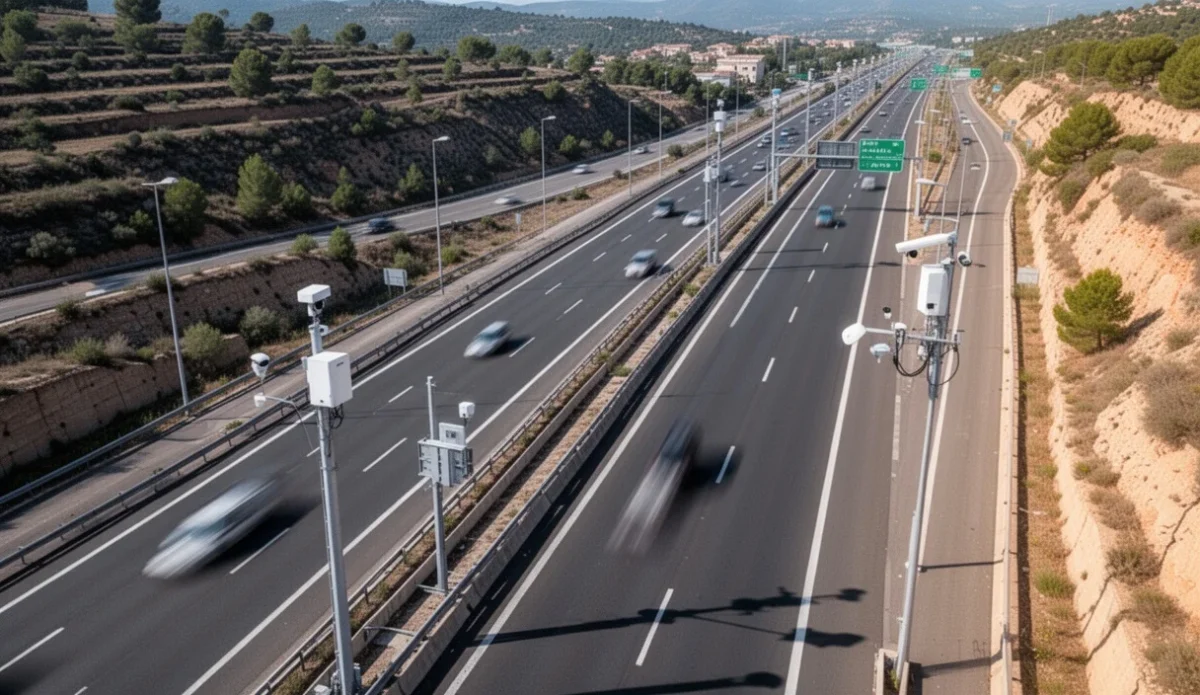
A new system in Catalonia aims to enhance road safety by automatically detecting traffic violations among heavy vehicles. This initiative is crucial as the AP-7 faces increasing congestion.
In a significant move towards improving road safety, Catalonia has unveiled a pioneering system designed to automatically detect traffic violations committed by heavy vehicles. The initiative, presented on June 25, 2026, focuses on five strategic points along the region’s road network, particularly targeting the heavily trafficked AP-7 highway.
The first operational control point is currently undergoing testing near the former toll booth at Martorell. This advanced technology comprises arches equipped with cameras and sensors capable of identifying various infractions, such as overweight trucks and compliance with mandatory rest periods for drivers. Notably, many violations stem from drivers failing to adhere to required rest hours.
With an investment of 4.4 million euros, funded through European grants, this system represents a substantial commitment to enhancing transportation safety in Catalonia. The setup allows for real-time data collection without requiring vehicles to stop. If any irregularities are detected while trucks pass through these checkpoints, variable message signs will alert drivers to pull over at designated areas where police officers await.
Unlike traditional methods that rely solely on manual inspections, this automated approach streamlines the process significantly. Data collected is transmitted directly to law enforcement via tablets, ensuring swift action can be taken if necessary. For foreign drivers, stopping will be mandatory at one of the checkpoints.
The AP-7 sees a staggering volume of traffic daily; between 26,000 and 28,000 heavy vehicles traverse the Martorell section alone. In total, up to 78,000 heavy vehicles can be monitored across all five locations each day. Such high numbers underscore the urgent need for effective monitoring systems.
This initiative comes in response to alarming statistics from earlier this year: between January and April 2026, authorities inspected over 8,264 trucks resulting in more than 7,200 citations primarily due to insufficient rest periods for drivers.
Sílvia Paneque, Catalonia’s Minister of Territory stated during the launch event that “it is vital that technological resources contribute to enhancing public safety.” While current implementations focus exclusively on trucks and buses, there are discussions about potentially expanding these capabilities to passenger cars in future developments.
The installation plan includes multiple locations along the AP-7: two points near Martorell (one northbound and one southbound), as well as additional sites at La Roca del Vallès and Vila-seca. A further control arch will also be set up on C-33 at Llagosta heading northbound.
This innovative approach not only aims at immediate enforcement but also seeks to gather valuable data that could inform future mobility policies within Catalonia. Previously utilized mobile antennas provided some level of monitoring; however, fixed installations like these represent a significant upgrade in capability.
The director of Servei Català de Trànsit (STC), Ramon Lamiel emphasized that “the AP-7 must function as an orderly highway,” highlighting how this new system aligns with broader objectives for improved traffic management.
The rollout of this automatic detection system marks a transformative step in how traffic regulations are enforced in Catalonia’s busy transport corridors. As authorities continue refining their strategies for managing heavy vehicle traffic effectively amidst growing congestion challenges on major highways like the AP-7, residents can expect enhanced safety measures aimed at reducing accidents caused by driver fatigue or vehicle overloads.

You might also be interested in