
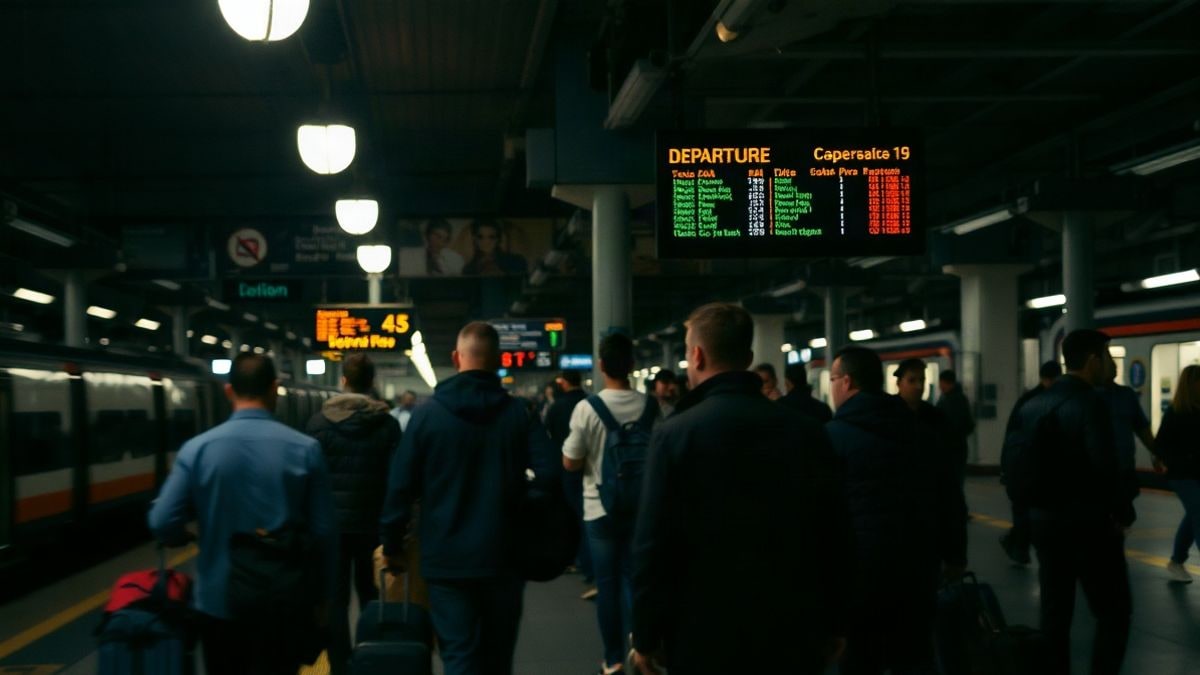
Sants station is experiencing a day of chaos this Tuesday with hundreds of travellers trapped by delays on the AVE Madrid-Barcelona. The speed limit of 80 km/h and single-track operation are prolonging the incidents.
Sants station in Barcelona woke up this Tuesday with crowded corridors and delayed trains. The cause: a fire in the locomotive of an AVE heading to Figueres on Monday near Ricla (Zaragoza), which forced the suspension of services between Madrid and Barcelona during the return operation of 12 October. According to elmundo.es, travellers were packed in the corridors, with many describing it as a "total chaos".
The incidents continued throughout the day and are expected to persist this Wednesday. Trains are operating on a single track with a temporary speed limit of 80 kilometres per hour, whereas the usual average is around 300, and with sighting speed in some sections between Barcelona and Madrid while repairs are made to the infrastructure.
One user summarised the situation on social media: "Six hours to get from Madrid to Barcelona. Thanks Renfe." The usual journey does not exceed three hours, even with the usual delays due to incidents on the track.
Another traveller explained to this outlet that, when looking for alternative flights for a work trip to Barcelona, prices had skyrocketed in the hours prior. On her return on the AVE to Madrid, she found that there were "double-booked seats" and several hours of delay in departure.
The Madrid-Barcelona route was not the most affected. Navarra and La Rioja had their AVE services cancelled, and their travellers were redirected to regional trains, a network that also suffers from issues of service and lack of investment across the state.
In recent months, the Spanish railway network has accumulated incidents that result in temporary speed limits. This is compounded by failures in rolling stock, such as the crisis with the bogies of the S-106 models from Talgo on routes between Madrid, Barcelona, and Valencia, or problems with the new trains of the Cercanías network in Madrid, the 453 models from Stadler.
The situation is entrenched in the Catalan railway axis. In addition to incidents due to "poor condition" or "damage to the tracks" that are reported weekly in the Adif programming for drivers, various testimonies have expressed the frustration caused by delays, service cuts, and lack of information in the Rodalies network, which serves 400,000 daily users. The Govern itself has acknowledged its inability to provide alternative transport due to lack of capacity.
The last major incident was the refusal of drivers to operate just a week ago due to concerns over the safety of the Catalan tracks after heavy rains, and their demand for safety certificates. 2026 has seen two serious railway accidents: one in Rodalies, when a wall fell onto the tracks and the train that passed afterwards collided with it, resulting in the death of the driver in Gelida; and the tragic accident in Adamuz (Córdoba) on the high-speed line, with 46 fatalities.
High-speed rail lost nearly 1.22 million passengers in the second quarter of 2026, following the Adamuz accident, according to the latest data from the National Securities Market Commission (CNMC).
For users in the province of Barcelona and the rest of Catalonia, the day translates into widespread delays, full trains, and the need to check the Renfe or Adif app before travelling. Delays extend to all operators, and it is recommended to anticipate journeys or seek alternatives while repair works continue.

Trending on the web

You may also like