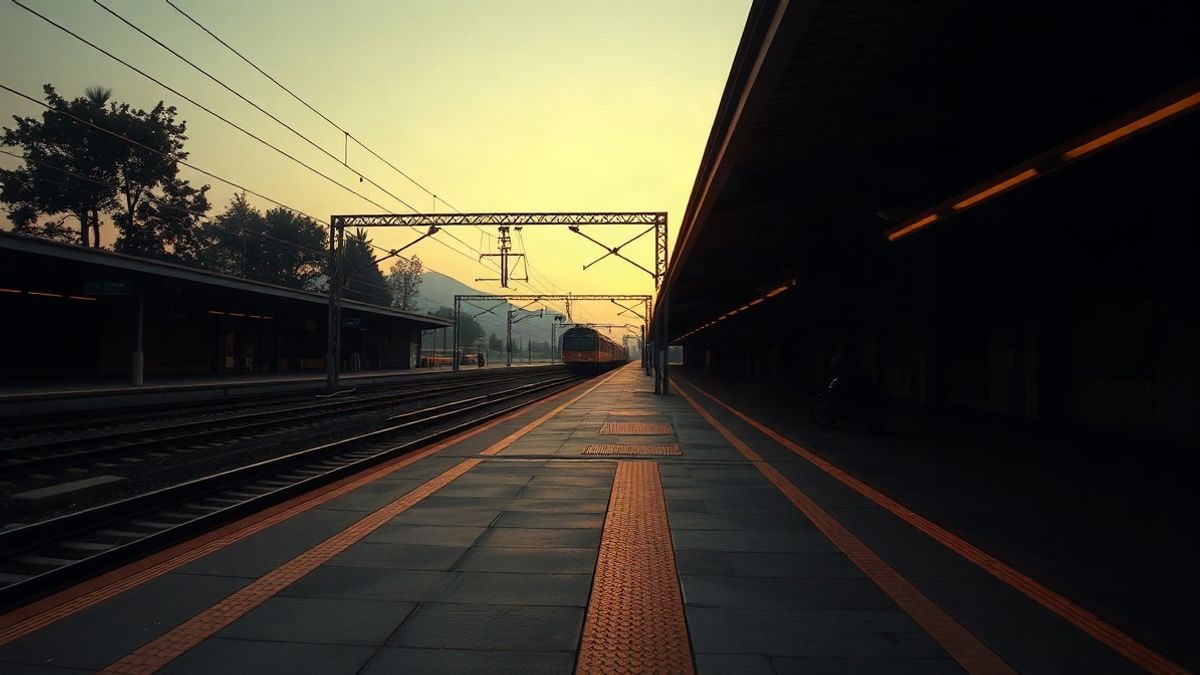
Rodalies will offer 66% of its services during peak hours this Thursday, October 29, and 33% for the rest of the day. The Generalitat is urging users to seek alternatives to the train.
According to moncloa.com, the Renfe train drivers' strike leaves Rodalies with two out of three trains running during peak hours this Thursday. The strike, called by the Sindicato Español de Maquinistas Ferroviarios (Semaf), affects the driving staff of all Renfe companies and will take place from 00.01 to 23.59 on Thursday October 29.
The minimum service has been set by the Department of Business and Labour of the Generalitat. Rodalies will maintain 66% of its trains during peak hours and 33% for the rest of the day. Sources from the Govern admit that the day will be very complicated and that adherence to the strike, which has a national scope, will be high.
Outside Catalonia, the minimum services have been decreed by the Ministry of Transport: 73% for high-speed and long-distance trains, and 75% for commuter trains during peak hours, dropping to 50% during off-peak hours. Two administrations are thus setting different thresholds for the same strike, something that has happened before but is once again drawing attention.
Semaf is not demanding salary increases. Its demands are technical: real and binding protocols in the face of weather alerts, regulations that coordinate communications in risk situations, effective application of interruptions in driving times, solutions for faulty rolling stock, and the unlocking of age reduction coefficients for retirement.
For those living in the Barcelona area, Baix Llobregat, or Vallès, the official recommendation is not to rely on the train. The metro and bus are the first options within Barcelona. In Vallès, FGC absorbs a good part of the usual Rodalies traffic, while on the coast and in Baix Llobregat the margin is smaller and the remaining third of service weighs on the intermediate stations.
The Procicat, the civil protection plan of the Generalitat, will hold an extraordinary session at 08:00 on Thursday to monitor the day and assess incidents. The same mechanism is activated during episodes of snow, wind, or flooding.
With two-thirds of the service during peak hours, frequencies are stretched and transfers accumulate. Those who can work from home on Thursday will save, according to the usual calculations of local commuters, more than an hour of travel time.
The expectation is to return to regular service on Friday, October 30, provided the strike is not extended. Before heading out, it is advisable to check the specific line on the Rodalies de Catalunya website, as the remaining 33% is not distributed evenly across all lines.

Trending on the web

You may also like