A Badalona judge has denied an urgent eviction request for a family who reoccupied their home after being forcibly removed. This decision highlights ongoing housing struggles in the area.
A recent ruling by a judge in Badalona has significant implications for housing rights in Sant Adrià de Besòs. On June 18, a family from the Mina neighborhood successfully reoccupied their apartment shortly after being evicted. The Consorci de la Mina, which owns the residential blocks on Rambla de la Mina, sought an urgent eviction to reclaim the property for families displaced from the nearby Venus building.
The judge’s decision was clear and firm, stating that there were no immediate plans to relocate residents from Venus, thus negating claims of urgency. Furthermore, she emphasized that evicting the vulnerable family without providing reasonable housing alternatives would be disproportionate.
This case is part of a broader context where 58 apartments are slated for eviction by year-end as part of a redevelopment project aimed at transforming the neighborhood. The local government intends to demolish the Venus building by 2028, making these evictions critical to their plans.
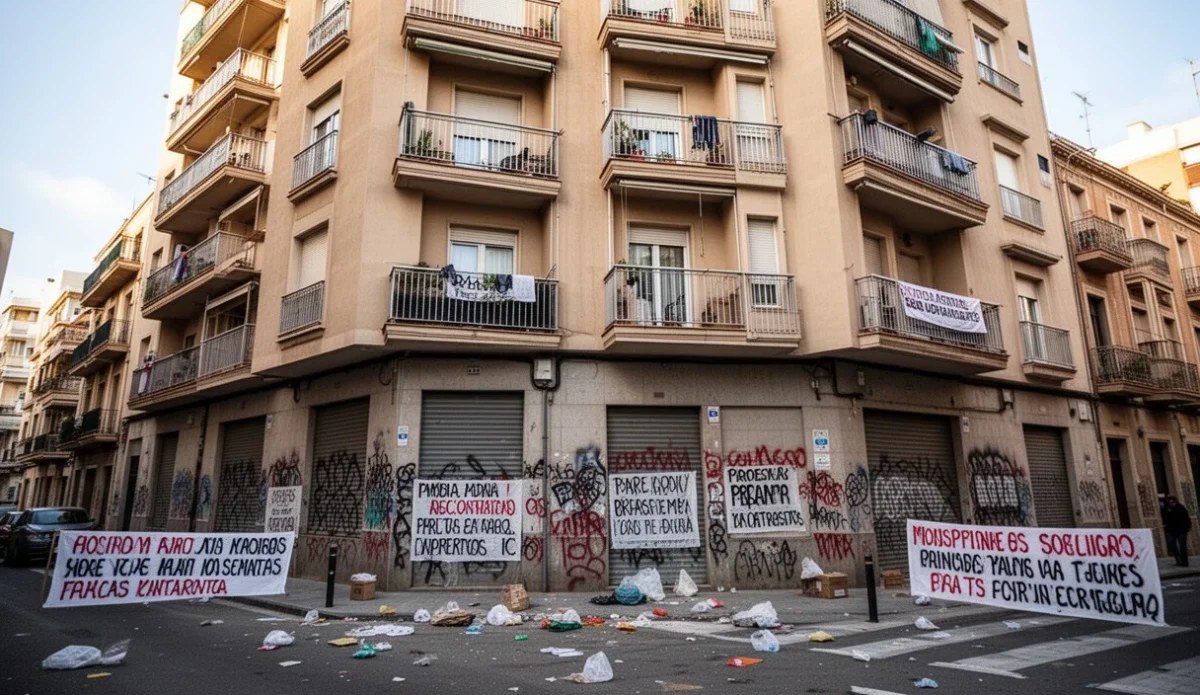
On the same day as the initial evictions, three more families faced similar fates but responded with protests outside Sant Adrià’s town hall. Residents demanded dialogue with Mayor Filo Cañete while expressing frustration towards Consorci administrators. They vowed to continue mobilizing until their demands are met.
Despite police interventions by Mossos d’Esquadra following court orders, residents have shown resilience. Hours after being forcibly removed, some returned to their homes by breaking through anti-occupation barriers installed by authorities. Among them was Samira, a young mother who has lived in her apartment for nearly ten years.
Samira articulated her plight during her eviction day interview, highlighting her long-standing requests for social housing that have gone unaddressed. Her situation reflects a growing concern over housing insecurity among vulnerable populations in urban areas across Spain.
The judge’s ruling not only supports Samira’s right to remain in her home but also draws attention to systemic issues regarding large property holders like Consorci de la Mina and their responsibilities towards tenants facing hardship.
As this situation unfolds, it raises questions about how local governments balance urban development with social equity and tenant rights. With ongoing protests and legal battles expected, residents are urged to stay informed about upcoming town hall meetings where they can voice their concerns directly to city officials.

You might also be interested in