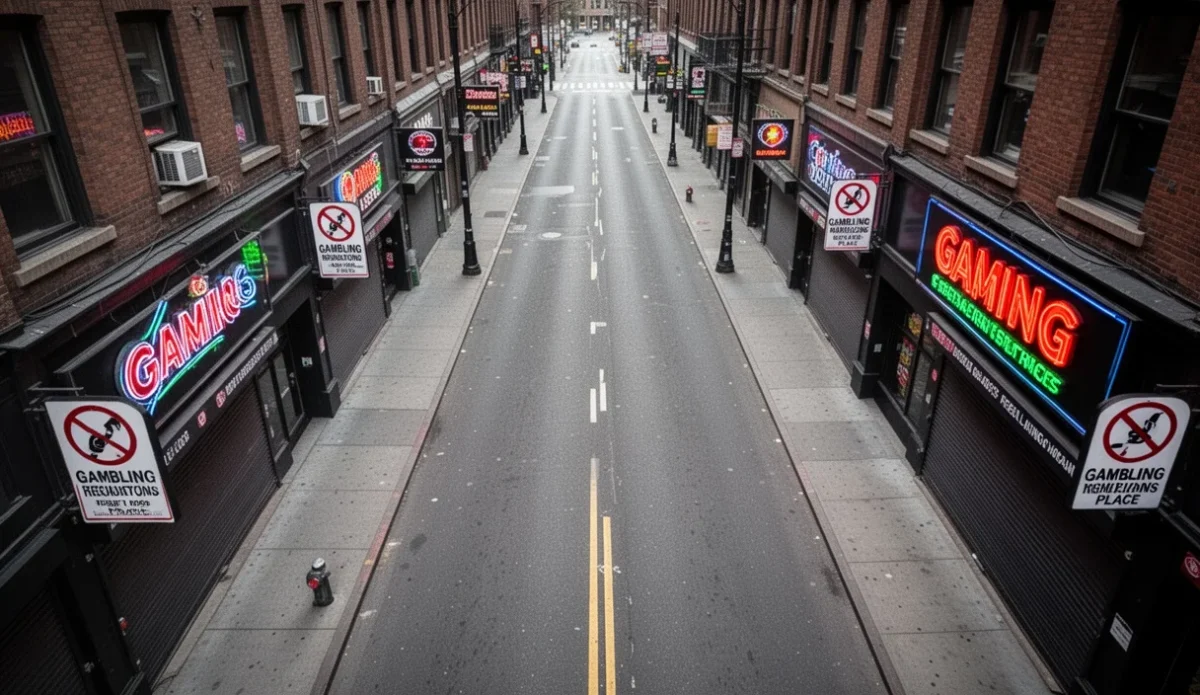
The Supreme Court will clarify municipal powers over gambling venues after a case from El Prat de Llobregat challenges existing regulations. This decision could reshape local governance of gaming establishments.
The Supreme Court of Spain is set to determine the extent of municipal authority regarding the regulation of gambling establishments, including bingos and casinos. This pivotal ruling follows an appeal from the City Council of El Prat de Llobregat, which contests a previous decision by the Catalan High Court that invalidated parts of its urban planning aimed at limiting new betting venues.
The issue has garnered significant attention due to rising concerns about gambling addiction, particularly among youth. A recent report from the National Drug Plan indicated that in 2025, approximately 13% of Spanish high school students engaged in online gambling, while nearly 21% participated in physical betting activities, despite legal age restrictions.
This legal battle is part of a broader trend observed across Catalonia, where several municipalities have enacted urban planning modifications to curb the proliferation of gambling businesses. Cities like Barcelona, L’Hospitalet, and El Prat have all sought to impose stricter regulations following the pandemic’s peak.
The Catalan association representing private gaming interests, known as Patrojoc, has challenged these municipal measures in court. The Catalan High Court has sided with Patrojoc in cases involving Barcelona and El Prat, asserting that local governments exceeded their jurisdiction since gaming regulation falls under regional authority.
The Supreme Court’s acceptance of El Prat’s appeal introduces a significant debate on whether local governments can enforce distance requirements or zoning restrictions for gaming establishments without infringing on regional laws governing gambling.
The admission by the Supreme Court surprised many observers given that it had previously ruled on similar matters concerning Barcelona.
Catalonia already imposes strict limitations on new gaming venues. For instance, no new bingo halls or gaming salons can be authorized within a radius of 1,000 meters from existing licensed locations. Additionally, these establishments are prohibited near educational institutions and healthcare facilities.
The current regulatory framework allows for only a limited number of licenses: up to 126 gaming salons, 75 bingo halls, and four casinos throughout Catalonia. Notably, any future developments related to the controversial Hard Rock project could permit up to six additional casinos in specific tourist areas.
A paradox exists for El Prat: it currently lacks any bingo or casino facilities within its borders.
This situation raises questions about the effectiveness of municipal plans when there is no immediate impact on local communities. The sole licensed gaming salon operates within a shopping center far removed from El Prat’s urban core.
The evolution of gambling establishments in Catalonia reveals an interesting contrast with other regions in Spain. Despite being one of the last regions regarding density—only two point four venues per 100,000 inhabitants compared to a national average of eight point eight—Catalonia has seen some growth over recent years. From 2015 to 2024, there was a notable increase in such venues by approximately 13%. However, this pales compared to other regions where growth reached nearly 44%.
The upcoming ruling by the Supreme Court will not only affect local governance but also set important precedents for how municipalities across Spain can regulate gambling activities moving forward. Stakeholders await clarity on whether they can impose stricter controls without conflicting with regional legislation governing this contentious sector.
Citizens interested in understanding how these changes may affect their community should stay informed through local government announcements and public forums discussing potential impacts on urban planning and public health initiatives related to gambling addiction.

You might also be interested in