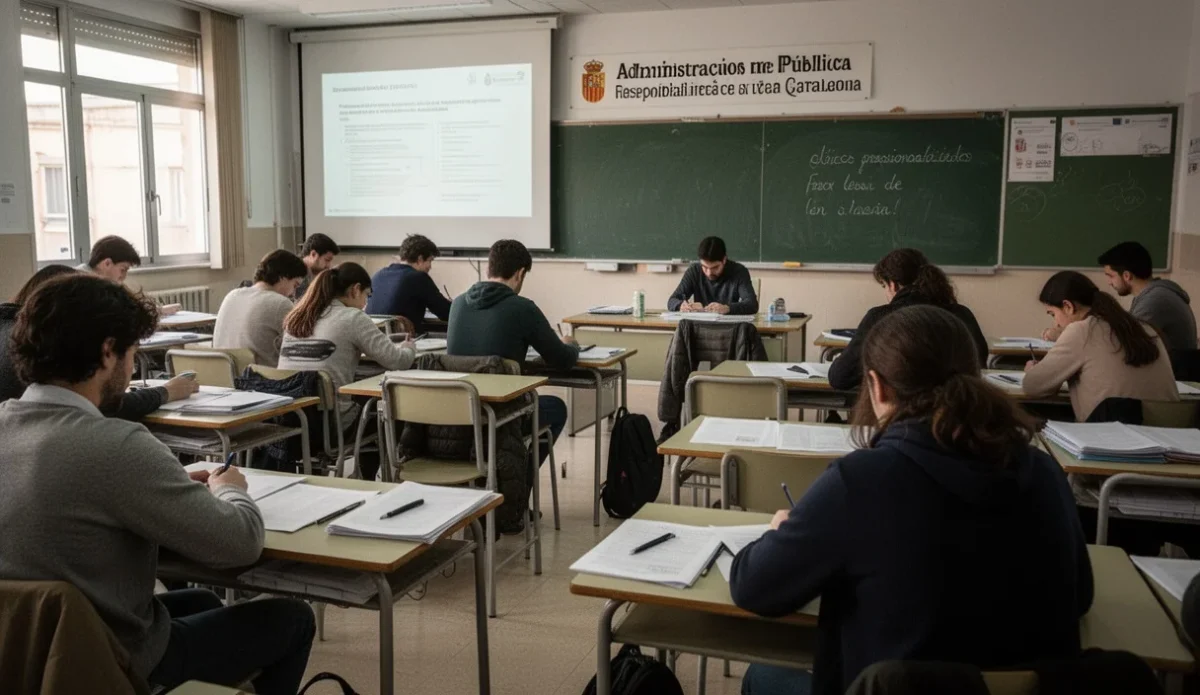
A new master's program in Barcelona aims to tackle the critical shortage of municipal secretaries affecting small towns. Fifty graduates will begin work this summer, providing much-needed support.
The lack of municipal secretaries has reached a crisis point in many small towns across Catalonia, with local governments struggling to approve budgets, manage projects, and even process payrolls. This issue has prompted the Diputació de Barcelona to take decisive action by establishing a specialized master’s program aimed at training future secretaries who are essential for ensuring legal compliance and financial oversight within local administrations.
Recognizing that the problem extends beyond mere vacancies, the Diputació has implemented a proactive approach to create a sustainable pipeline of qualified professionals. The initiative is designed not only to fill existing gaps but also to cultivate a new generation of municipal leaders equipped with practical skills necessary for their roles.
The first cohort of this innovative program consists of fifty students who have successfully completed their training and are set to join various municipalities this summer, particularly those with populations under 1,000 residents. These smaller towns have been disproportionately affected by the shortage of secretaries, making this initiative crucial for their operational stability.
“What we are doing is generating a talent pool,” said Xavier Forcadell, general coordinator of Municipal Assistance at the Diputació de Barcelona and one of the project’s architects.
Forcadell emphasized that waiting until vacancies arise is no longer viable; instead, there must be trained individuals ready to step into these roles immediately. The master’s program includes scholarships and hands-on experience with real municipal cases, ensuring that graduates are well-prepared from day one.
This approach addresses not only immediate staffing needs but also long-term sustainability. The increasing number of retirements among current secretaries combined with a lack of awareness about this career path among law and public administration graduates has exacerbated the situation. Many students complete their studies unaware that such positions exist or what they entail.
The Diputació’s initiative reflects broader trends in local governance where municipalities face challenges in attracting skilled professionals across various fields including architecture and urban planning. However, the role of municipal secretary remains particularly critical as it underpins both legal and financial operations within local governments.
“We realized it wasn’t just about retirements; there’s a fundamental issue: not enough people want these jobs,” Forcadell noted.
The master’s program deviates from traditional academic models by focusing on practical application rather than theoretical knowledge alone. Over four months, students engaged directly with real-life scenarios involving contracts, budgets, urban planning issues, human resources management, and grant applications under the guidance of approximately ninety experienced professionals from the Diputació itself.
This hands-on experience is complemented by an innovative mentorship system designed to support graduates during their initial months in office—a period often fraught with uncertainty as they navigate significant responsibilities without adequate guidance.
“Many people leave because they arrive alone at a municipality with enormous responsibility,” Forcadell explained. “We want them always backed by professionals who can guide them.”
The response to this initiative has exceeded expectations; nearly 300 candidates applied for just thirty available scholarships worth €1,200 each. Ultimately, fifty students were selected—thirty receiving scholarships while twenty others joined without financial aid—and most will enter into a dedicated pool established to meet ongoing municipal needs.
Ariadna Poyo, one graduate who studied Public Management Administration remarked on how valuable it was to blend practical training with mentorship: “Knowing there will be professionals from the Diputació available for guidance brings great peace of mind.”
Ferran Alcántara echoed similar sentiments regarding his own journey toward discovering this career path through the master’s program: “I learned about it while preparing for competitive exams; hardly anyone discusses secretarial roles in university.”
The success of this pilot project has encouraged plans for future iterations aimed at solidifying its place as an ongoing source for cultivating talent within local government structures across Catalonia. Local mayors have expressed relief at seeing new recruits entering their offices as they often feel overwhelmed when lacking essential personnel like secretaries who play pivotal roles in decision-making processes.
The mayoral leaders anticipate that these newly trained professionals will alleviate some pressures faced by smaller municipalities competing against larger ones for limited talent pools.
Looking ahead towards next steps—the Diputació is already working on launching another edition of the master’s course aiming not only at continuity but also expanding collaboration efforts involving Generalitat de Catalunya along with universities—to enhance visibility around these vital positions while ensuring consistent annual influxes into local government sectors throughout Catalonia.

You might also be interested in