Starting July 3, tram lines T4, T5, and T6 will face significant disruptions due to extensive upgrades. The project aims to enhance public transport efficiency and pedestrian access.
Beginning this Friday, July 3, residents of Barcelona will experience substantial changes in their daily commutes as the city initiates a major upgrade to its tram network. The improvements will affect tram lines T4, T5, and T6, with service interruptions lasting until mid-September and partial disruptions continuing until spring 2027.
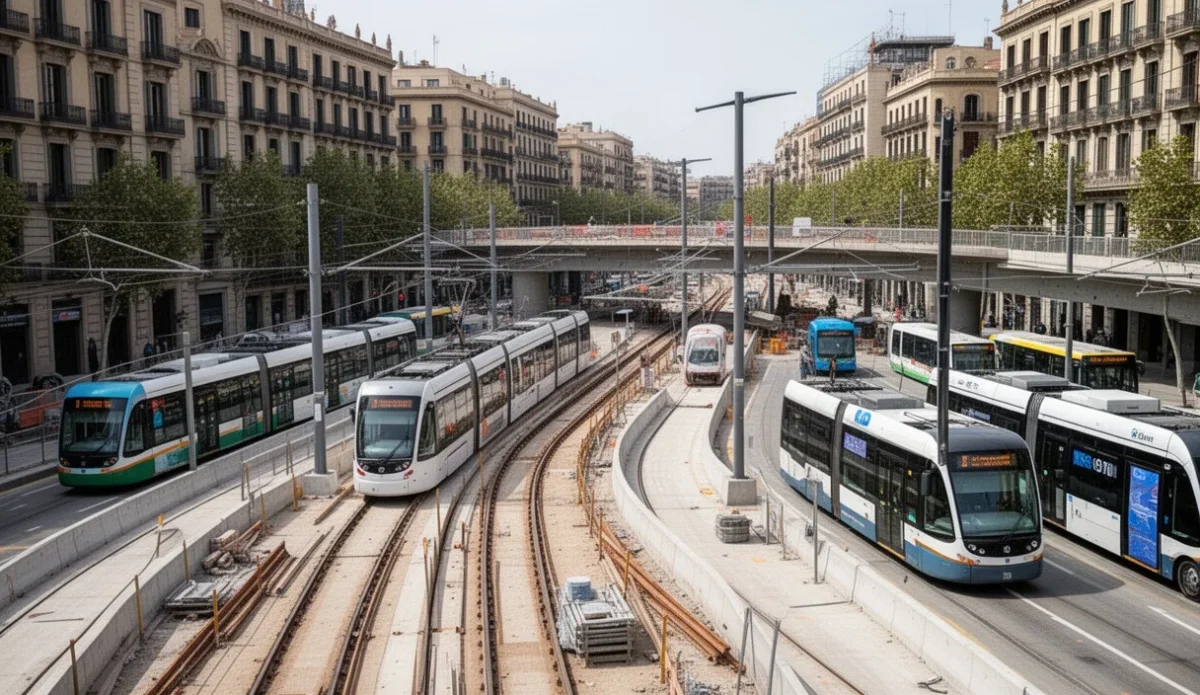
The project, spearheaded by the City Council of Barcelona in collaboration with the Metropolitan Transport Authority (ATM), focuses on enhancing mobility along key thoroughfares such as Gran Via de les Corts Catalanes and Diagonal Avenue. This initiative involves replacing the existing single-track system with a new double-track platform designed to accommodate both trams and buses.
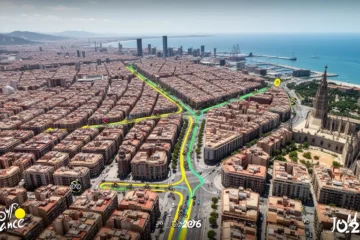
As part of these enhancements, the urban landscape around Gran Via will also be transformed. The area between Glòries and Poblenou will see significant improvements aimed at optimizing traffic flow for pedestrians, cyclists, buses, and private vehicles. Notably, where there were once eight lanes for cars, a pedestrian-friendly promenade is set to emerge.
This upgrade marks the second phase of an extensive transformation plan that began last summer. It aims to streamline various modes of transportation converging at the complex intersection of Gran Via and Diagonal Avenue. Enhanced pedestrian pathways are planned to facilitate better access between Glòries and Diagonal through newly constructed crosswalks.
“The goal is to prioritize pedestrian movement while improving overall transit efficiency,” said a spokesperson from ATM.
During the initial phase from July 3 to September 13, line T4 will be suspended between Verdaguer and Maresme, while lines T5 and T6 will not operate between Ciutadella | Vila Olímpica and Sant Martí de Provençals. To mitigate these disruptions, special bus services will be introduced that mirror affected tram routes.
The special bus service for line T4 will connect Verdaguer directly with Maresme. Meanwhile, alternative options like metro line L4 remain available for users needing transit between Selva de Mar and Ciutadella | Vila Olímpica during this period.
Following September 14, limited service on line T4 is expected to resume between Verdaguer and Estació de Sant Adrià; however, full restoration of lines T5 and T6 won’t occur until after ongoing construction wraps up in spring 2027. Even then, partial interruptions are anticipated as work continues on Gran Via.
“We are committed to ensuring minimal disruption during these essential upgrades,” stated a city official involved in the project.
The construction efforts also extend beyond just tram services; they encompass alterations affecting bus routes as well as bicycle lanes throughout the summer months. For instance, cyclists traveling along Diagonal must reroute via alternative bike paths due to closures affecting critical connections between neighborhoods.
In response to these changes, both ATM and the City Council have launched an extensive information campaign aimed at keeping commuters informed about service modifications before they take effect. This includes deploying staff at key stops impacted by construction alongside distributing informational pamphlets detailing alternative transport options available during this transition period.
“Our priority is ensuring that all users can navigate these changes smoothly,” added another city representative overseeing communication efforts.
The total cost for this ambitious project stands at approximately 32.54 million euros. Of this amount, Barcelona’s City Council is financing around 23.30 million euros, while ATM covers an additional 9.24 million euros. These funds reflect a commitment not only towards infrastructure improvement but also towards enhancing overall public transport accessibility across one of Europe’s busiest cities.
For those navigating through affected areas or seeking alternatives during construction phases: detailed maps outlining detours for both pedestrians and vehicles are available online through local transport websites or can be obtained at designated information points across affected stations starting next week.

You might also be interested in