A massive security operation will see 4,500 police deployed across Catalonia during the Tour de France's Grande Départ. The event will impact mobility significantly over three days.
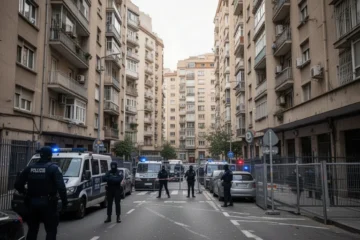
In a historic move, Catalonia is set to deploy 4,500 police officers to ensure safety and manage traffic during the first Grande Départ of the Tour de France in the region. This extensive operation will unfold over three days, from July 4 to July 6, as cyclists traverse more than 350 kilometers across 64 municipalities. The scale of this initiative reflects not only the anticipated crowds but also the complexity of coordinating such a large-scale event.
The announcement was made by Núria Parlon, the consellera of Interior, alongside Berni Álvarez, the conseller d’Esports. They emphasized that this operation is distinct from previous large-scale events in Catalonia, such as the Pope’s visit. Parlon noted that while both required significant security measures, the focus for the Tour is primarily on ensuring smooth mobility and rapid response capabilities.
A substantial portion of police resources—approximately 1,500 officers—will be dedicated specifically to managing traffic flow. Various units from local police forces will collaborate with specialized teams including traffic units and emergency responders to maintain order and prevent accidents throughout the race.
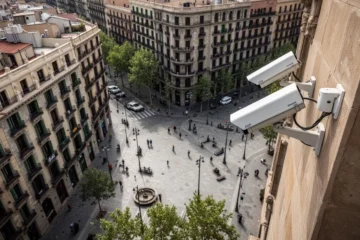
The operational center for this initiative will be based at Egara Police Headquarters, where coordination among urban guards, civil protection services, medical emergencies (SEM), and fire services will take place. Additionally, aerial surveillance using helicopters and drones will monitor restricted airspace during race hours.
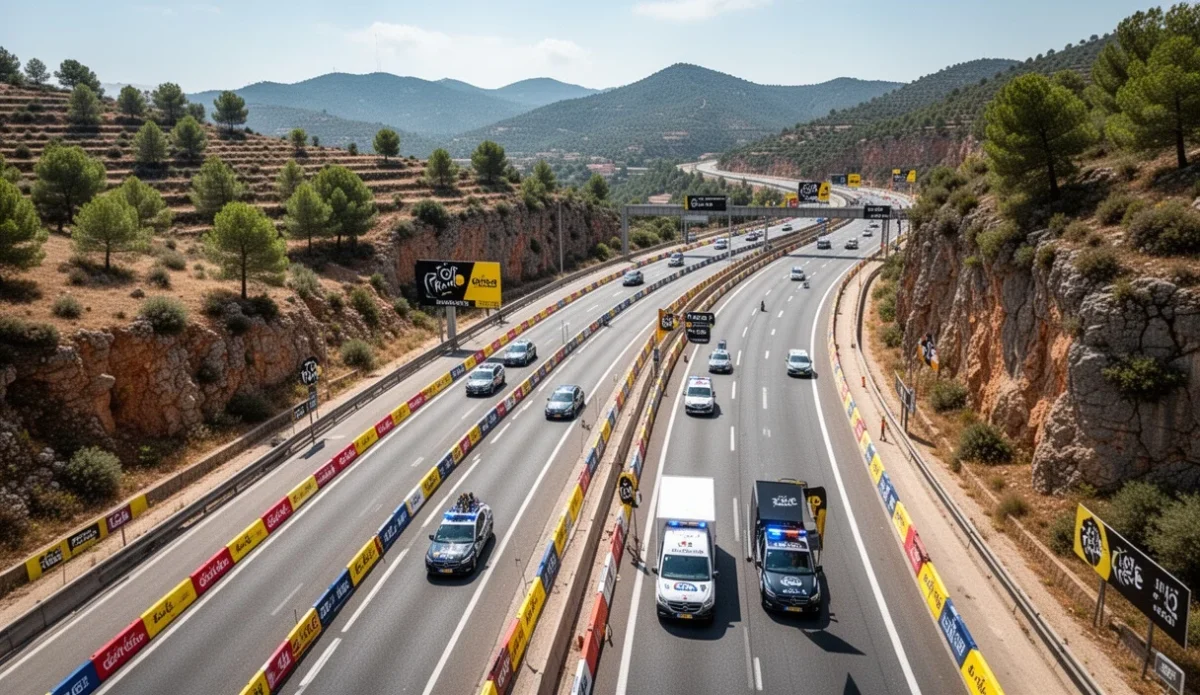
The impact on local roads will be significant. Roads are expected to be closed for over four hours at a time—much longer than typical cycling events like the Volta a Catalunya which usually sees closures lasting just over an hour. The logistical challenges are compounded by a promotional caravan that precedes each stage by two hours with around one hundred vehicles.
The first stage on July 5 runs from Tarragona to Barcelona on a holiday weekend when many locals head to coastal areas. This could lead to severe congestion along key routes like N-340 and C-31 as they close off access points leading into Barcelona. Authorities advise avoiding these roads entirely during peak times.
The second stage on July 6 poses different challenges as it takes place on a weekday through economically active regions such as Osona and Ripollès. Major roads including C-352 and N-260 will experience closures affecting towns like Campdevànol and Ribes de Freser.
Catalonia has long been known as a cycling-friendly territory; however, this event marks an unprecedented level of disruption due to its scale. Historical comparisons can be drawn with past major events in Europe where similar levels of policing were required; for instance, London’s hosting of major sporting events often necessitates thousands of officers for crowd control.
To mitigate disruptions in public transport caused by road closures, authorities have announced enhanced services on rail lines leading into affected areas. Starting July 2nd, Ferrocarrils de la Generalitat (FGC) plans to increase train frequencies significantly across various lines serving high-demand regions during race days.
Buses servicing interurban routes will also face limitations; access into Barcelona may only be possible via Ronda Litoral due to road restrictions affecting major stops along Diagonal and Gran Via streets throughout race days.
This comprehensive approach aims not only to ensure safety but also facilitate mobility amidst what promises to be one of Catalonia’s most watched sporting spectacles in recent history. Residents are encouraged to plan their travel ahead of time using public transport options whenever possible while staying informed through official channels regarding real-time updates on road conditions.

You might also be interested in